London Calling: Time to get Extra Slim! (Part 1)

Ripmax Extra Slim

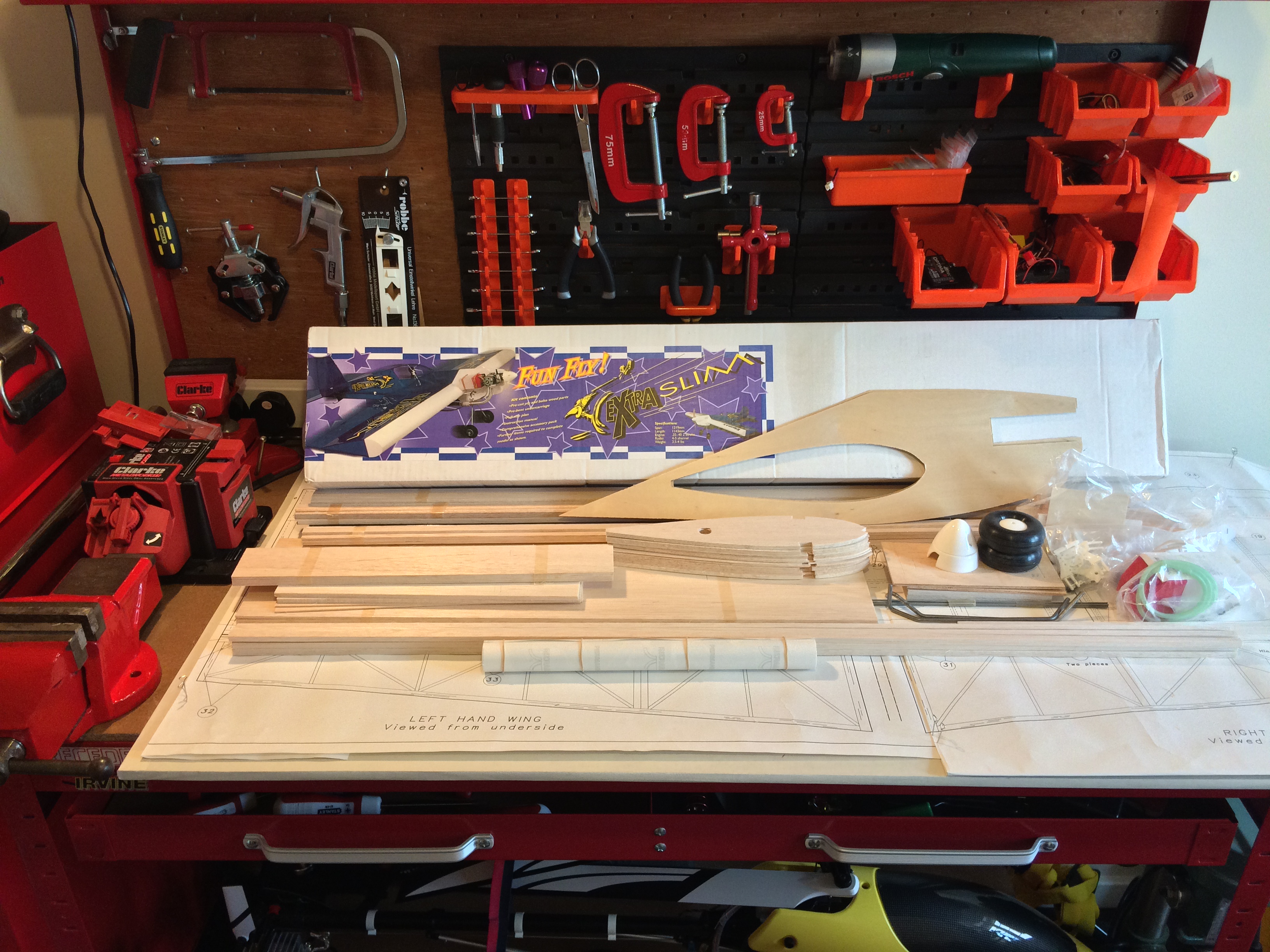
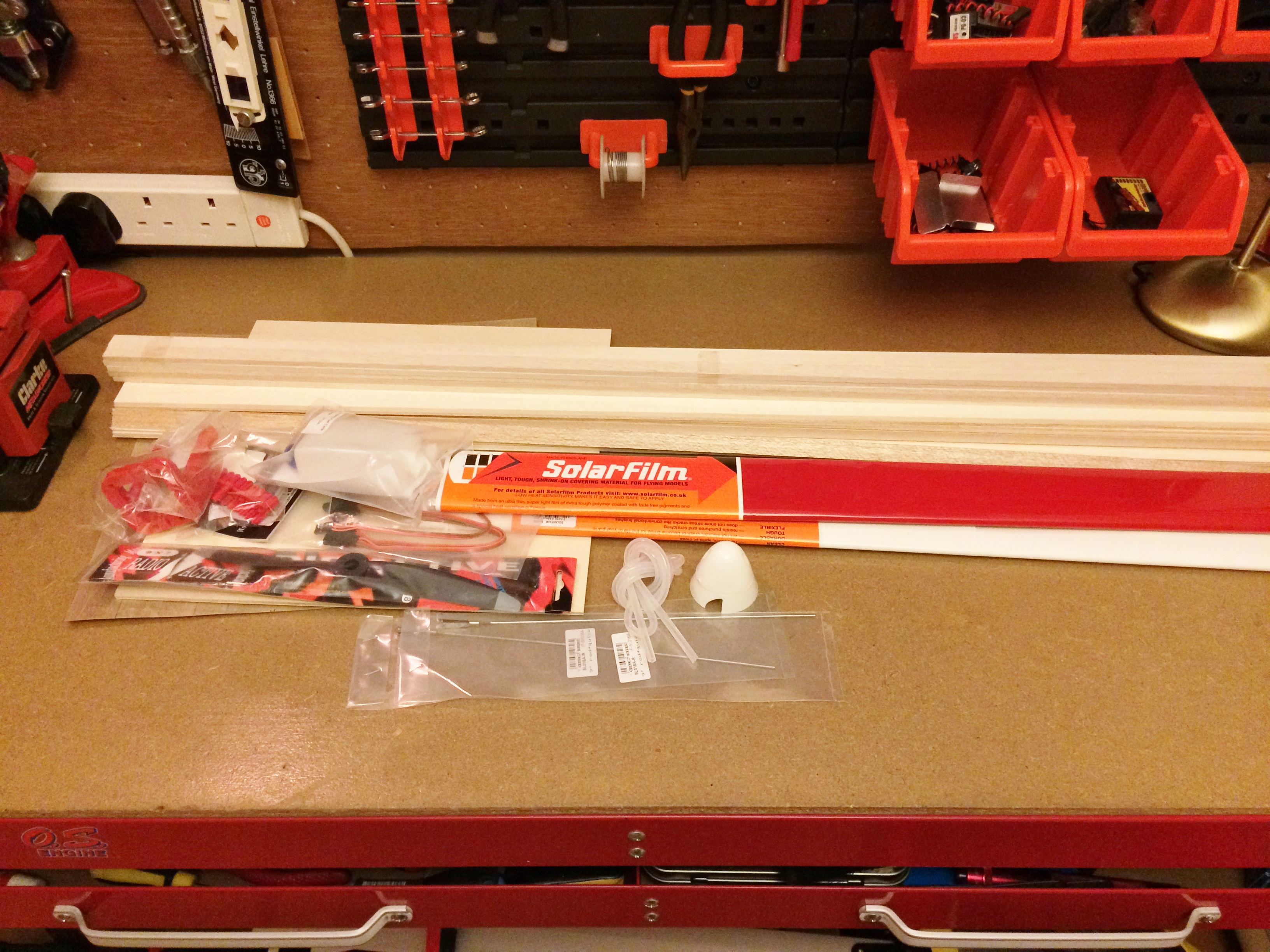
A lot of parts for such a small box; a real builders kit is this model

It’s been over 8 months since my last post and I feel it’s time for another.  New flat, job and daily commute into London have been the main reason. I’m still getting used to be called ‘scientist’ instead of ‘student’ or ‘lab-rat’, but I cannot complain as it has all been a bit of an adventure and all my hard work has finally paid off.

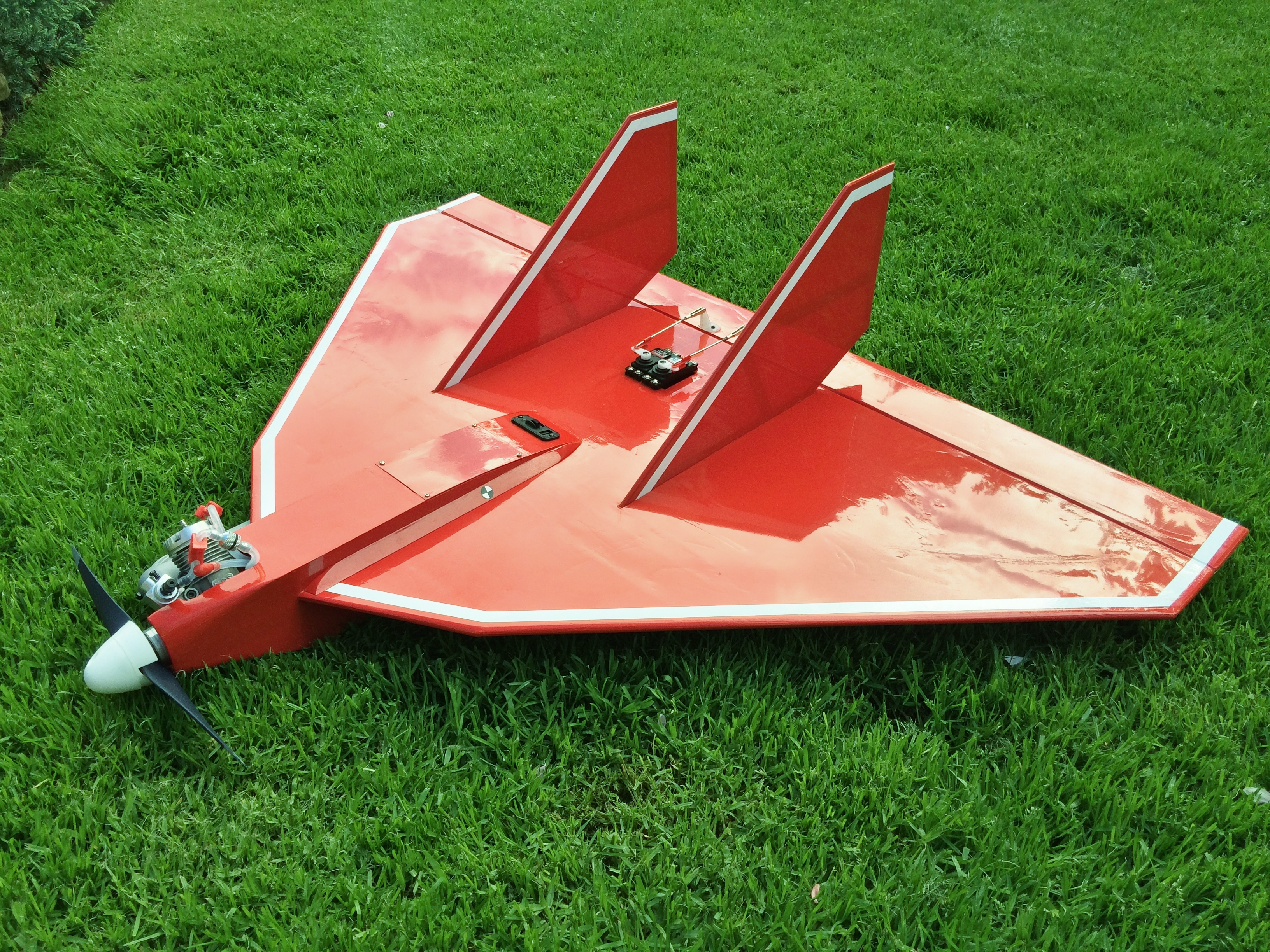
In the meantime (not helped by all this wet weather) the hobby has been focused on the workbench and this introduces the subject for today. My new club (Harlow & District) occasionally host a fun-fly day and theme competitions such as Limbo, ground loops etc.  All great fun and while watching from the pits, between fuelling up my usual Heli, I promised myself to own a suitable machine in time for the next event. A quick browse online revealed the same Jive’s, Cougar’s as the rest of my club. A game of ‘snap’ anyone? Slec still produce the Limbo-Dancer as a kit which would allow for a little more scope for individuality and I was very tempted, but as luck would have it a Ripmax Extra-Slim came up on eBay and looked just the ticket.  Add a four stroke as an alternative to the usual electric motor and screaming 30 two strokes and it should look (and sound) very distinctive!

Ripmax Extra Slim

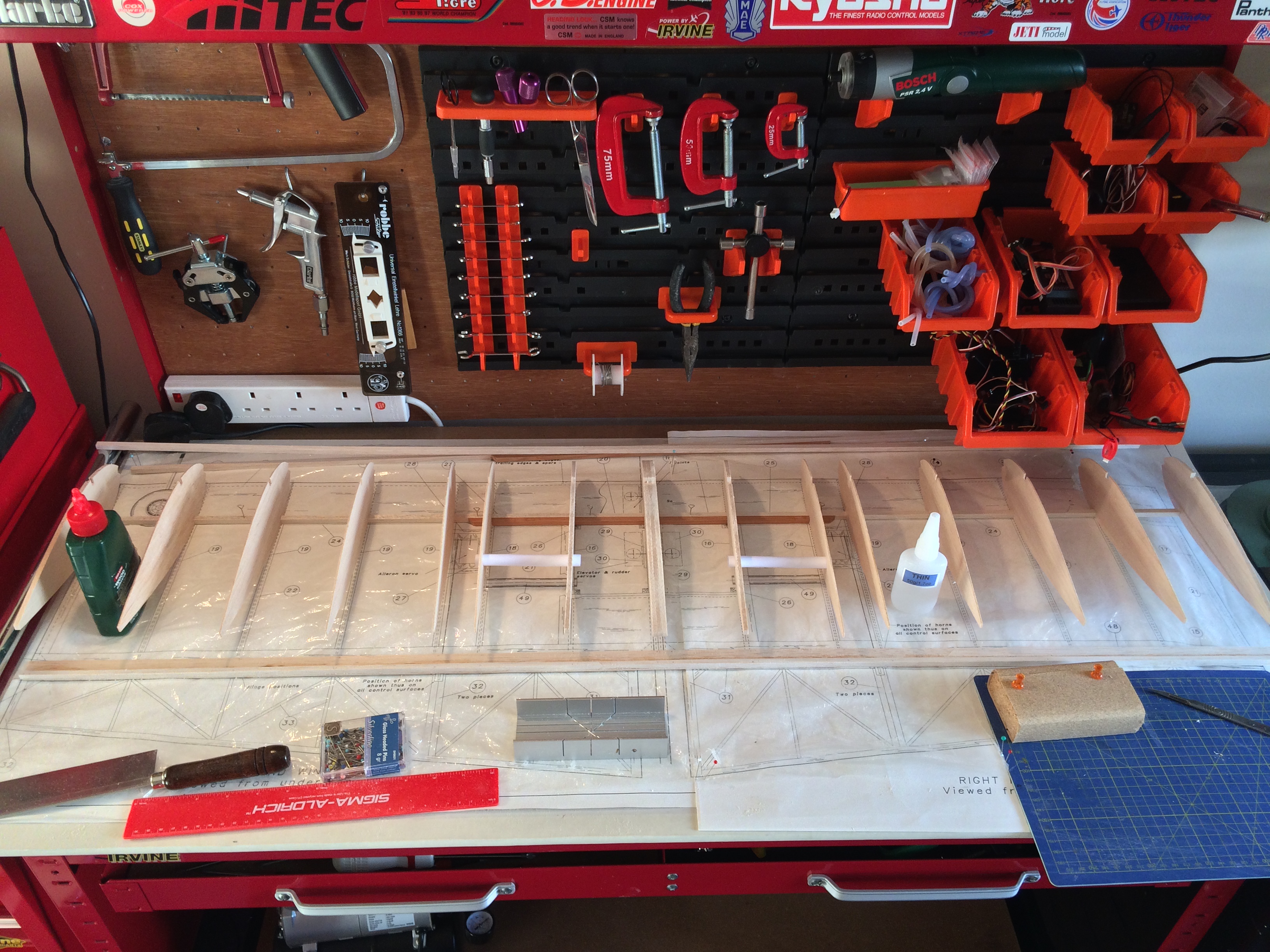
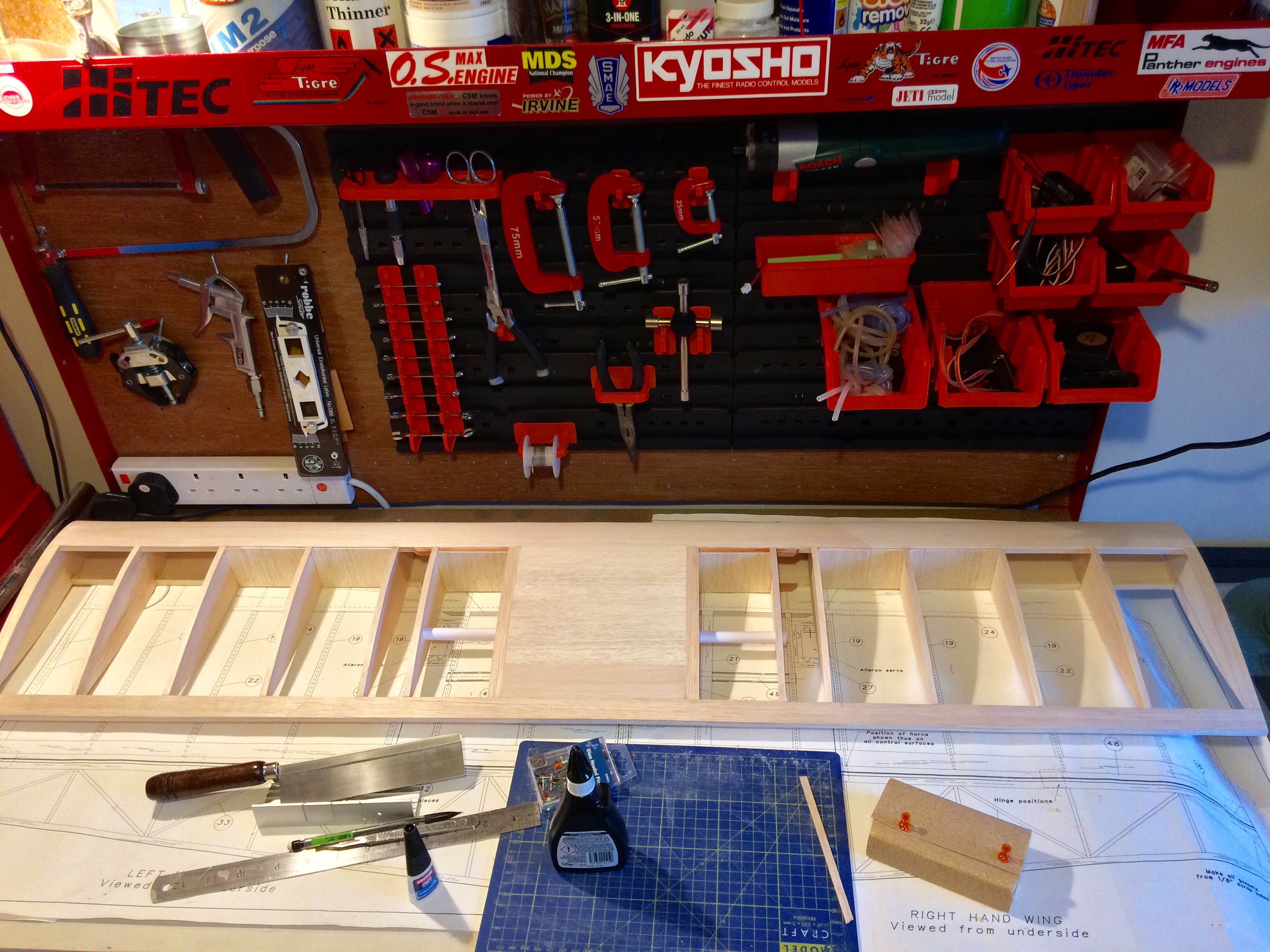
Tall and widely separated ribs make for a simple wing

Ripmax Extra Slim

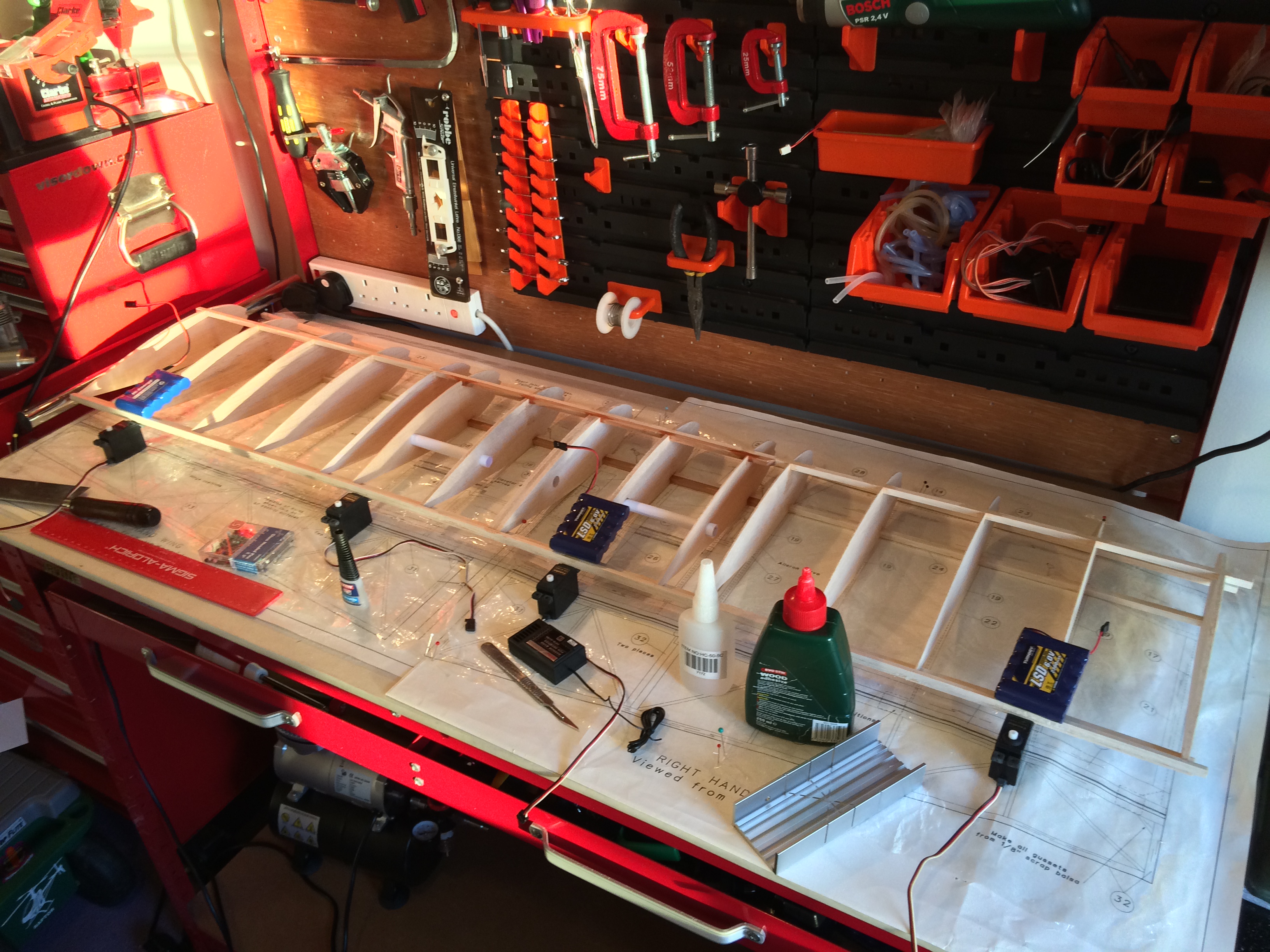
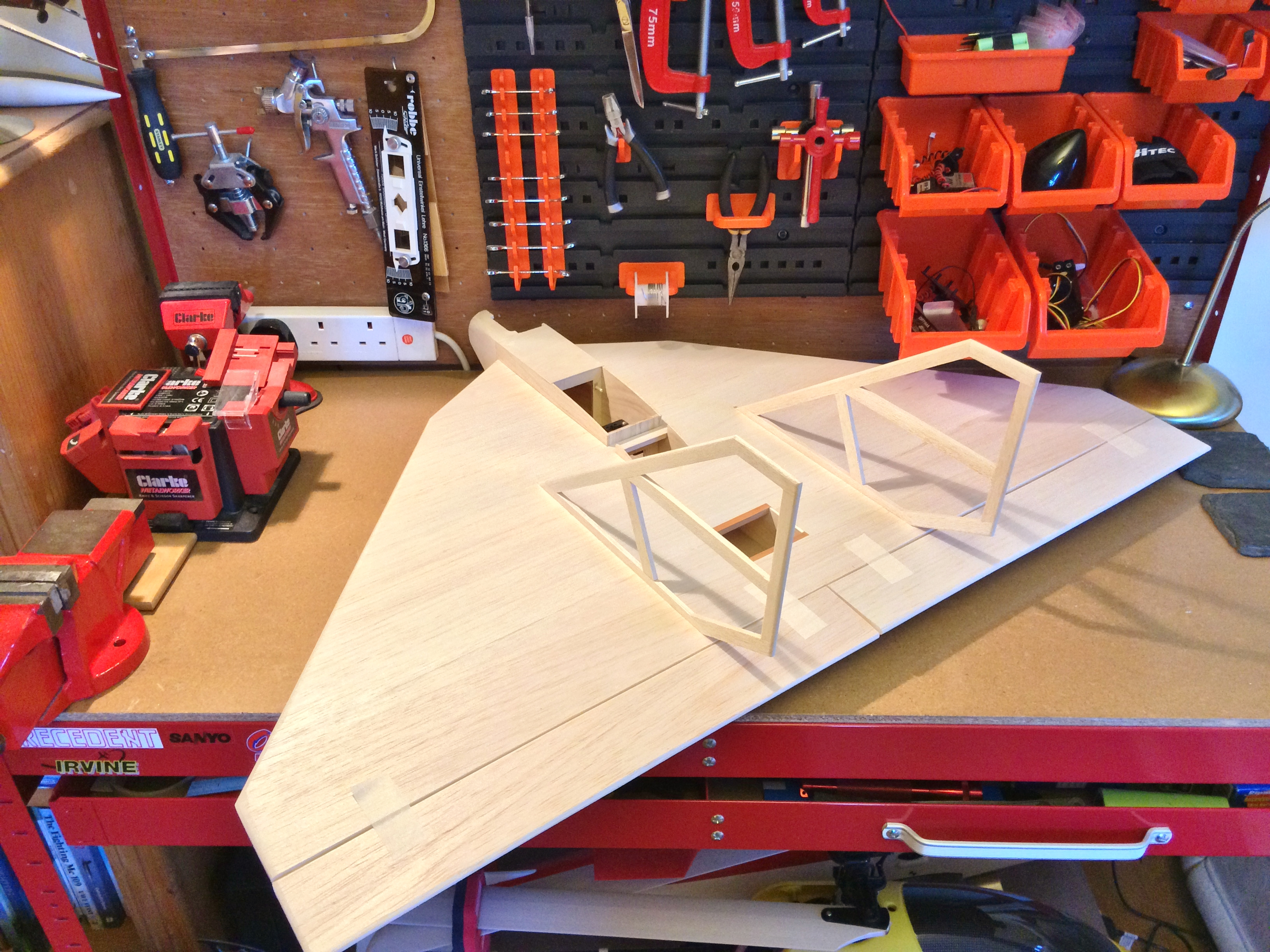
A symetrical wing requires packing up the trailing edge off the board; I found standard servos were just the right height. An old 35Mhz receiver makes a perfect right angle square for aligning the ribs correctly 🙂

Ripmax Extra Slim

That’s the wing more or less done.

Ripmax Extra Slim

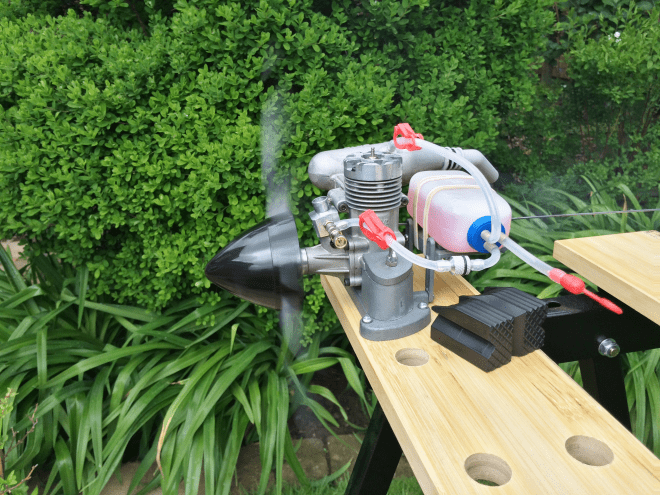
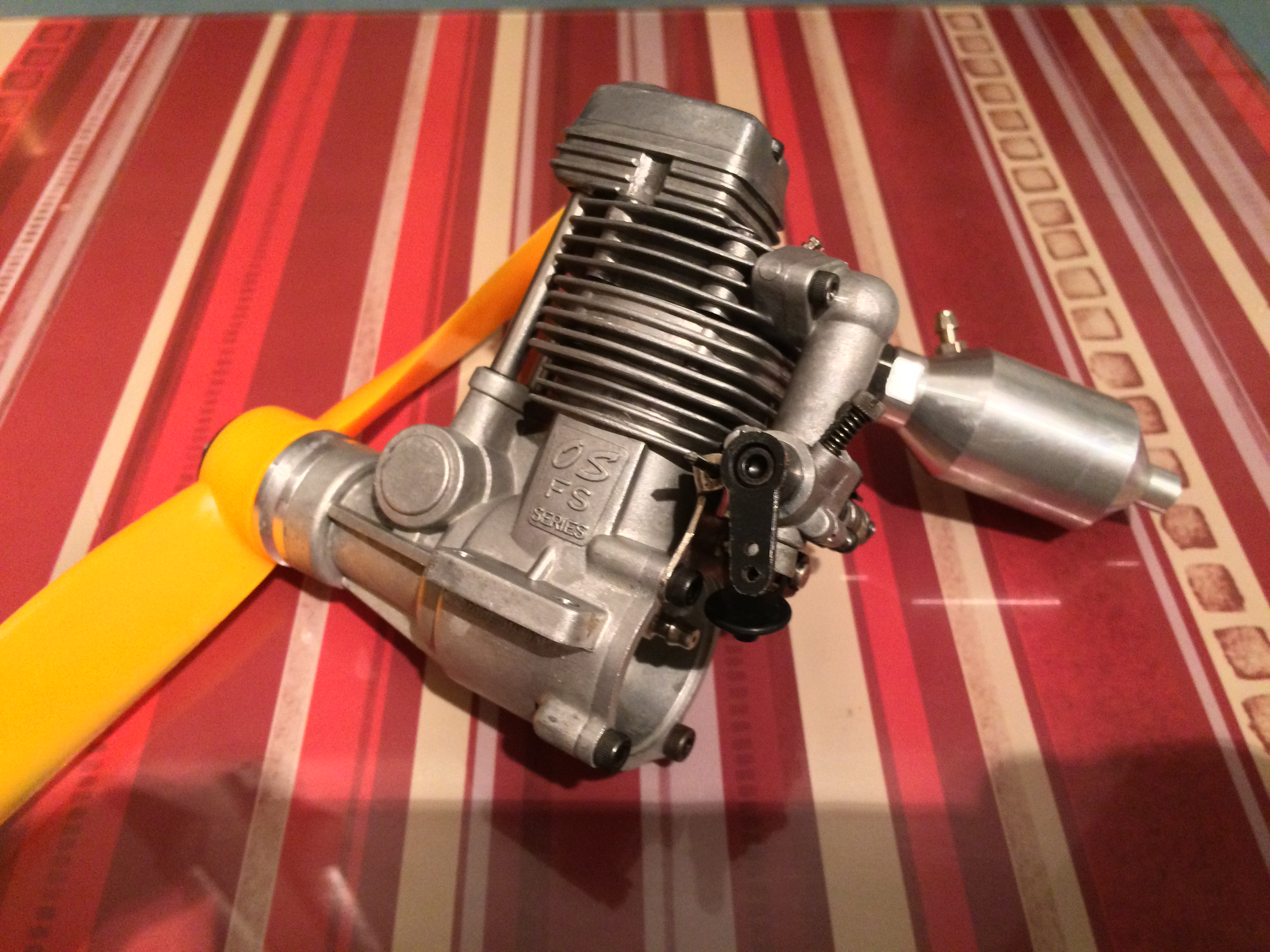
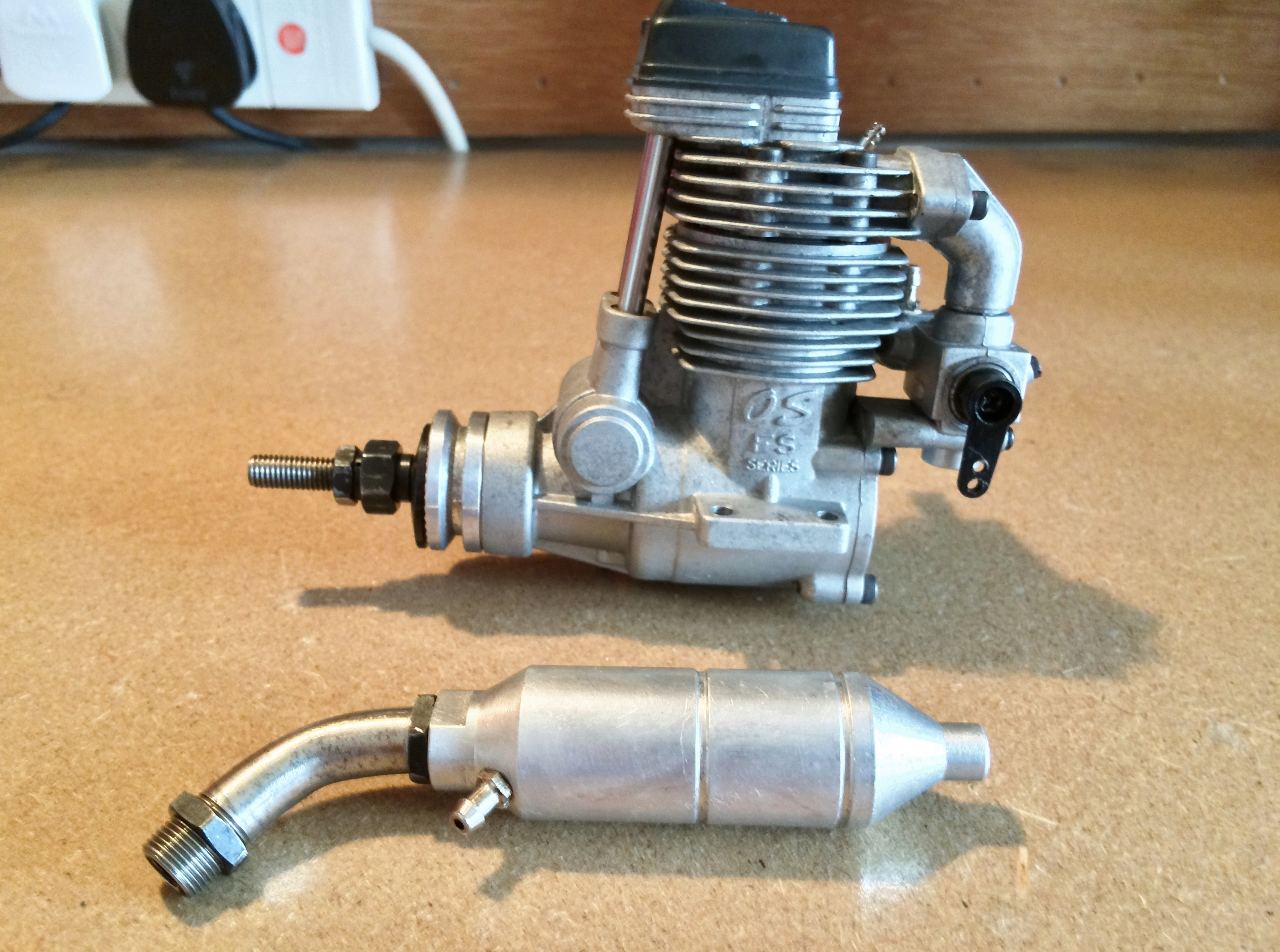
My chosen powerplant a thoroughly second hand OS40FS surpass. It was in a sorry looking ‘dipped in toffee’ state when it arrived as the previous owner(s) obviously preferred Castor oil…but a couple of evenings stripping down, cleaning (see here for how I did this) and rebuilding soon had it back up to spec.

Ripmax Extra Slim

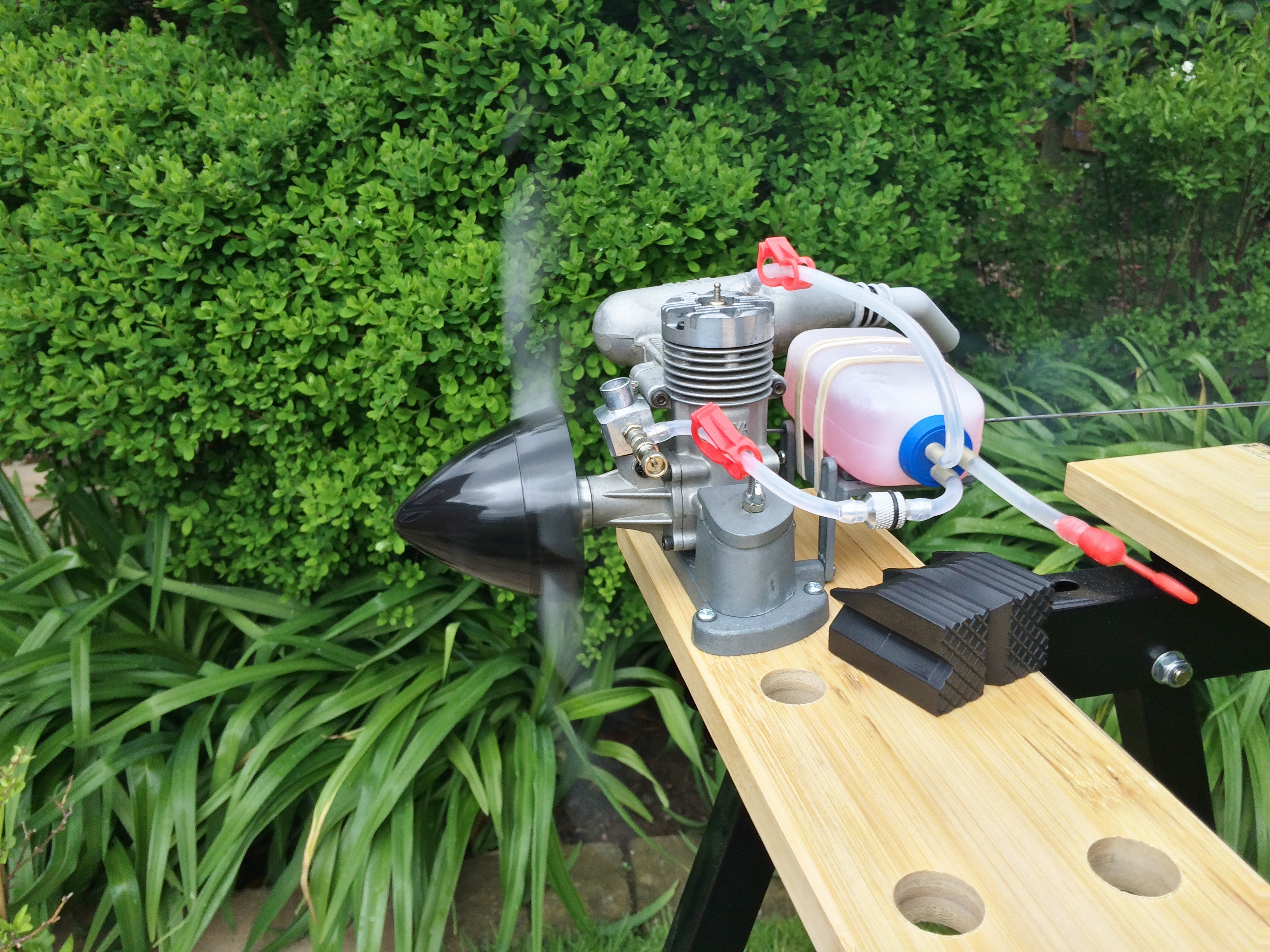
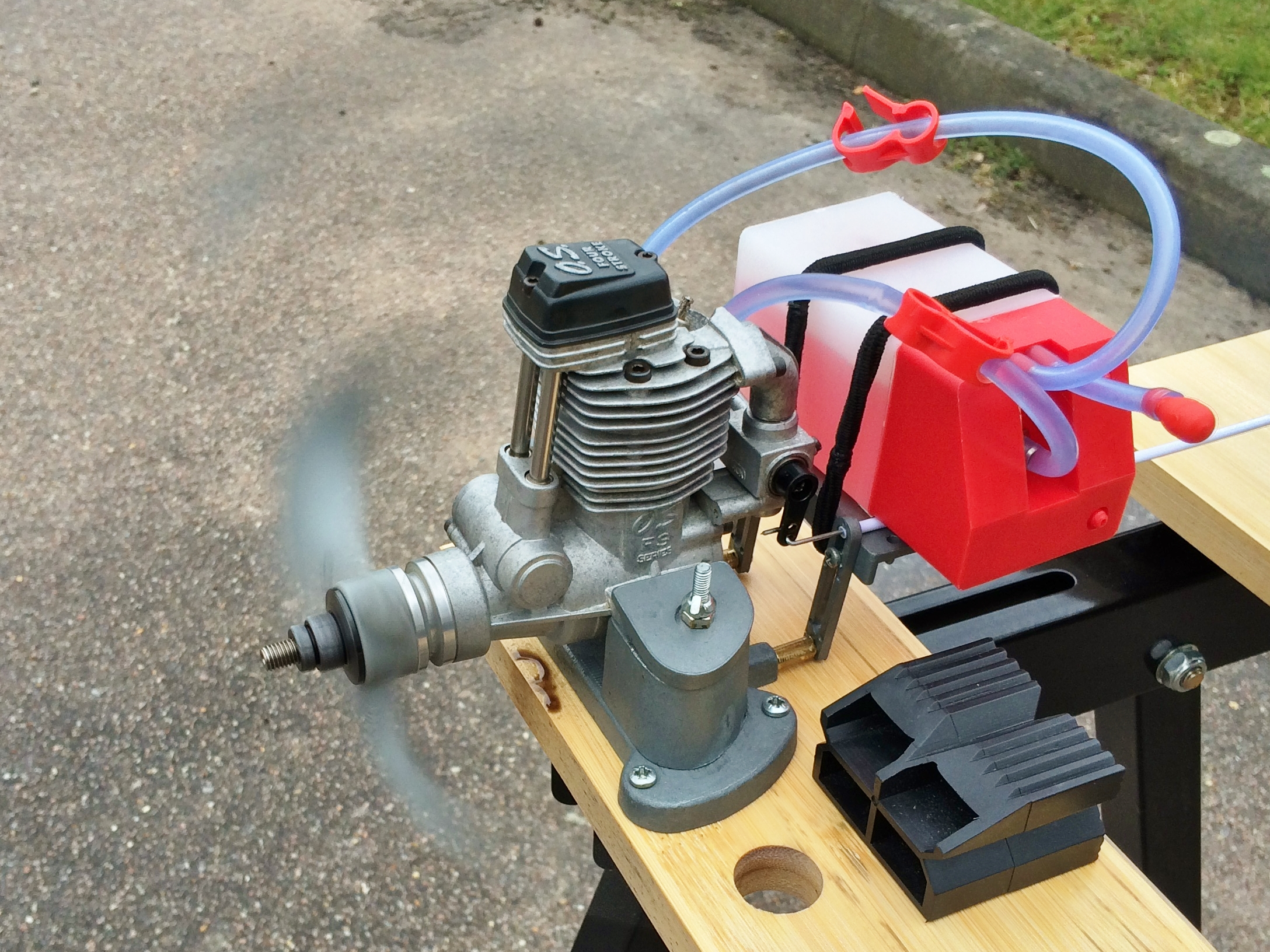
Runs a treat too and idles so slow you can almost see the prop!

That’s it for now, I’ll post up more photos as the build progresses.

A Sensible Plan (Mini Whizz Delta)

Mini-Whizz

The Mini Whizz Delta – an ideal first plan project.

Mention ‘built from a plan’ to most at the average flying field today and an image of a highly skilled old-timer in front of a large ¼ scale Tiger Moth complete with fabric stitching, wire bracing and braised undercarriage will spring to mind. Not all plans need be so complex or strike so much fear and today’s subject is the Mini Whizz delta. This small and simple design by Brian Cooper was offered as a free pull-out plan with the July 1999 issue of RCM&E and has been popular ever since. Within my local club Mini Whizz’s were for a long time the model of choice for streamer combat. Hopefully you will also see how easy some plans are too follow and be inspired enough to have a go yourself. Even a simple aircraft like this will stand out as unique within a flight line dominated by ARTF clones.

I’ve not been able to find the plan on RCM&E’s plan service but the original magazine can often be found on eBay or magazine exchange. I will see about getting my plan scanned and uploaded (with RCM&E’s permission).

Unlike a kit, the parts will need to be cut out from a pile of freshly delivered raw balsa. The quantity and grade of wood required is up to you to determine and will require measuring the length of spars, ribs and formers on the plan to compile an inventory (I’ve listed this at the end of this post).  For this Mini Whizz I ordered the wood and all accessories online from Slec for just under £50 including postage.

Raw materials – cannot wait to get started!

Mini-Whizz

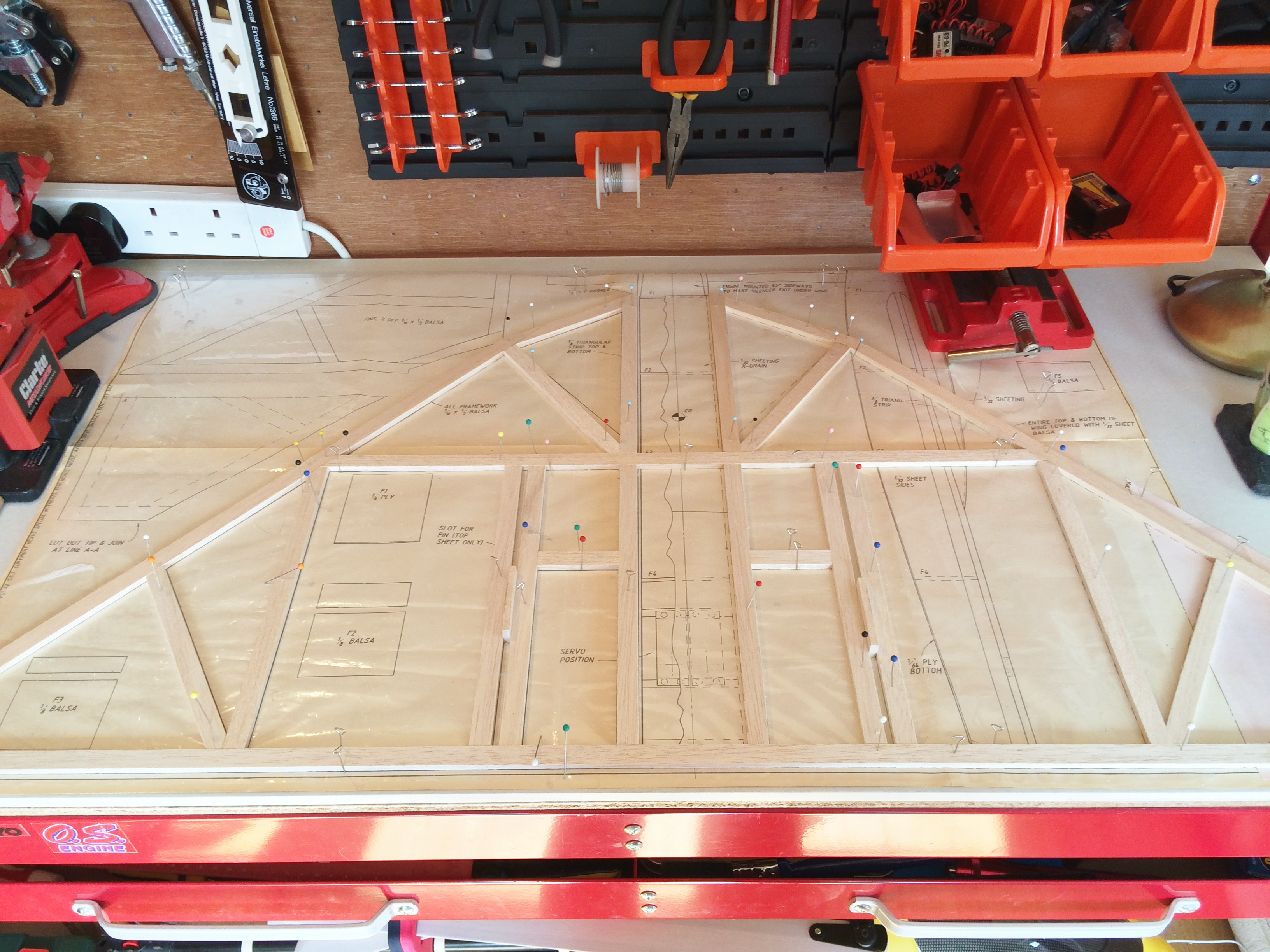
The wing frame is build up from lengths of 4.76mm x 12.7mm (3/16″ x 1/2″) medium grade balsa strip. Accurate joints are key here and I used white wood glue for strength.

Mini-Whizz

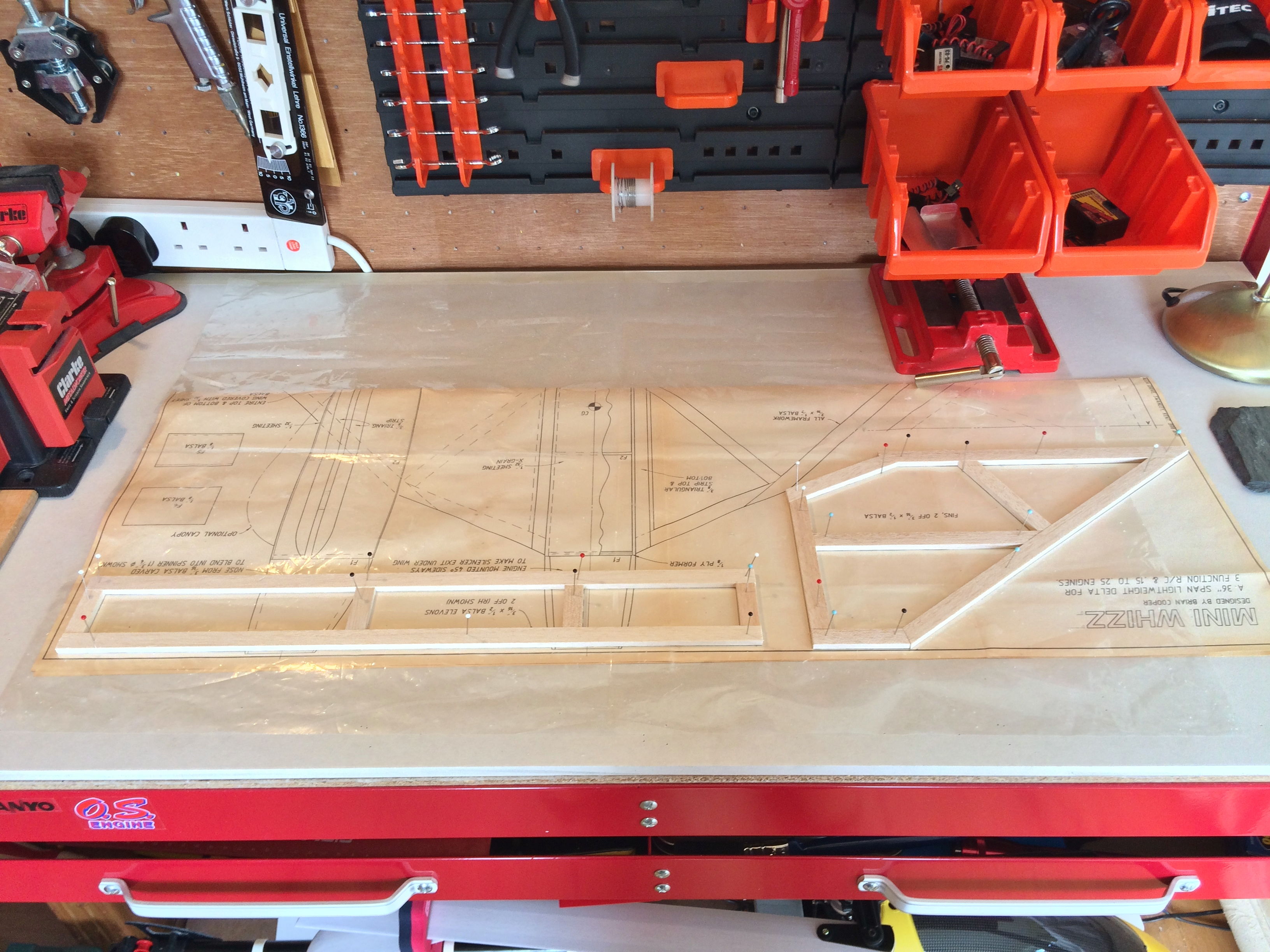
The elevons and fins are constructed as per the wing frame using 4.76mm x 12.7mm (3/16″ x 1/2″) medium grade balsa.

Mini-Whizz

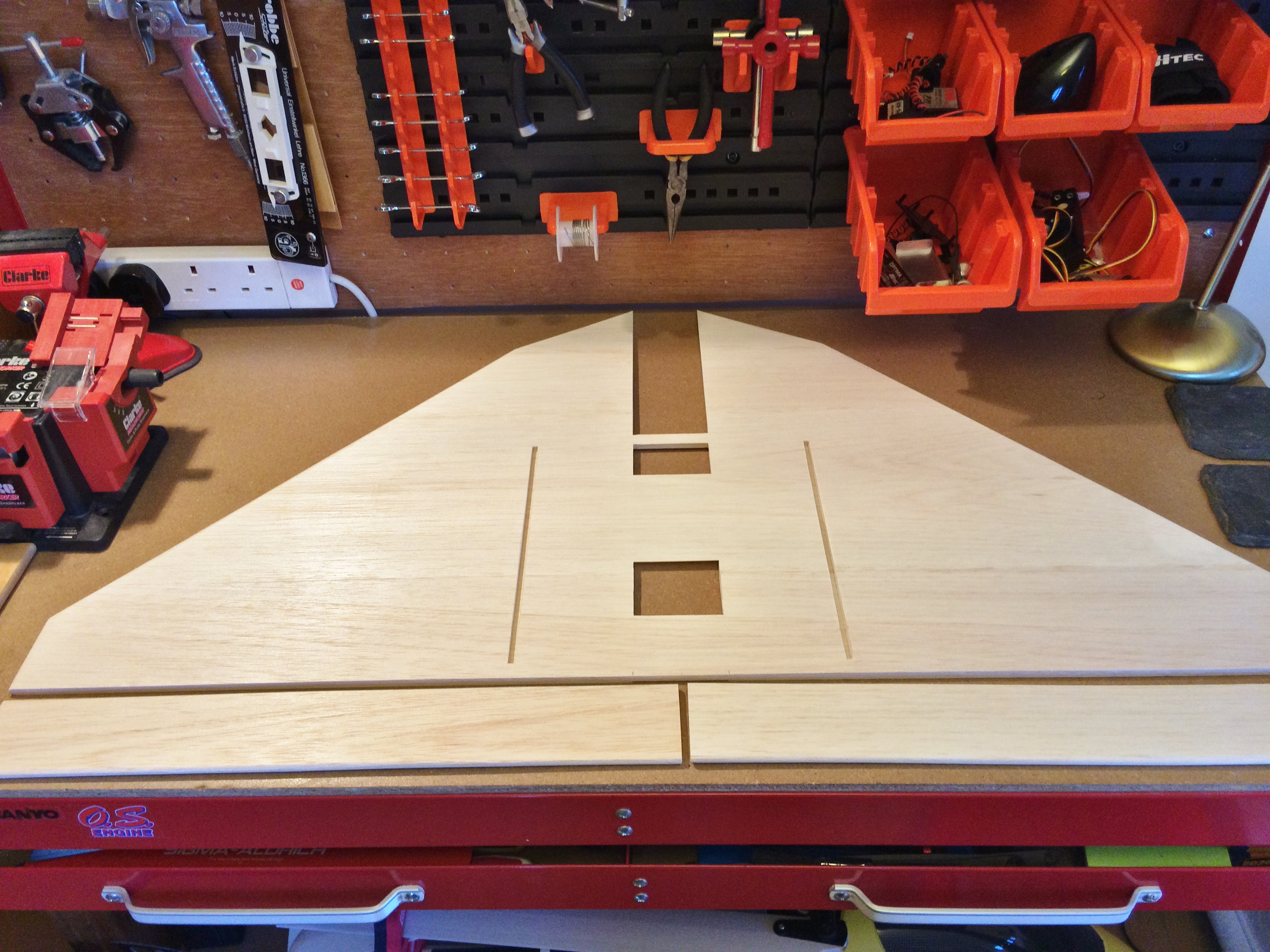
The wing is then sheeted (topside first) in 0.8mm (1/32) medium grade balsa sheet. I used cyanoacrylate to butt join the sheets together on a flat surface (remember to use polythene sheet between the balsa sheet and building board). The frame is then brushed with a coat of white glue, laid onto the sheet and weighed down.

Mini-Whizz

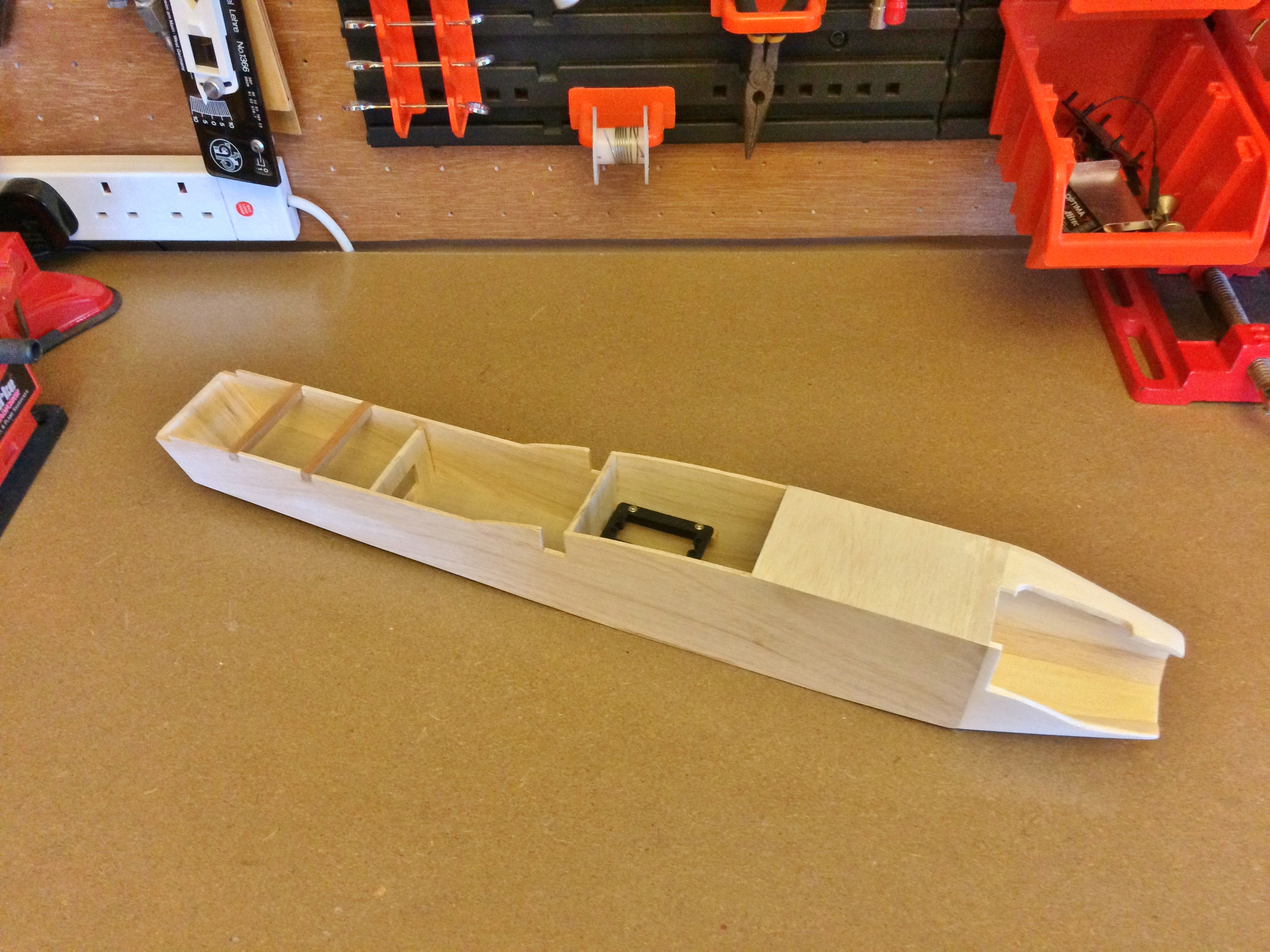
The fuselage is a simple box affair and the only component where you have to translate the parts from the plan to sheet wood. The formers, all rectangles, are easy to do. The fuselage sides were produced by overlaying the plan onto the wood and then marking the outline using a pin to prick into the wood every cm. Remove the plan and it is simply a case of joining up the dots with a pencil. I made use of a small Hitec servo tray, held with self-tapping screws onto lengths of hardwood strip glues onto either fuselage side.

Mini-Whizz

Dry assembly prior to covering

And that’s it – one simple delta that is fast, manoeuvrable and offers seemingly endless vertical climb-outs.  Hopefully I’ve inspired you to have a go at some balsa-bashing for your next project!

Shopping List:

Quantity Metric (mm) Imperial (Inches) Wood Grade
Balsa Sheet
1 3.2 x 75 x 915 1/8 x 3 x 36 Hard
2 2.4 x 75 x 915 3/32 x 3 x 36 Hard
1 4.5 x 75 x 915 3/16 x 3 x 36 Medium
10 0.8 x 75 x 915 1/32 x 4 x 36 Medium
Balsa Strip
12 4.5 x 12.5 x 915 3/16 x 1/2 x 36 Medium
Balsa Triangular Strip
1 9.5 x 9.5 x 915 3/8 x 3/8 x 36 Medium
Plywood Sheet
1 0.4 x 300 x 300 1/64 x 12 x 12 N/A
1 3 x 300 x 300 1/8 x 12 x 12 N/A
Hardware
1 110ml (4oz) fuel tank
2 M2 metal quick links
2 M2 x 228mm (5/64 x 9″) threaded pushrods
2 Pushrod swingkeepers
2 Medium size control horns
1 Spinner 45mm (1.3/4″)
1 Engine Mount (19-35 cu.ins) + bolts, captive nuts etc.
1 approx. 2.5 metres covering film (split this if using two tone)

Spring Cleaning Castor (How to clean a model engine)

There are many different methods described for cleaning models engines. I’ve tried them all with varying degrees of success…….

How to clean a model engine.

I really despise castor oil….. As soon as I stopped using fuel that contained castor, my engines suddenly became reliable and stayed clean both inside and out. While ‘back-in-the-day’ castor might have been the best oil available, synthetics have now greatly surpassed it. However the same old arguments still crop up from those who swear by the oil:

 “It’s more tolerant of a lean run”

 “It doesn’t lose viscosity if the engine becomes too hot”

 “It smells nicer coming from the exhaust”

Ok, I admit the last point could be true, but as for the first two I reply stating why should your engine ever be allowed to run too lean? If correctly set up that state of affairs shouldn’t ever happen. I suppose it could be argued that “if you use castor you then need castor”. As soon as your engine’s exterior varnishes over with sticky burnt on oil you will lose air cooling efficiency and rely upon castor oil’s high temp properties to keep your now overheating engine running (It will also need constant re-tuning as a result; an easy way to recognise poor castor oil users as they are forever adjusting the needles!).

Consequently if I buy a second hand engine that has clearly been subjected to castor torture it is immediately stripped down and given a comprehensive spring clean.   Over the years I have tried multiple methods for cleaning model engines and have summarised my findings here:

Cleaning agent Cost Disadvantages Result
Wire wool Negligible Evidence of a complete lack of mechanical sympathy? Hard work to do and removes not just the burnt on oil but also the protective anodising and/or sand blasted appearance. The engine is clean but left vulnerable to exterior corrosion and scratches. It will most likely require polishing to get any kind of aesthetically pleasing finish. Re-sale value is nil.
Ultra-sound sonication High Specialist equipment. Depends very much upon your equipment. I tried high-spec equipment in the laboratory at work. Does not harm the metal or finish but I found it did not remove all traces of exterior varnishing.
Dishwasher tablet in boiling water on a hob Negligible Due to the ionic properties of detergent the exterior anodising could darken – this is especially true if a steel pan is used or bolts/fixatives are washed at the same time. Bearings will be destroyed if washed. Requires no additional scrubbing with a brush and can be immediately re-assembled. The engine is cleaned very thoroughly but left darker than it went in. This won’t affect the running of the engine, but it might affect re-sale value.
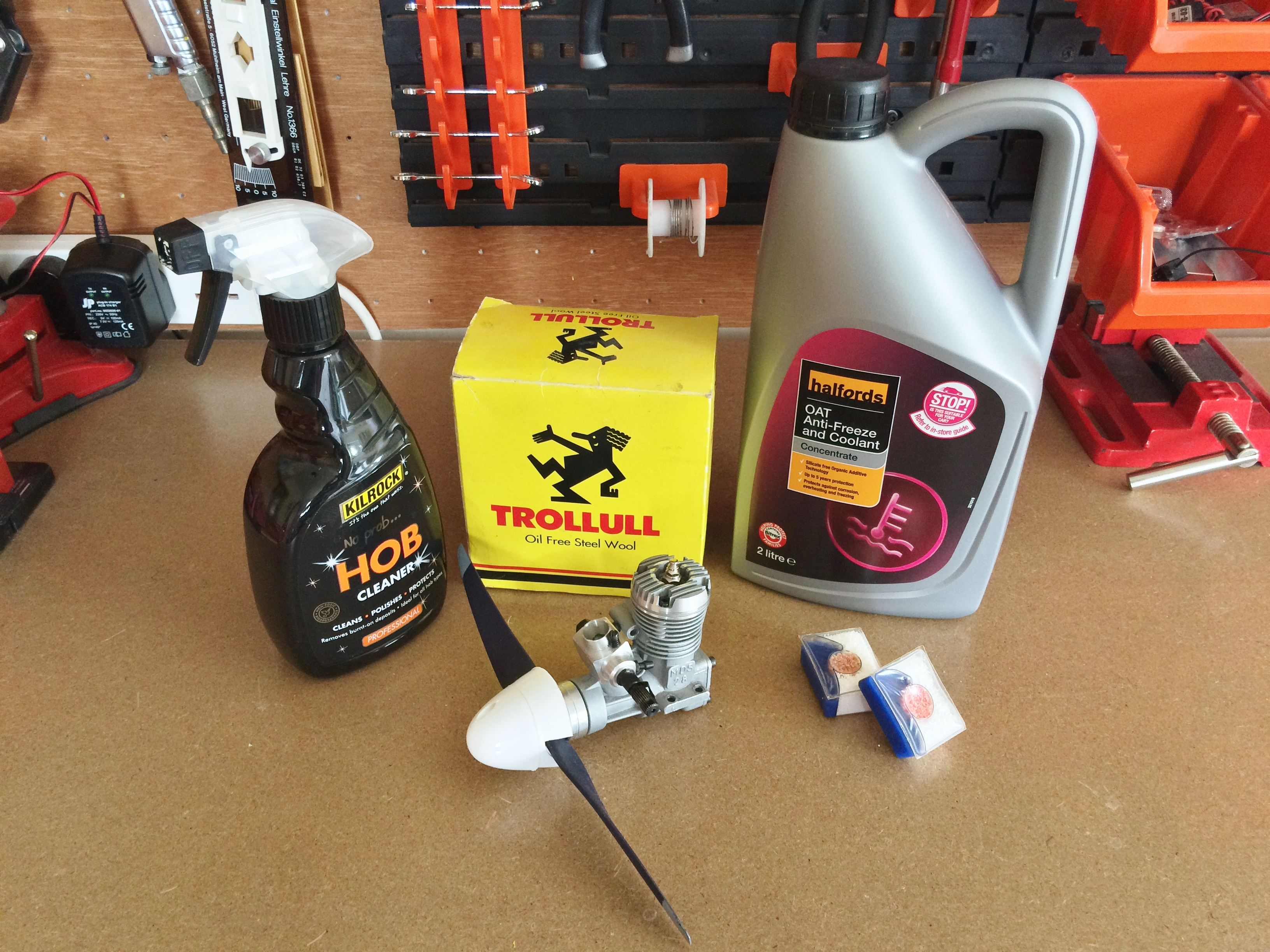
Antifreeze in a slow cooker Nominal Require a slow cooker that is then kept solely for hobby use. The dirt, if not removed in the cooker, is left very loose and comes off easily with a (soft plastic) scrubbing brush under running water.   Once rinsed, oiled and re-assembled the engine is left looking immaculate.
Power/Oven Cleaner (e.g. Dawn or Cillit Bang) Minimal Messy and caustic! Can be performed with the engine still in one piece. As per detergents above, the engine will be very clean but the anodising can darken.

Wire wool aside, I’m sure the detergent and ultra-sonication methods could be optimised in someone else’s hands, but I’ve settled on the antifreeze method and all my engines run perfectly following reassembly.

Antifreeze Model Engine Cleaning Method:

Step 1: Heat up the antifreeze.

NB: Before beginning, a word of caution regarding the coloured anodizing on Irvine engines (mainly their cylinder heads and black carburettors).  The colour is invariably stripped off in the cleaning process.  Anodizing on all other manufacturers I’ve cleaned is unaffected.  True anodizing is effectively an attractive and hard-wearing anodic applied layer which being aluminium oxide in nature shouldn’t be affected by anti-freeze (which of course is designed to work in aluminium engines all day long).  I can only summise that Irvine must use something else e.g. paint, or haven’t sealed correctly allowing the dye to leach and/or use a soluable dye.  This won’t impact on engine performance of course but might the resale value if it’s an old classic.

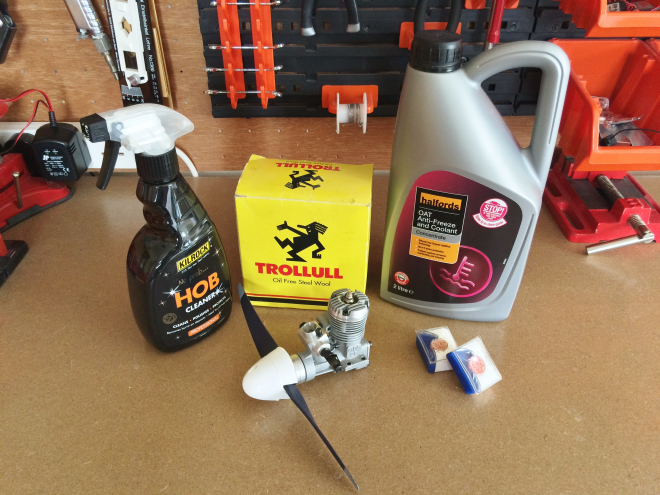
I use either Halfords red concentrate or Prestones antifreeze/coolant concentrate but anything will do the job providing – and this is important – it has corrosion inhibitors. This will ensure the aluminium anodising will not be harmed. If you have any concerns about food contamination, particularly if using a ceramic type, then I would urge on the side of caution and mark the cooker for hobby use only. A suitable slow cooker can be bought for less than £20 new from the likes of Argos so this need not be a particularly expensive sacrifice.
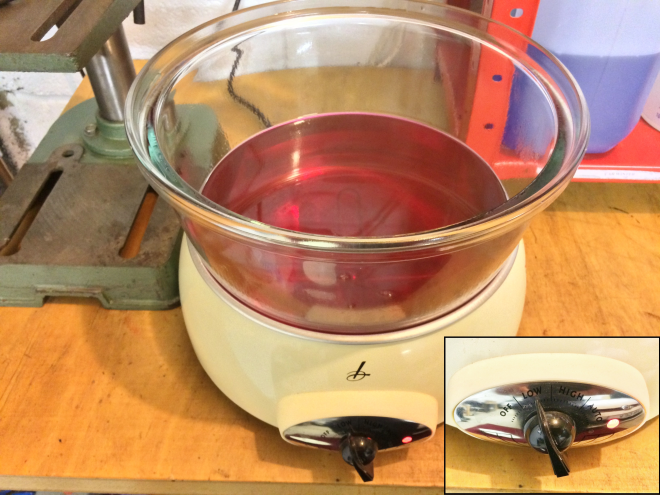
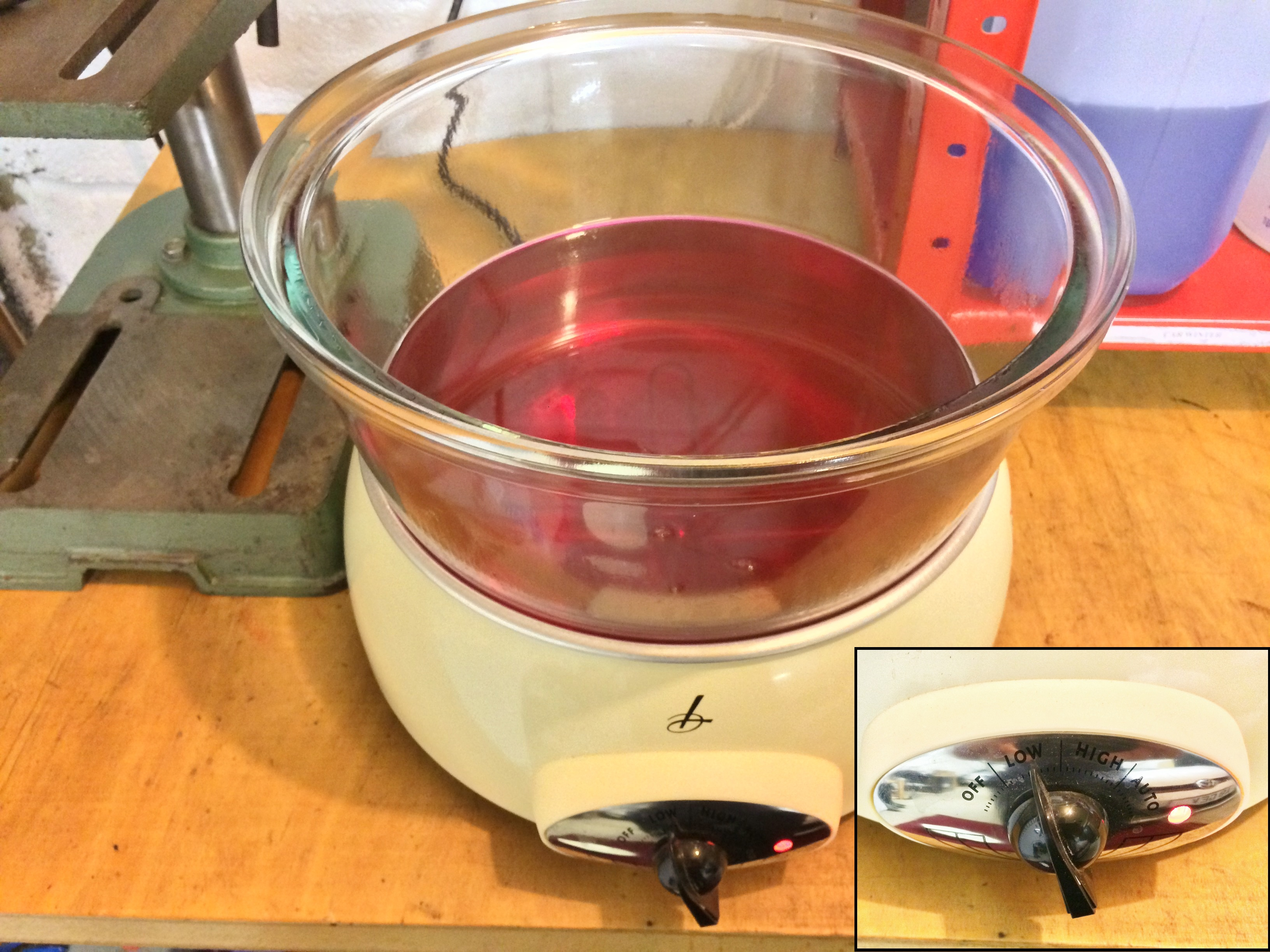
Simply pour in the antifreeze and switch on to a LOW setting in a ventilated environment. I’ve used both neat and 50/50 with water and have not noticed any difference to the cleaning performance.

Step 2: Dismantle the engine.

Getting those bearings and cylinder liner out need not be difficult. I’ve seen videos online of blow torches being used here and cringe! A blow torch flame will work, but keep in mind that at 1500 °C it is both dangerous and you are well above the 660 °C melting point of aluminium. Consequently it won’t take much to go too far and spoil the finish. A much simpler method is to turn on the oven to 240 °C (gas mark 9), place the parts on a baking tray and ‘cook’ for a couple of minutes. More often than not, if face down, you will hear the bearing/cylinder liner drop out on its own accord. If not then (wearing thick oven gloves!) a quick tap on a block of wood will do it. Don’t resort to hammers, etc. If things won’t budge try increasing the oven temp first or leave it in for a bit longer. If a pair of pliers really is required then use a rag between the blades to ensure nothing is scratched. If the engine is hot enough the liner should slide out easily. Always make a note of any marks/guides present prior to dismantling so things go back together in the right direction. It is also worth pointing out here that cylinder head bolts should always be loosened/tightened in opposite pairs to even out the stress and prevent any distortion.

You will need a puller tool to remove the prop driver on most engines (I use this one from Machine Mart).

If heat doesn’t assist in removing those small bearings supporting the cam shaft deep inside 4 stroke engines then they are best removed using the pressed candle wax method (plenty of youtube videos on this).
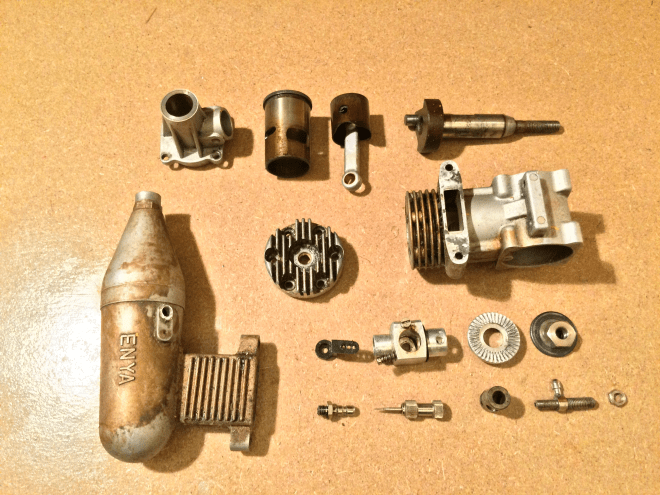
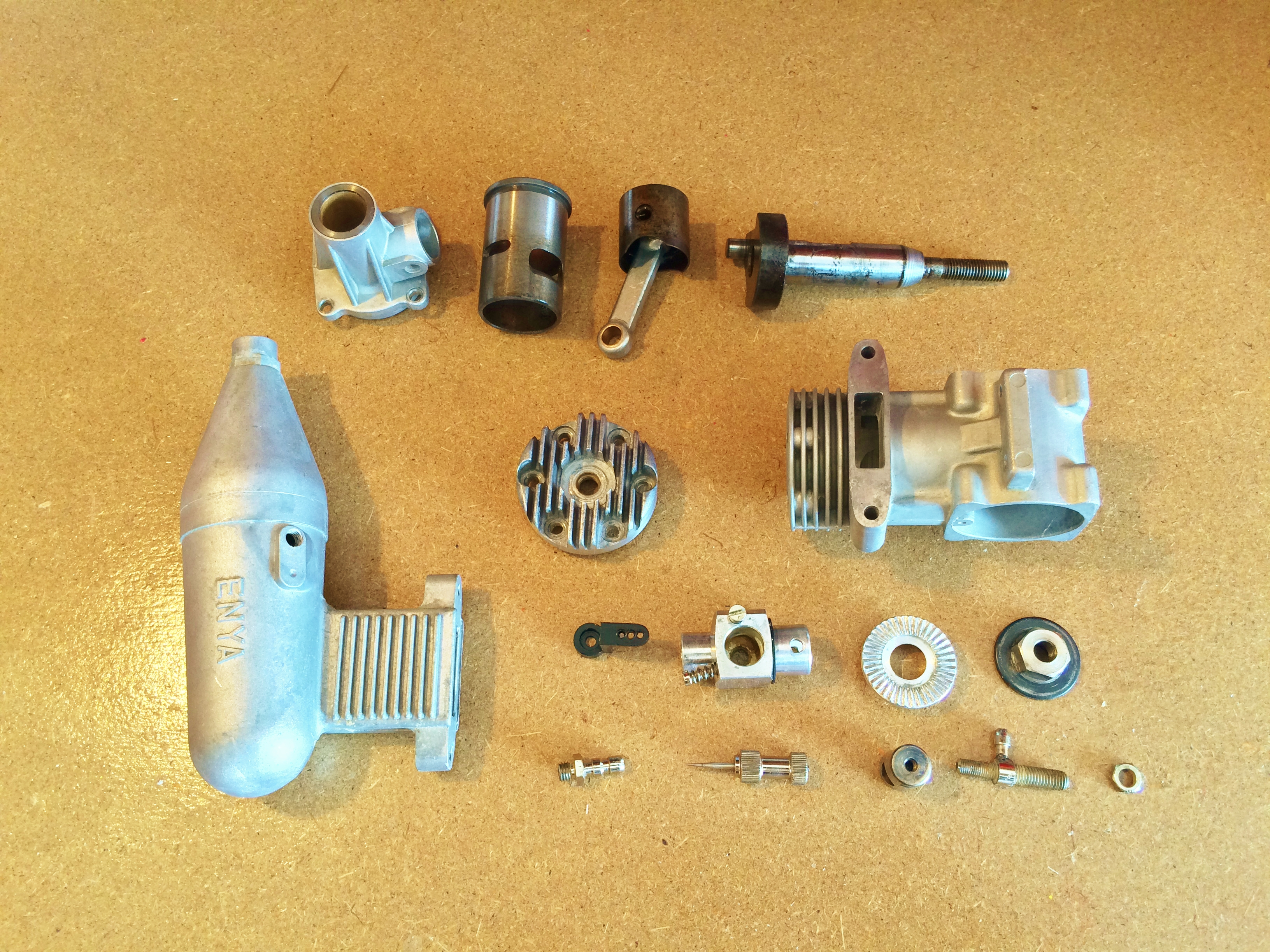
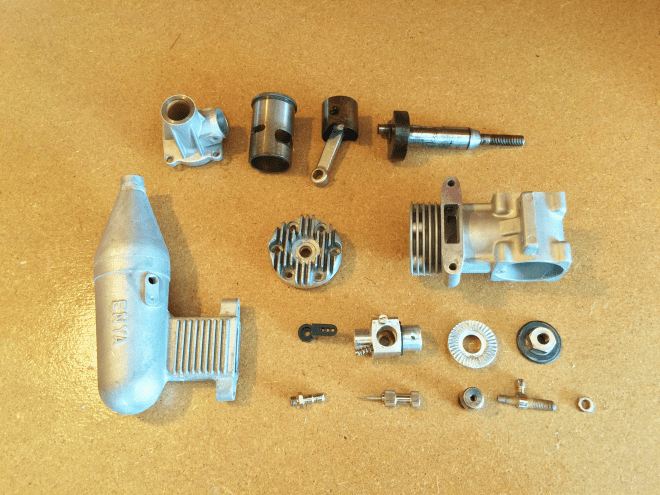
Example 1: Here we see the components of a very dirty second-hand Enya SS40 laid out following removal of the cylinder liner in the oven. I leave the conrod attached to the piston when cleaning my engines. This particular engine uses a plain bronze bushing so there are no ball bearings to contend with, but where present now is a good time to check if they need replacing. Most engines use a sealed front and an unsealed rear. A set of new bearings will cost around £5 from a bearing specialist like RCbearings. Alternatively try a cycle shop.

Step 3: Soak the engine parts.

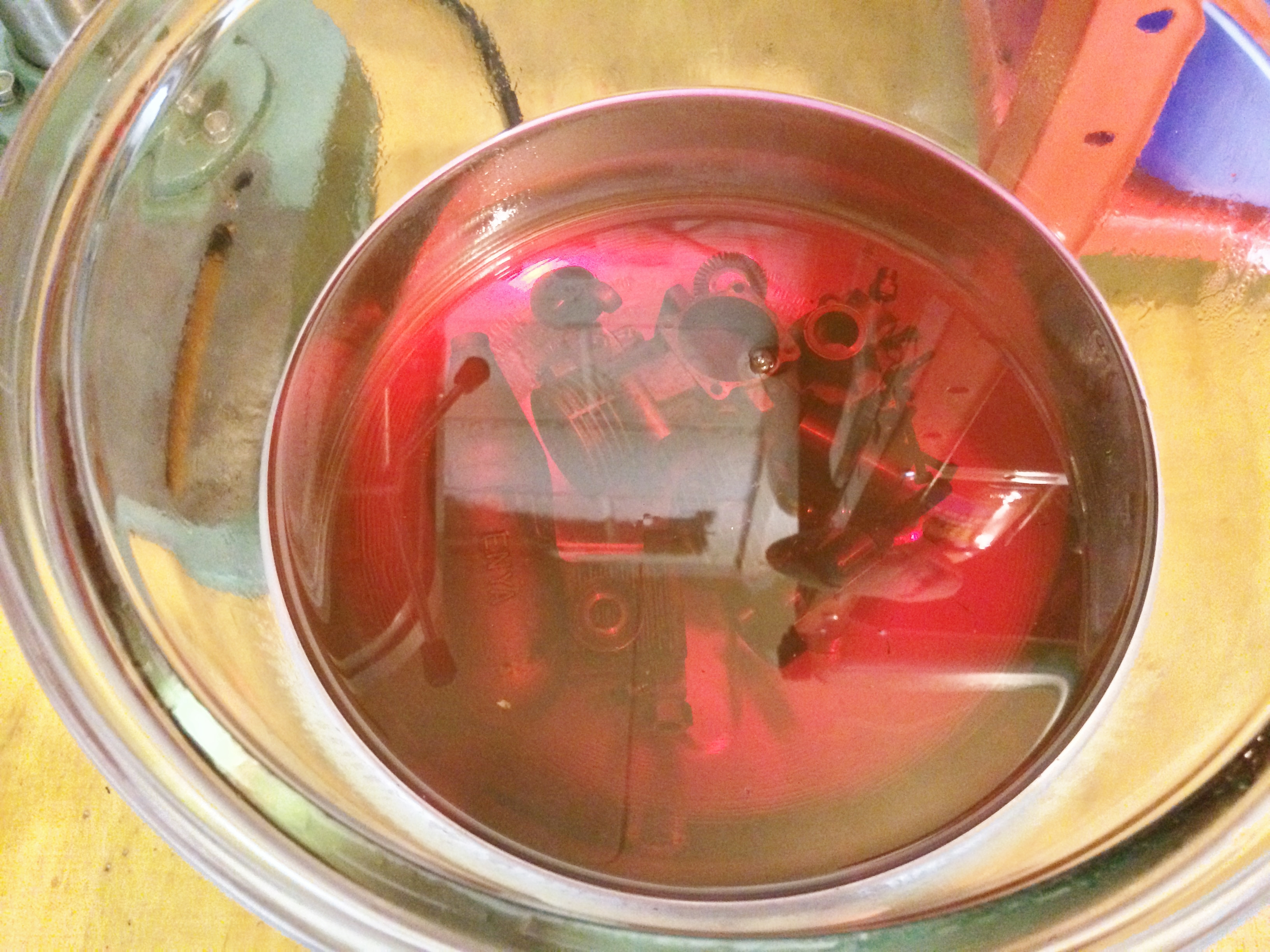
Add the parts to the slow cooker. Ensure all parts are completely submerged or you may get a tide line mark. Add a little water if needed to raise the level if required. Place the lid on to prevent evaporation and leave covered on a LOW setting overnight. I’ve often found the grime is loosened after only a few hours but everything is quite safe left for several days if required (in a well ventilated area). It is quite safe when using antifreeze to soak the steel and aluminium parts together. Plastic parts are also quite safe, as are ball bearings. I have even soaked an engine intact (which is useful for four strokes) – just ensure when rinsing afterwards that you liberally squirt WD40 into the engine to expel any water and then re-lubricate with afterrun/machine oil (Water Displacement 40 is NOT a lubricant in itself!).
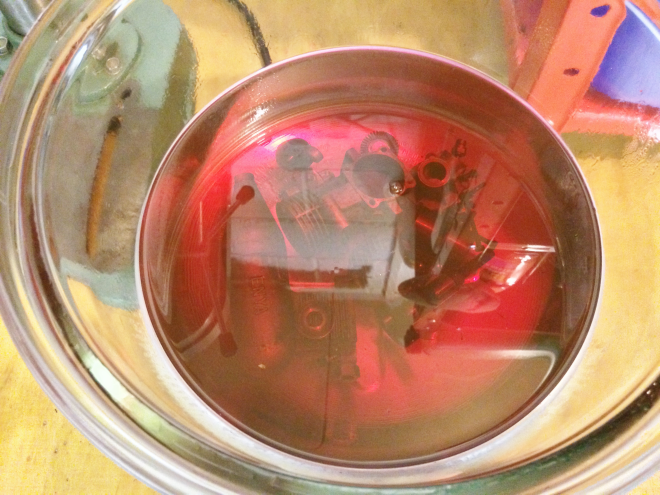
Ensure all parts are completely submerged. Steel, aluminium and plastic parts can all be soaked together with no risk of harm or discolouration.

Step 4: Final cleaning and reassembly.

Once ready, take out the parts (wear rubber gloves at all times so as not to scald yourself) and scrub with a stiff brush and soap under hot water. The dirt, if not already gone will come away very easily. The hot water just ensures everything dries quickly and I also place the parts on a radiator or oven shelf at 50 °C to dry. Coat any steel parts and bolts in WD40 immediately after washing or they will develop a surface rust.  Bearings if not to be replaced should be rinsed in WD40 then soaked in after-run oil. Check needle jets are clear of obstructions.

Reassembly is simply a case of reserve order to dismantling, using the oven to heat things up again. Use the exploded diagram in the instruction booklet as a reference – particularly with regard to the direction of the cylinder liner and piston. Once assembled, lubricate with afterrun/machine oil and then sit back and admire your handiwork.
Enya SS40

Parts all cleaned, lubricated and ready for assembly.
Enya SS40

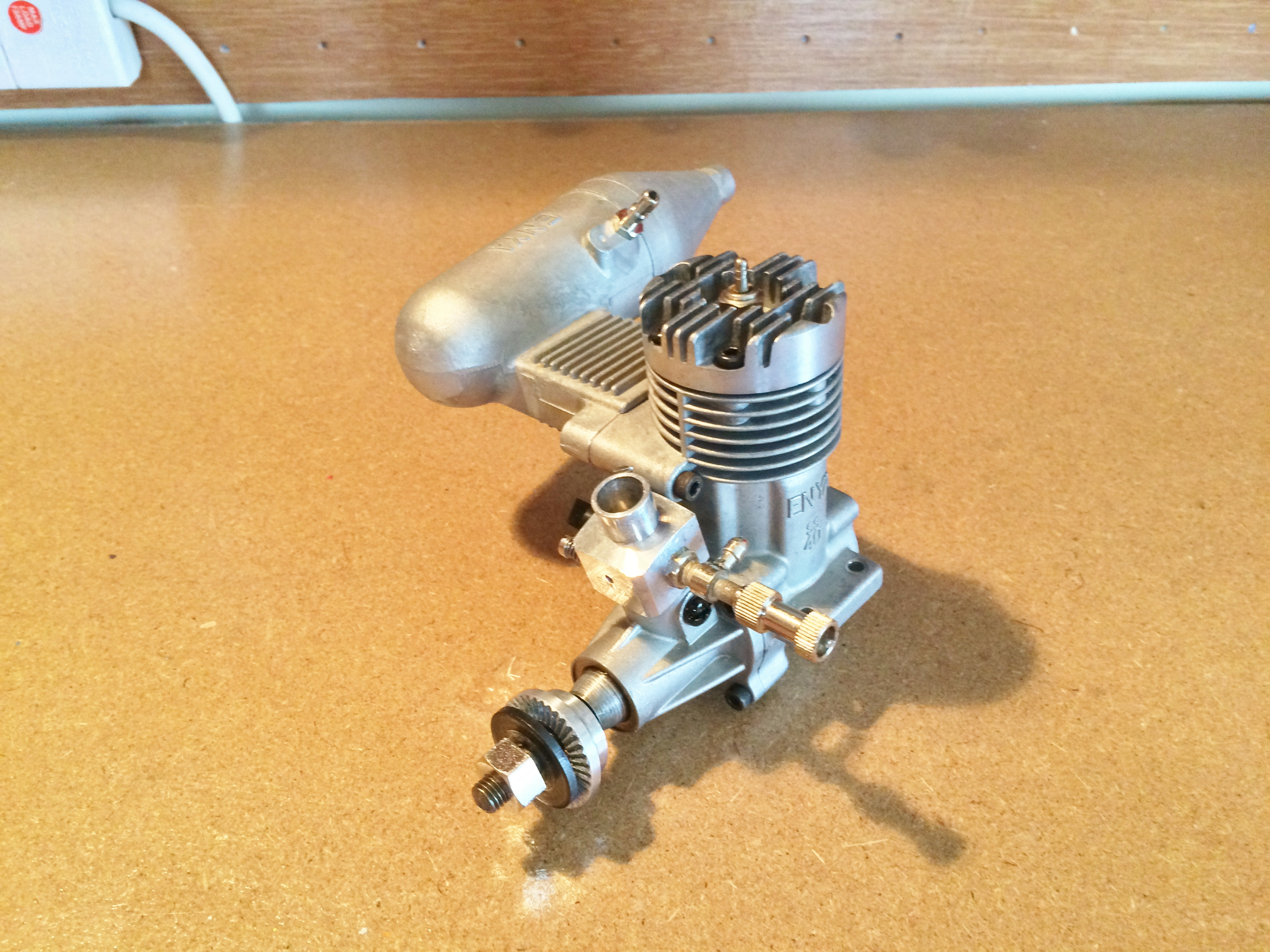
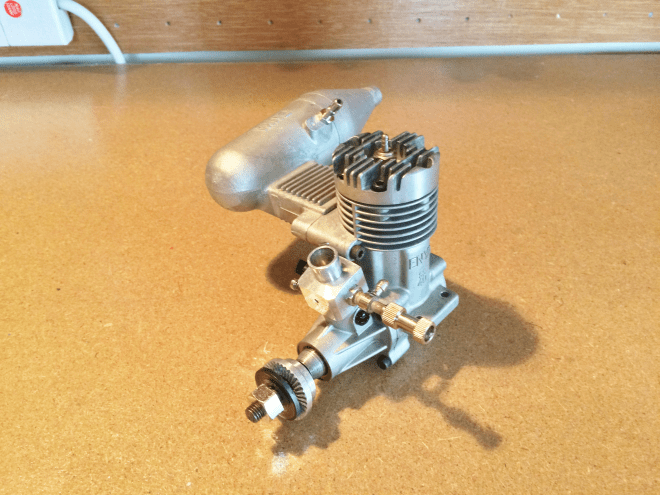
Reassembled and ready for action.

Enya SS40

And here she is purring like a kitten on Optimix fuel.  On a fully synthetic fuel like Optifuel the engine will stay looking like this.
OS52FS 1

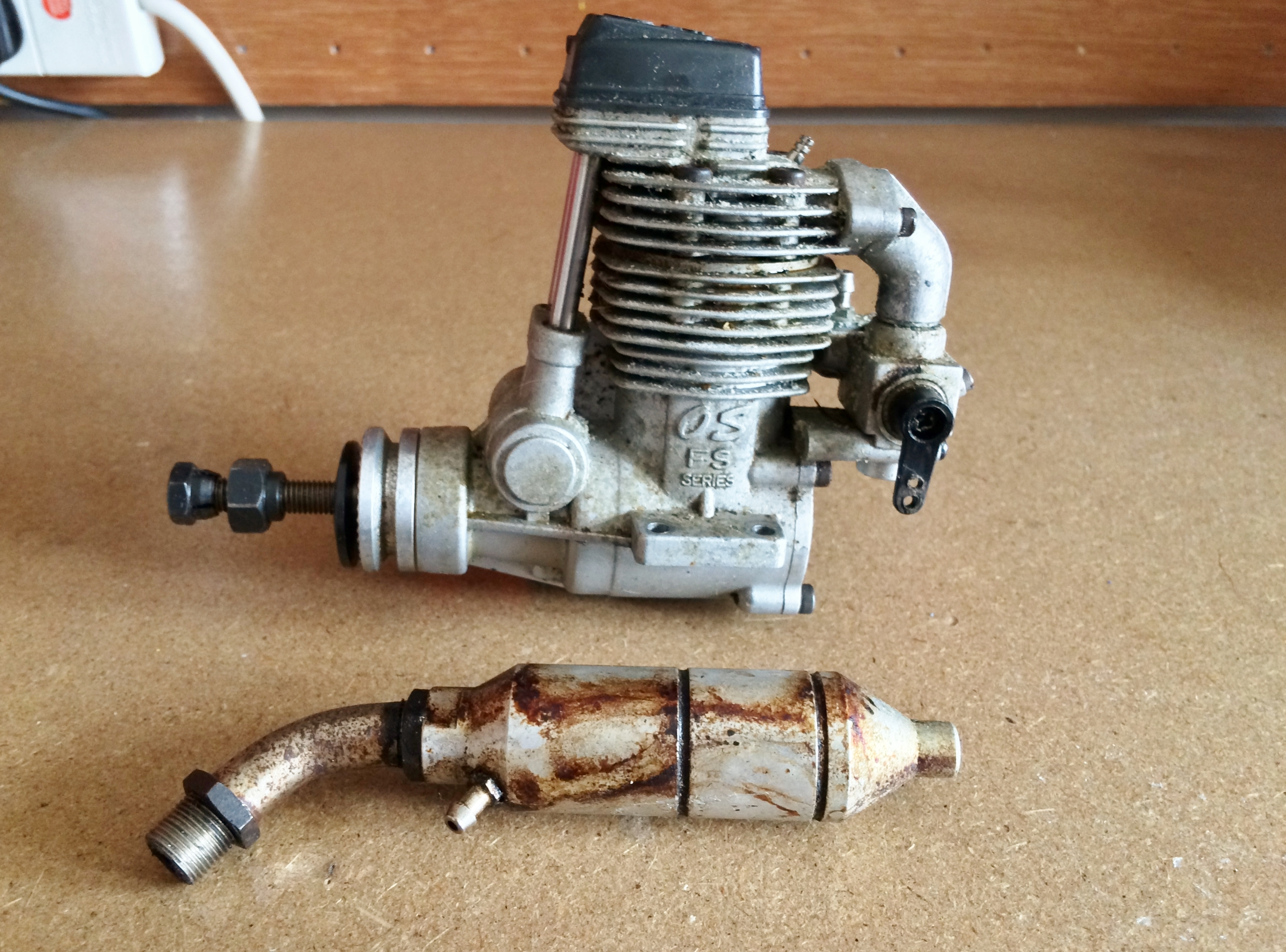
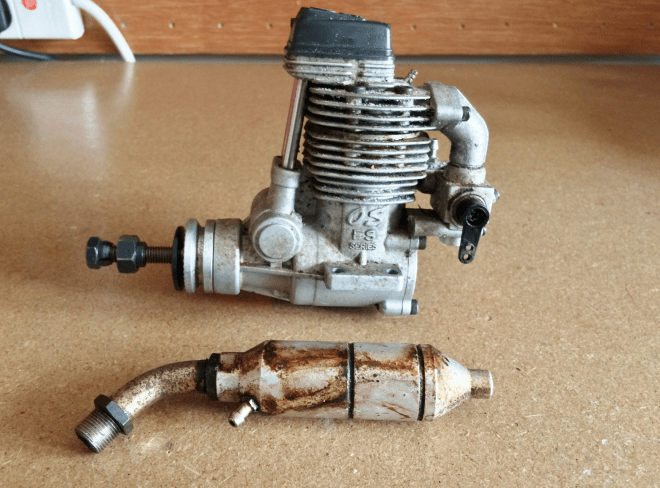
Example 2: Here, and looking very sorry for itself, is an OS FS52 Surpass; a recent eBay purchase. Aside from clear evidence of castor oil in the fuel this engine has evidently been left to mould in a damp and dusty garage. While I can (just about) understand an owner failing to look after a common 2-stroke, when it comes to hundreds of pounds worth of OS 4 stroke it ceases to be amusing…… In this case the abuse has resulted in corrosion to the surface anodising, the valves were black with burnt on carbon deposits and the rockers were struggling to move within gummed up castor. The only good thing I could find was that some after-run oil must have been added at some point as the bearings were clean. If it wasn’t for the reasonable price I had paid I would seriously have considered asking for my money back!
OS52FS 2

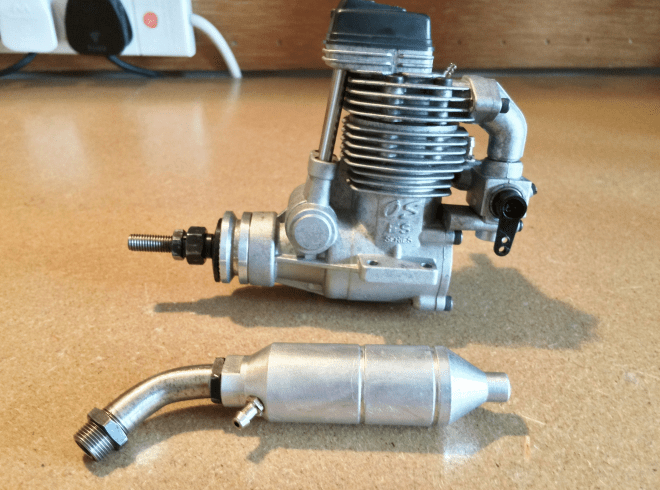
Unfortunately no amount of cleaning will remove staining to the anodizing caused by corrosion. Still a 100% improvement in appearance from when I received it!
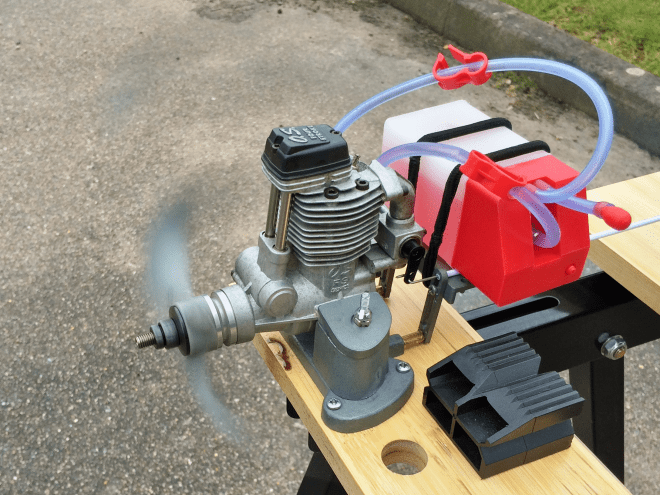
OS52FS 3

All’s well that ends well, she sounds oh so sweet on a 12×6 prop.
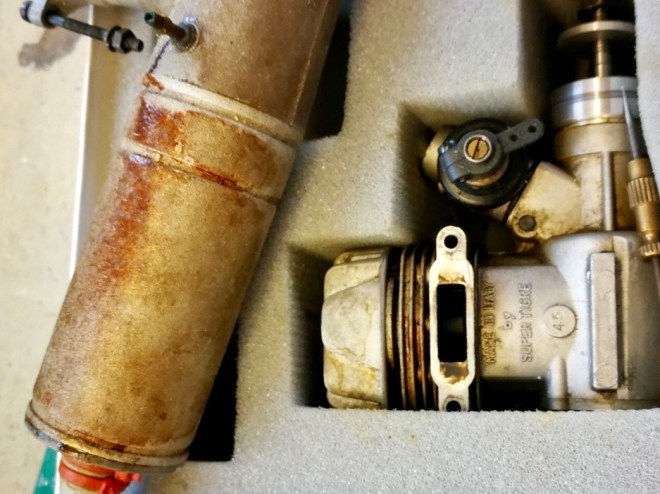
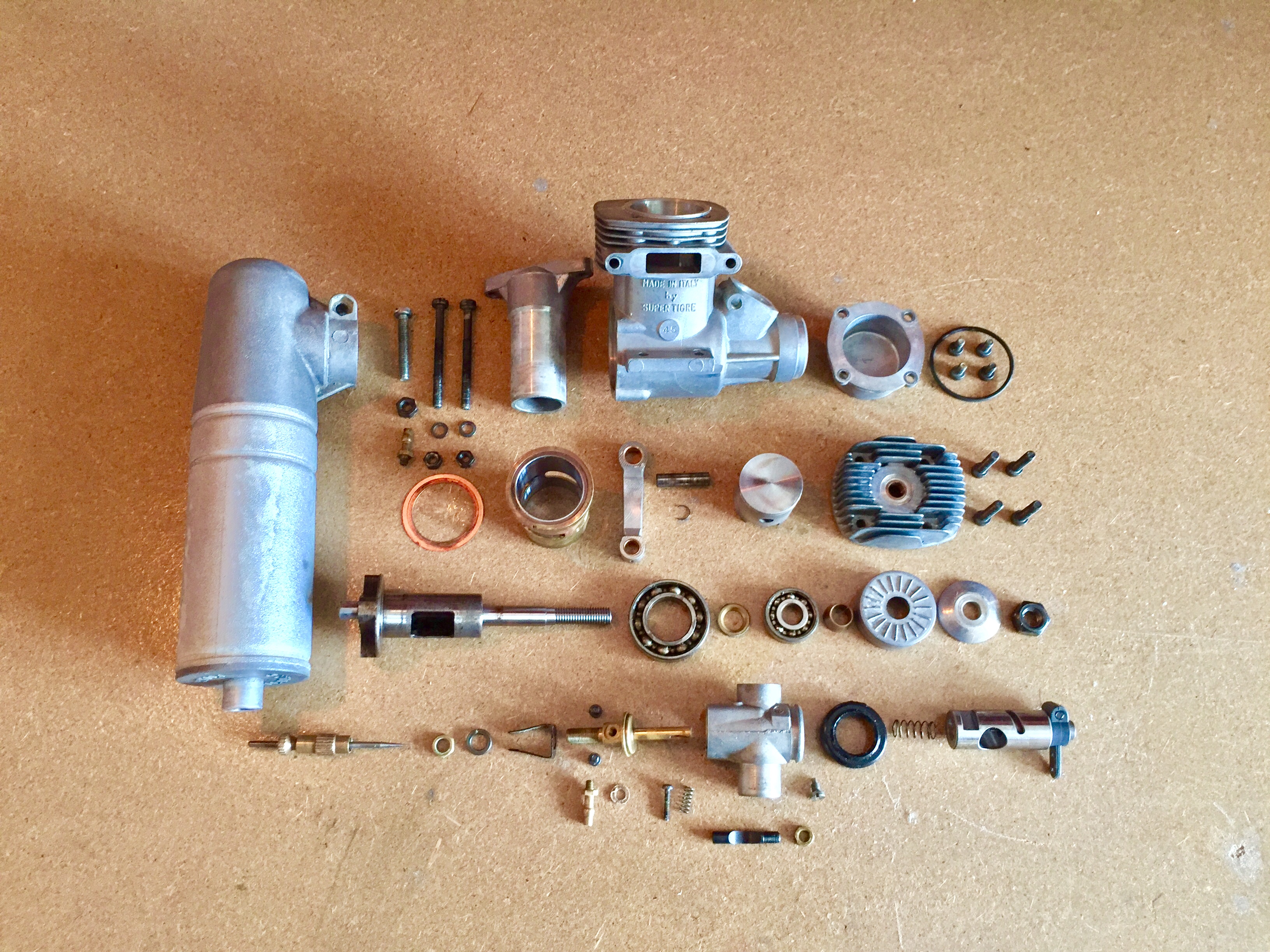
GS45 1

Example 3: A sticky Super Tigre GS45. This is no way to treat an Italian thoroughbred!
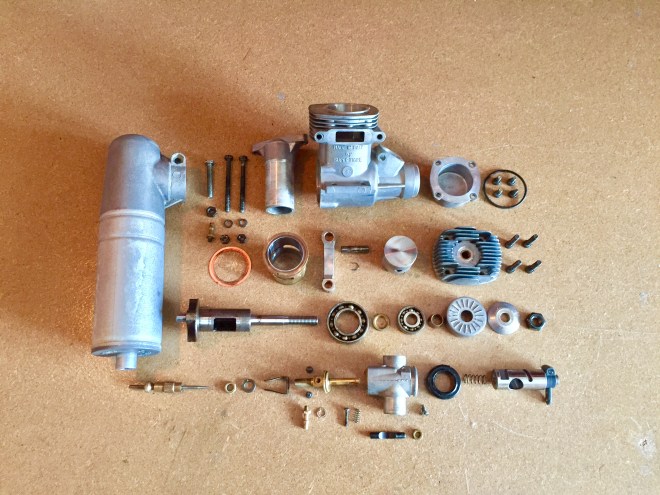
GS45 2

Parts gleaming and ready for reassembly.
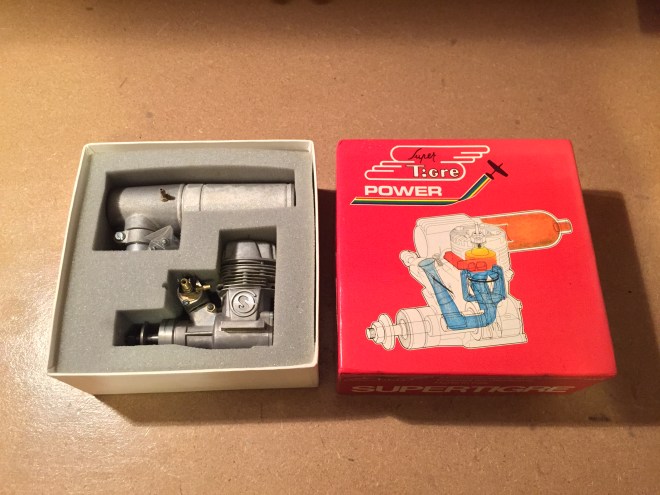
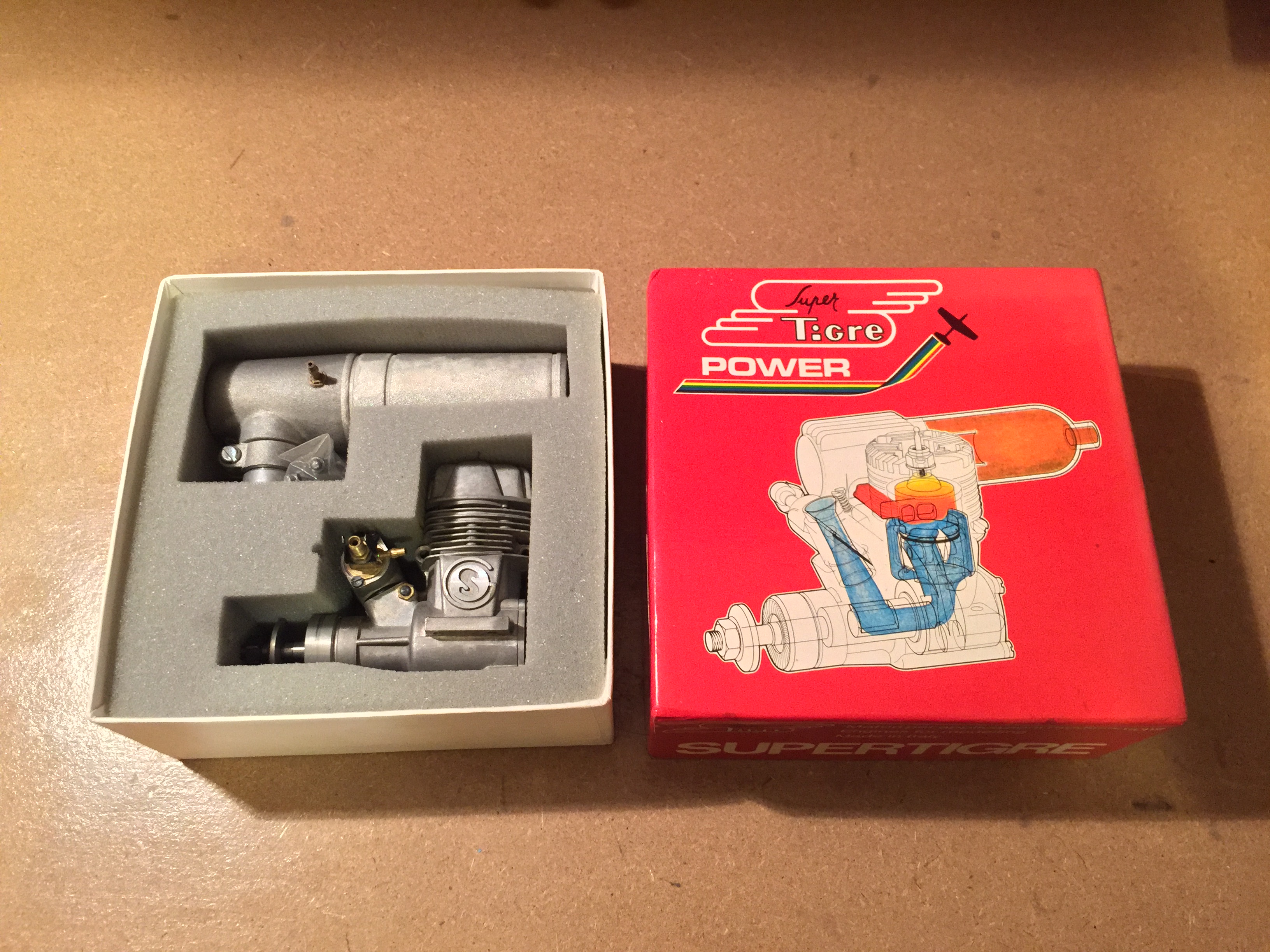
GS45 3

Boxed up and looking as good as new. On synthetic based fuel it will stay looking this way.

Under the Cover

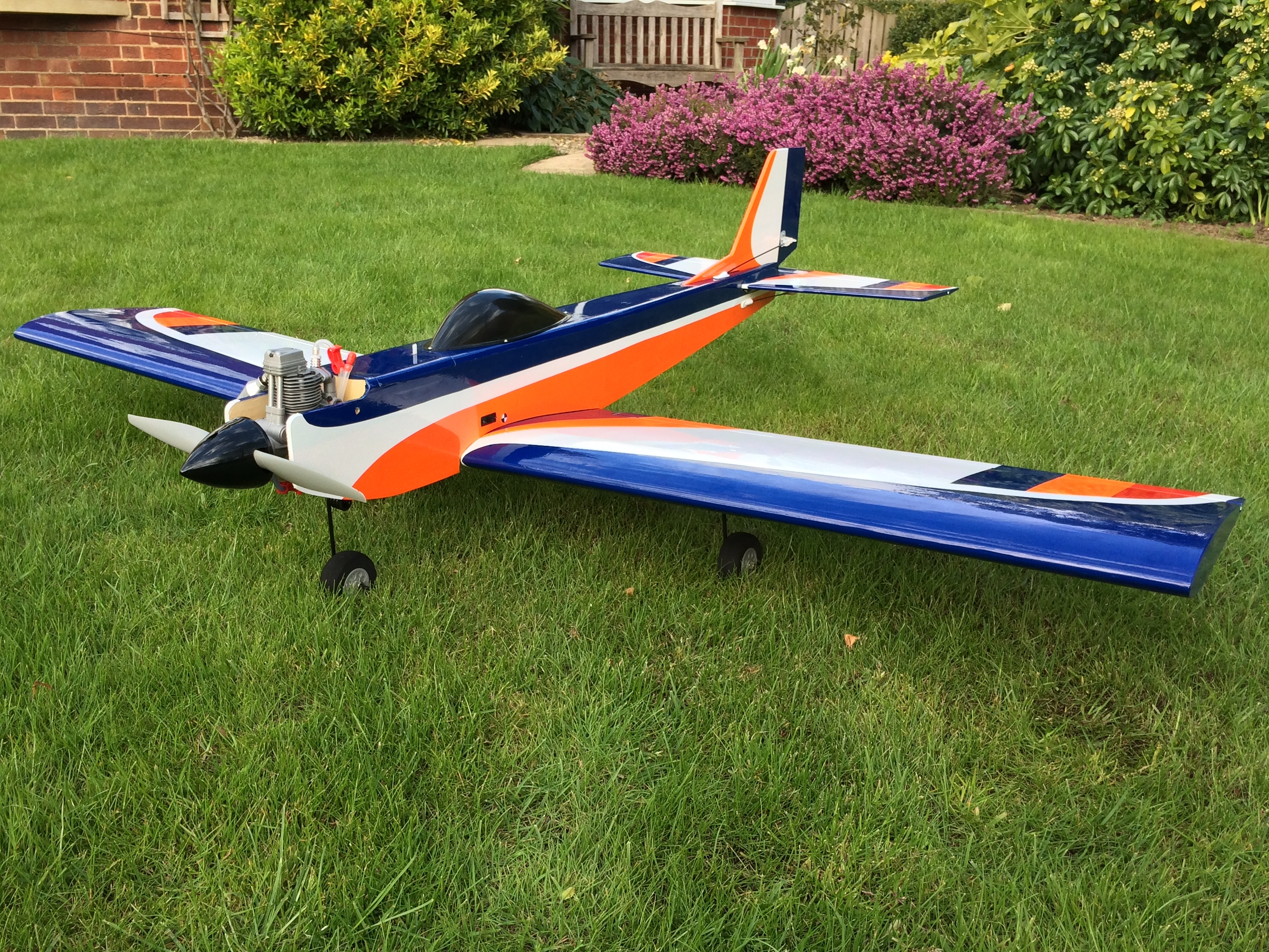
HobbyKing Maestro 46

My HobbyKing Maestro 46

Fixing the undercarriage on a HobbyKing Maestro 46:

If you fly your Maestro from a grass strip you will, like me, quickly find the main undercarriage legs get a bit wobbly. The hardwood blocks that holds the main legs are not substantial and when assembling the model I was a little sceptical that it would be up to the job. Well, as you will see I was only half right.
The purpose of this post is twofold. Primarily it’s a simple picture walkthrough of how I addressed fixing the wings on my model. Second it’s to show what is under the cover to those considering buying one but are put off my fears of a flimsy undercarriage – let’s face it 99% of model flying clubs in the UK are grass.

When assembling my Maestro it was quickly evident that this model is light. Engine bulkhead aside, there is not a single part that has not been milled down to save weight. Even the front hatch, a component I would have sanded smooth from solid balsa sheet, is constructed from no less than 7 individual CNC-lightened components to produce a ‘built-up structure’. Clearly this has been done to make the model a 2-in-1 and cater for those who choose to power their model with electric. For nitro, low weight is not going to do any harm – just remember to make sure that prop is balanced and tracking straight as there is not much superfluous material to absorb any engine related vibration. Turning to the wing I couldn’t help but be slightly suspicious of the main undercarriage blocks. They seemed small and just how far had efforts to keep the weight down gone? Had balsa been substituted for plywood on the ribs either side of the block? How thick were the ribs? Had glue been kept to the barest minimum? I’ve owned models in the past where built up wings and wing-mounted undercarriage blocks are not always a successful combination, particularly when flying off grass. As such I tend to steer toward tail-dragger type models. An additional snag with an ARTF is that, unless you peel back the covering, there is just no way of knowing what lurks under that film.

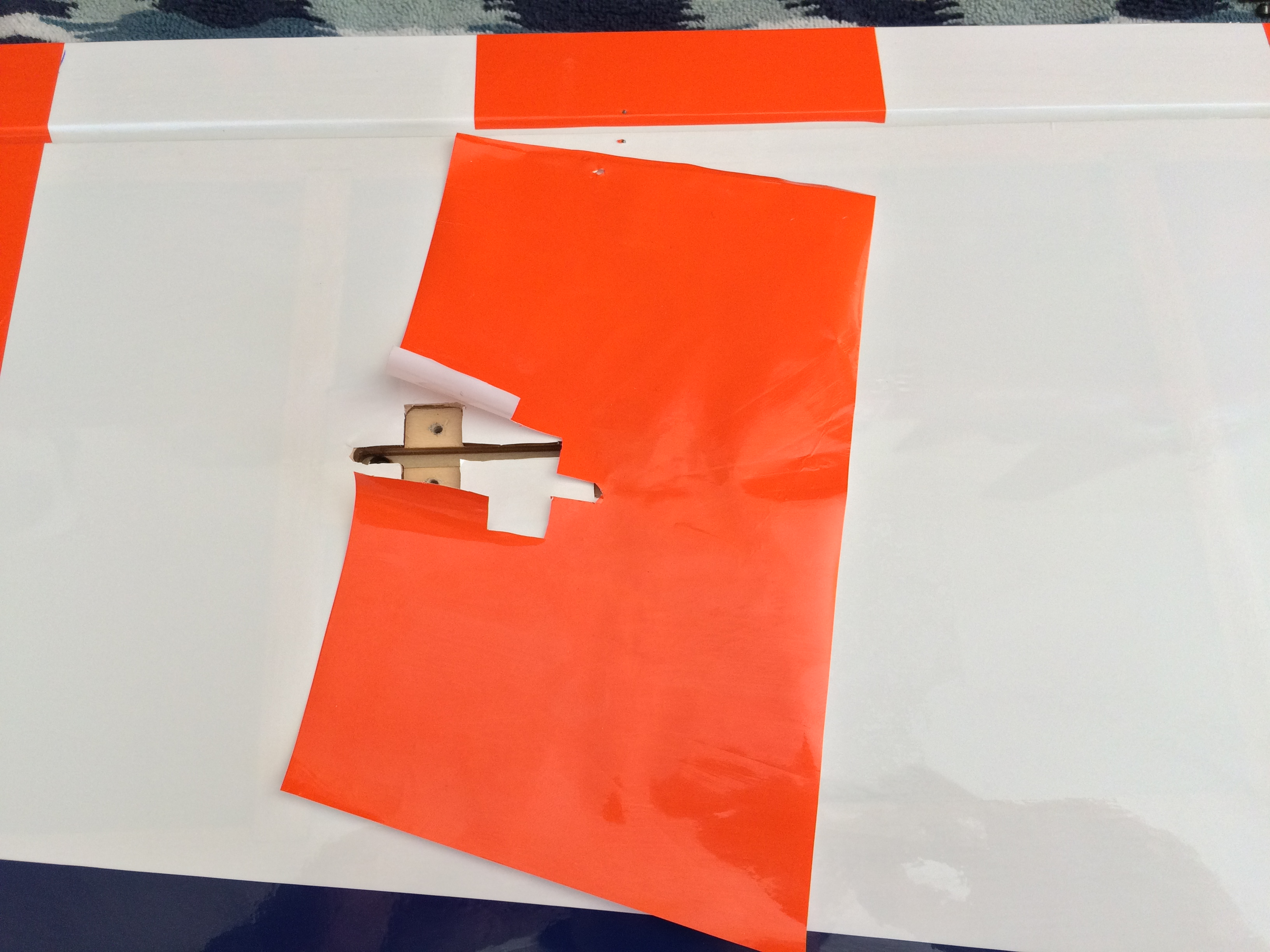
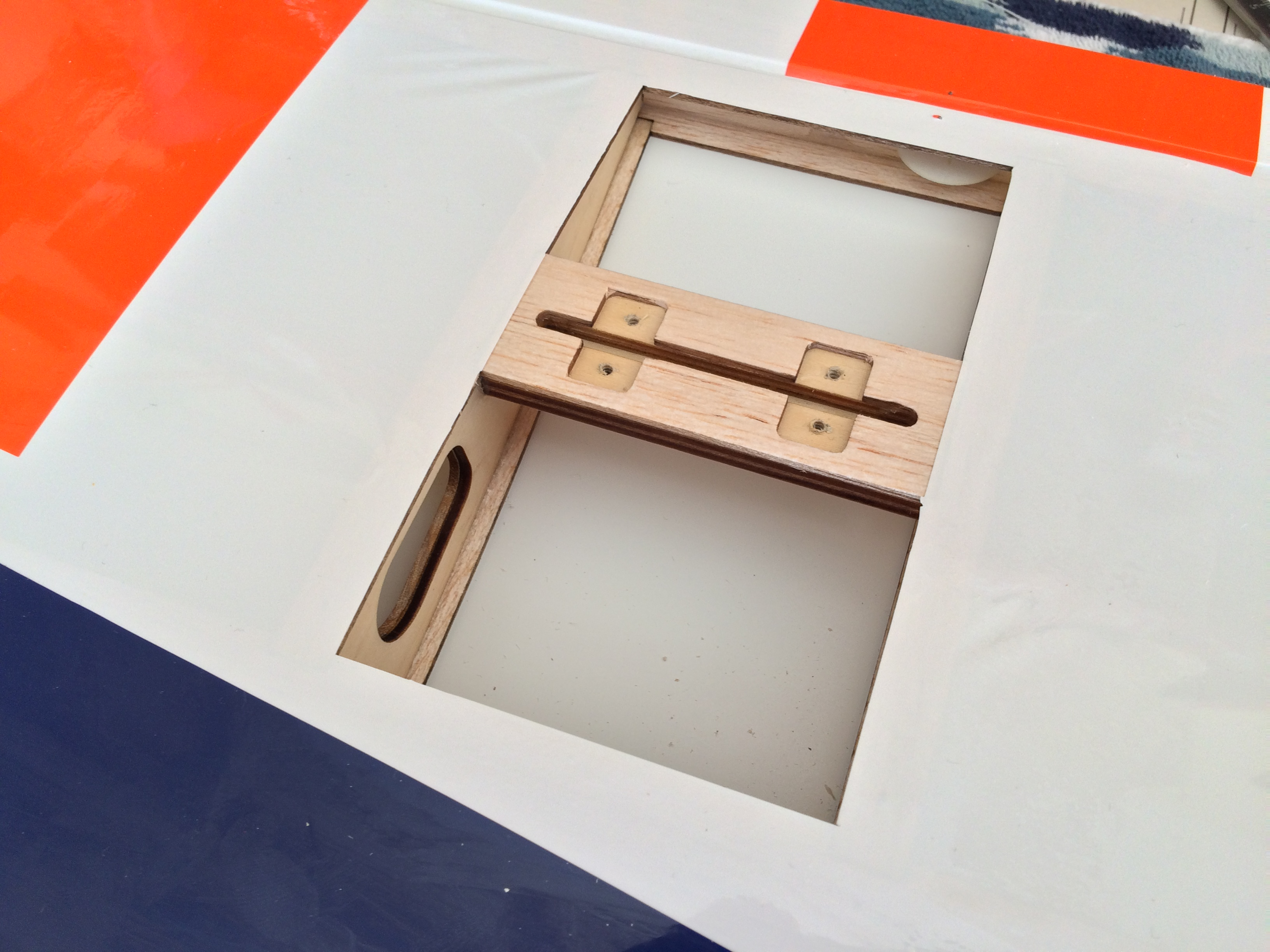
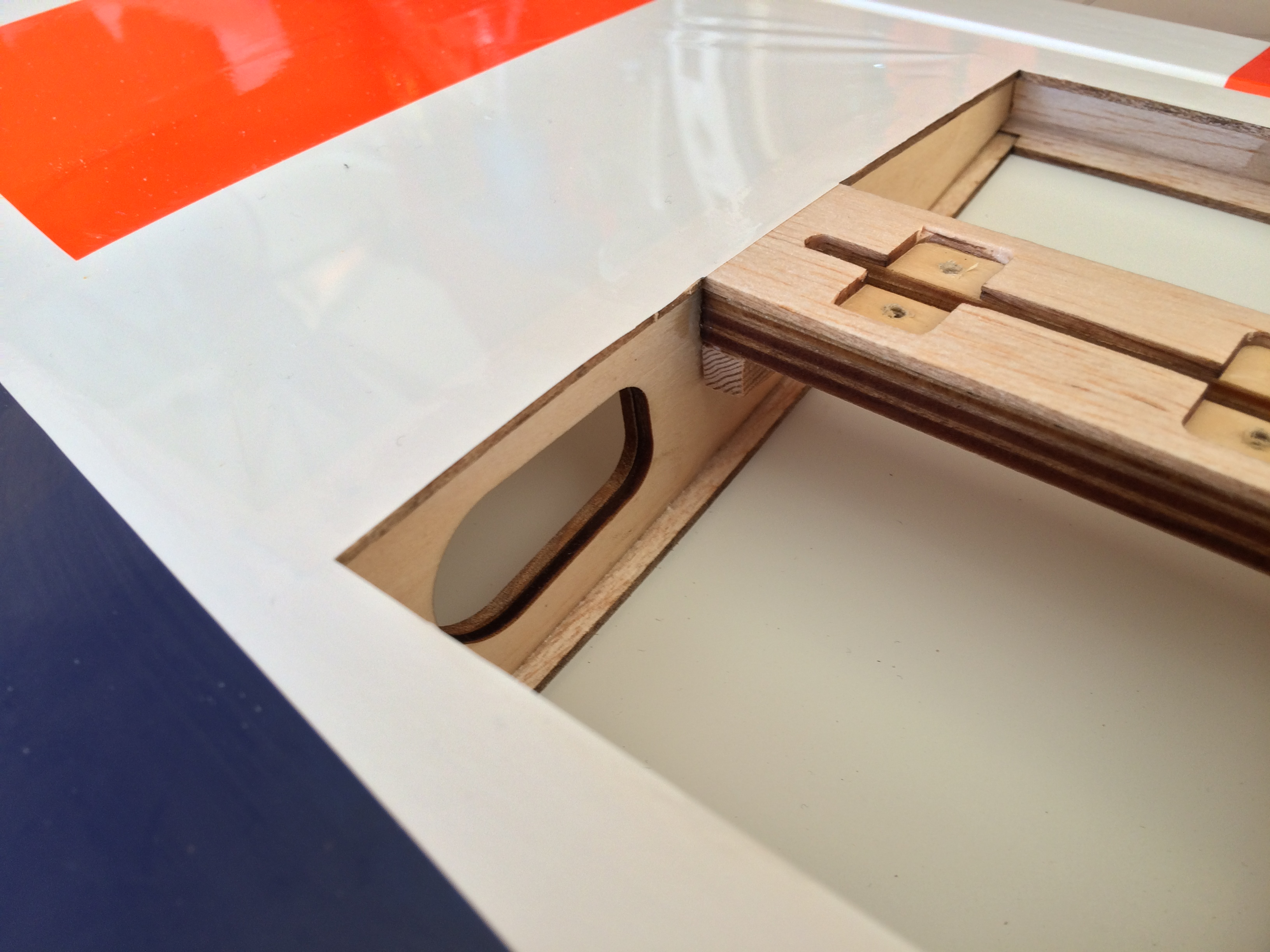
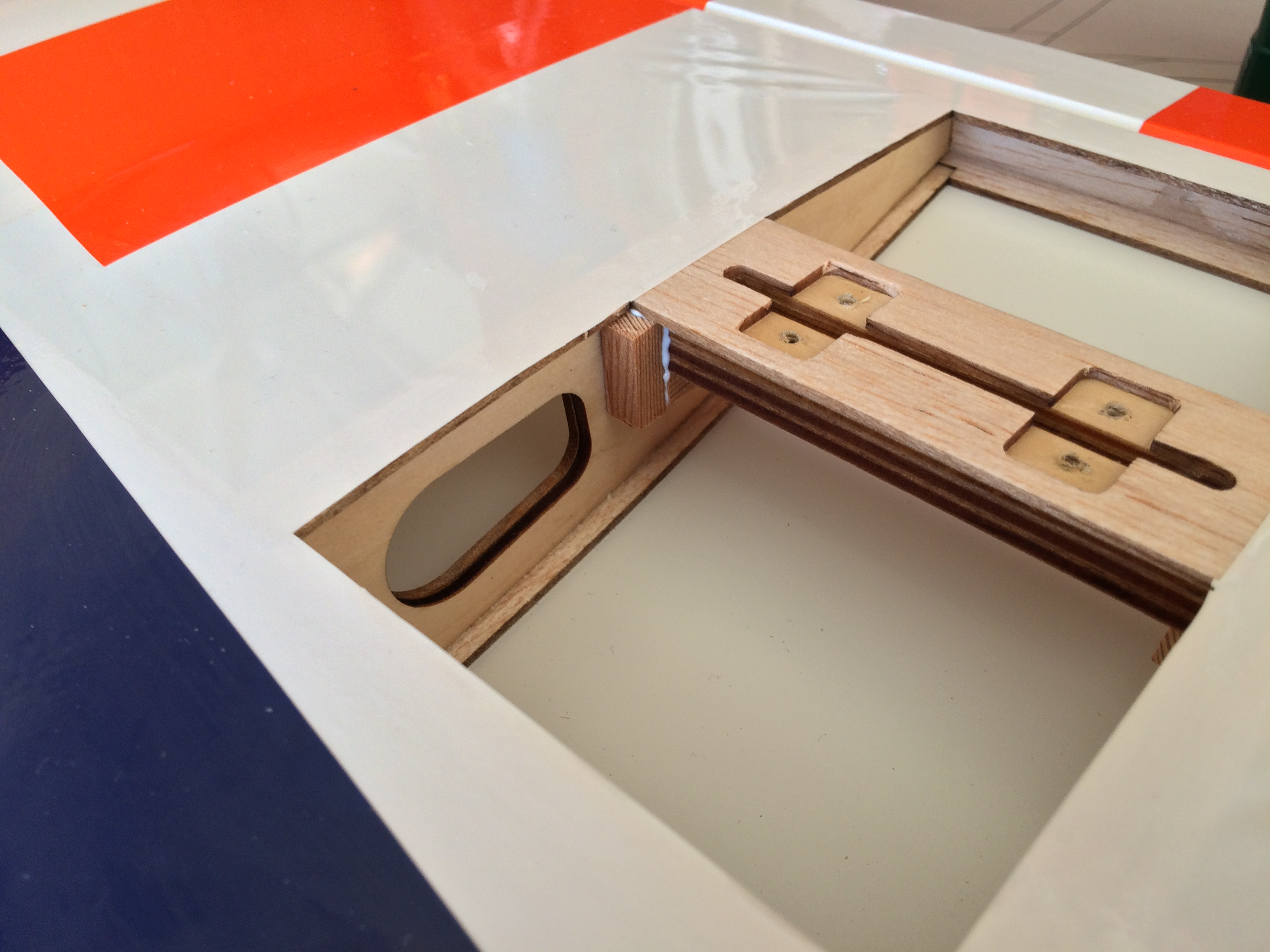
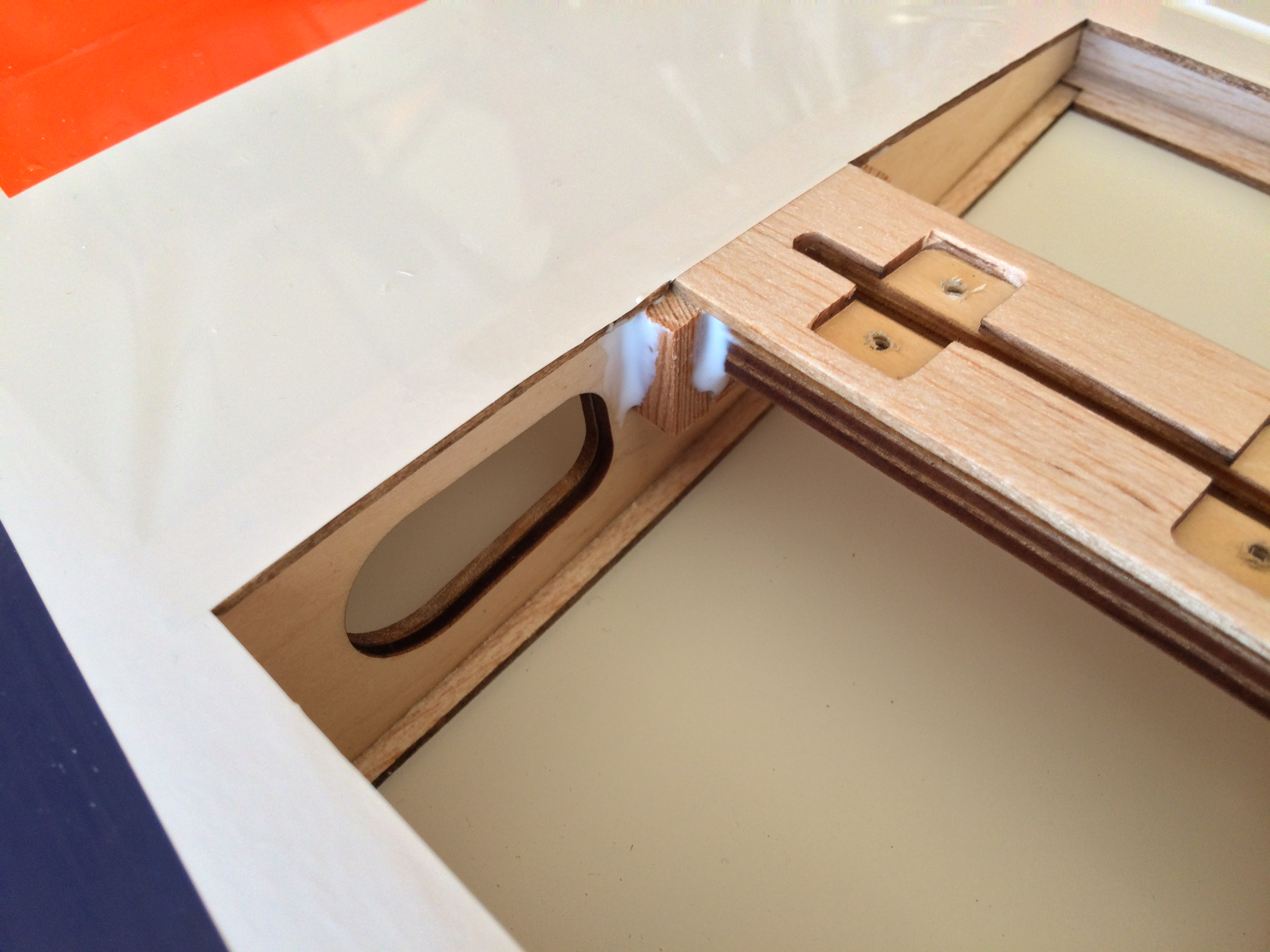
I was therefore pleasantly surprised once the covering was peeled back. The blocks are held in place between two plywood doublers and appear to ‘slot’ into holes cut in the rib, effectively sandwiched then into place during building. Loose fit or not that block is not going to come out short of splintering the entire rib. So why had mine come loose in the slots? Jokes about my landings aside, my guess is that cyanoacrylate has been used. Even when thick, cyano is not the best glue to use for a component that receives any kind of shock – it is too brittle. I have beefed up my blocks by affixing a hardwood strip ‘cradle’ to surround the joint and used a liberal quantity of white wood glue. Fingers crossed this should now hold up to landings on a grass field.

hobbyking maestro 46

The first step is to removing the covering between the ribs. The orange stripe is made from heat shrink film, not self-adhesive trim, and pulls away easily. I failed in my attempt to recycle this afterwards but it was worth a try.

hobbyking maestro 46

Cut the covering away between the two ribs. Always use a new knife blade to do this if you want a neat job.

hobbyking maestro 46

I then glued a length of hardwood strip to the underside and against the rib either side of the block. Be generous with the glue.

The cradle was completed with the addition of further lengths vertically either side of the block.

hobbyking maestro 46

Finally run a line of glue into all the corners to form a gusset. Allow all the glue to dry thoroughly (it dries transparent) before re-covering. Then it is simply a case of cutting a patch of covering film (I used Solarfilm) and re-attaching the undercarriage. To ensure the legs are not free to rock back and forth within the block,  drop a (small) blob of quick set epoxy into the hole just prior to inserting the legs. The epoxy will mould to shape when cured and prevent the hole from elongating. Ensure before doing this that the undercarriage leg is given a light smear of oil or it will be a permanent fixture.

‘That’ Modelling Shed Image (DPR Models)

DPR Rare Bird 25.05.15  (8)

Addendum: Fantastic news that as of 2017 the DPR range is back in production thanks to purchase of the DPR manufacturing business (presumably from Flying Toys Ltd.) by an aeromodelling entrepreneur and are now being distributed by Jarvis Manufacturing and J Perkins.

….

It has been a while since my last post. I’ve had a number of other priorities and I’m soon going to be moving from Edinburgh to London. Exciting times ahead. So onto the subject of today’s post. I’ve already made my views clear on the subject of ‘to build or not to build’ old unbuilt kits within my earlier posts, those who prefer to hoard such kits are advised to turn away now!

DPR models used to be everywhere in the 1990’s and their range started with basic sheet balsa ‘Chuckie’ gliders through to advanced balsa and tissue kits at the other. DPR models sold over a million kits which for a niche hobby was astonishing. I would compare DPR at the time more to the likes of the Guillow’s. By that I mean you could find them in most toy shops and not restricted solely to specialised model shops as per Kiel Kraft or Veron.

DPR Models 1997 (1)

Hamleys aside, most toy stores didn’t offer such a glorious sight – a squeaky turnstile was the more typical offering. However the key to DPR’s success was they were available in a humble toy store and therefore much more accessible to all.

While Guillow’s have thrived and can continue to be seen almost everywhere online, in museum gift shops and even some larger toy stores, the traditional offerings of DPR models fell short of the more demanding consumer market of the 2000’s that preferred instant gratification. Not all was bad news though as the founders of DPR models, David (Peter) and Janine Rawlins, recognised the change in market and in 2003 the couple re-registered their company as Flying Toys Ltd. Today, based in Essex, they are the distributing company behind the high successful Parrot series of RC toys.   I must say that I do like this current range of RC toys. With so many being sold, combined with so many YouTube clips of ‘hobby-grade’ RC aircraft in action online, the chances of the bug biting and someone moving from toys to more advanced models – whether that be one of the aforementioned Guillow’s warbirds or a full house RC aeroplane/helicopter are greater than ever. This can only ever benefit the hobby.

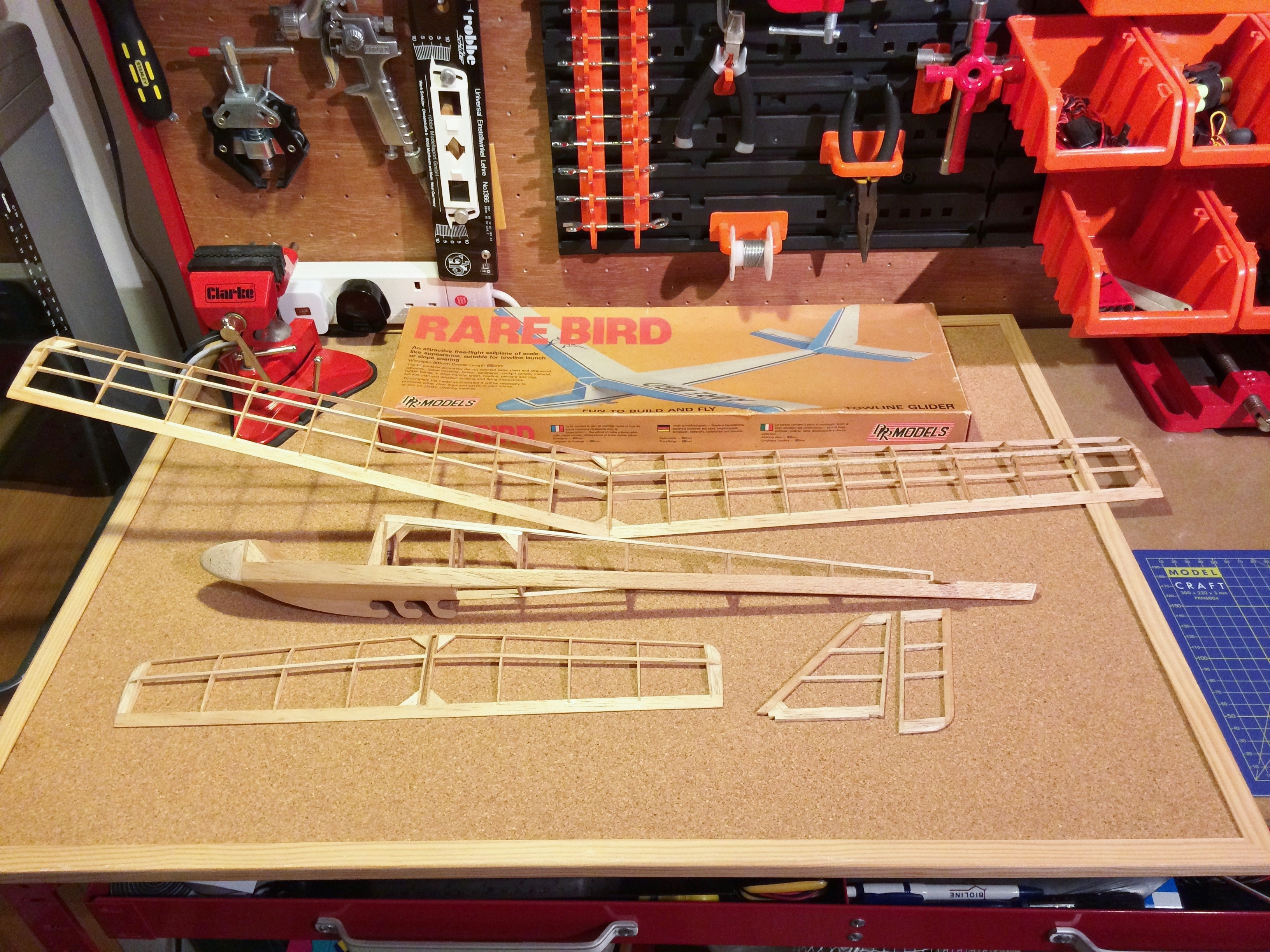
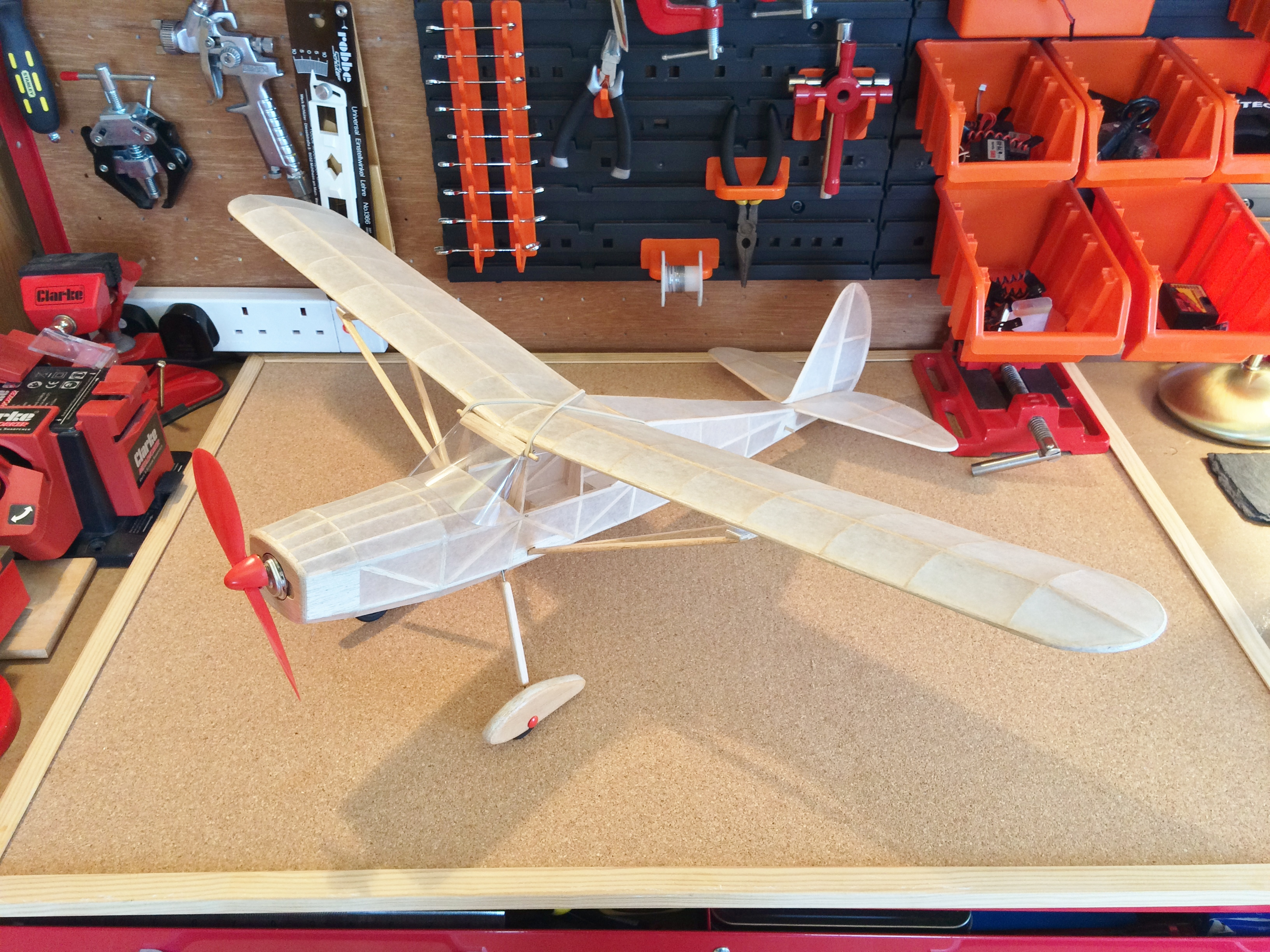
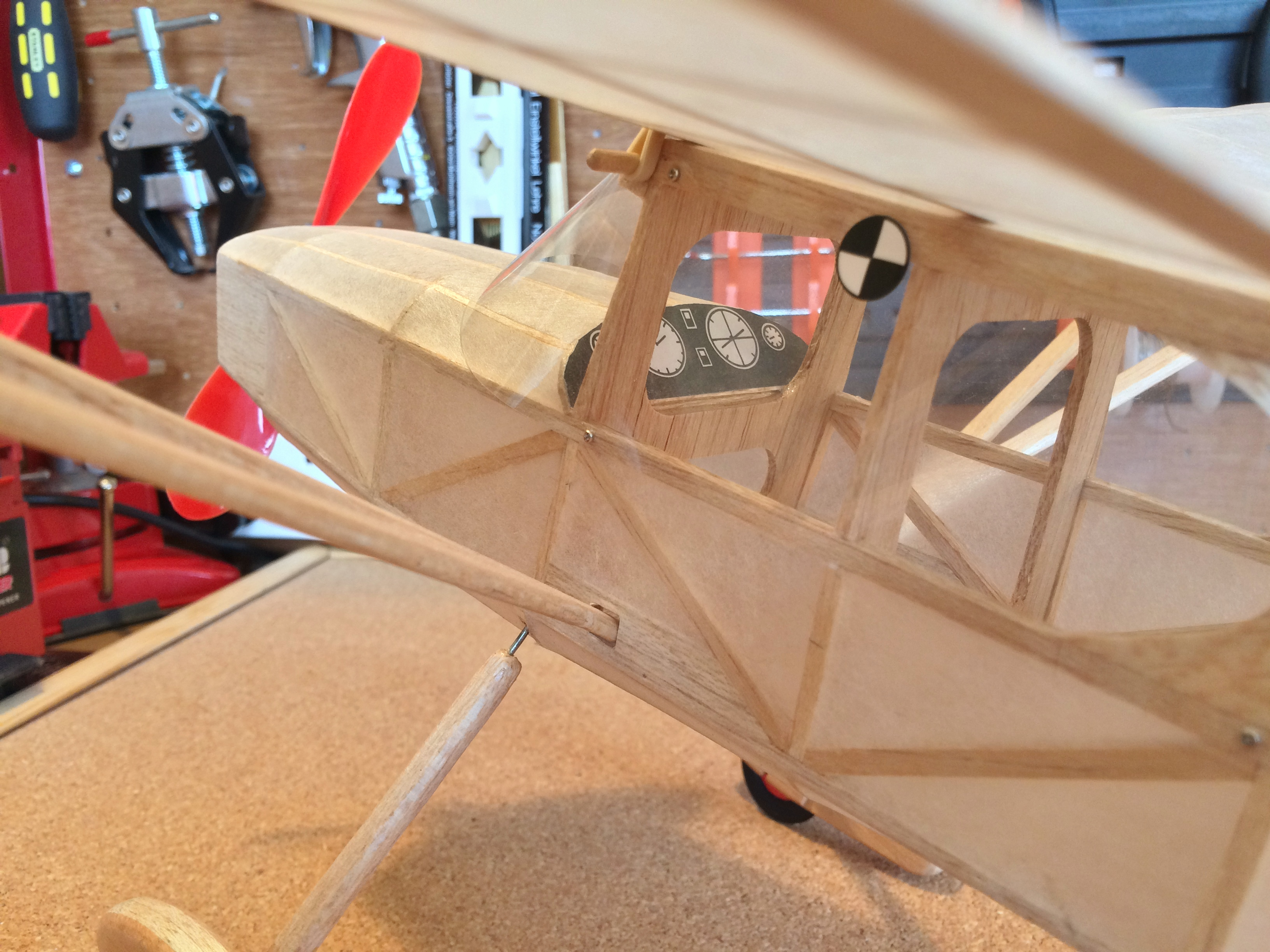
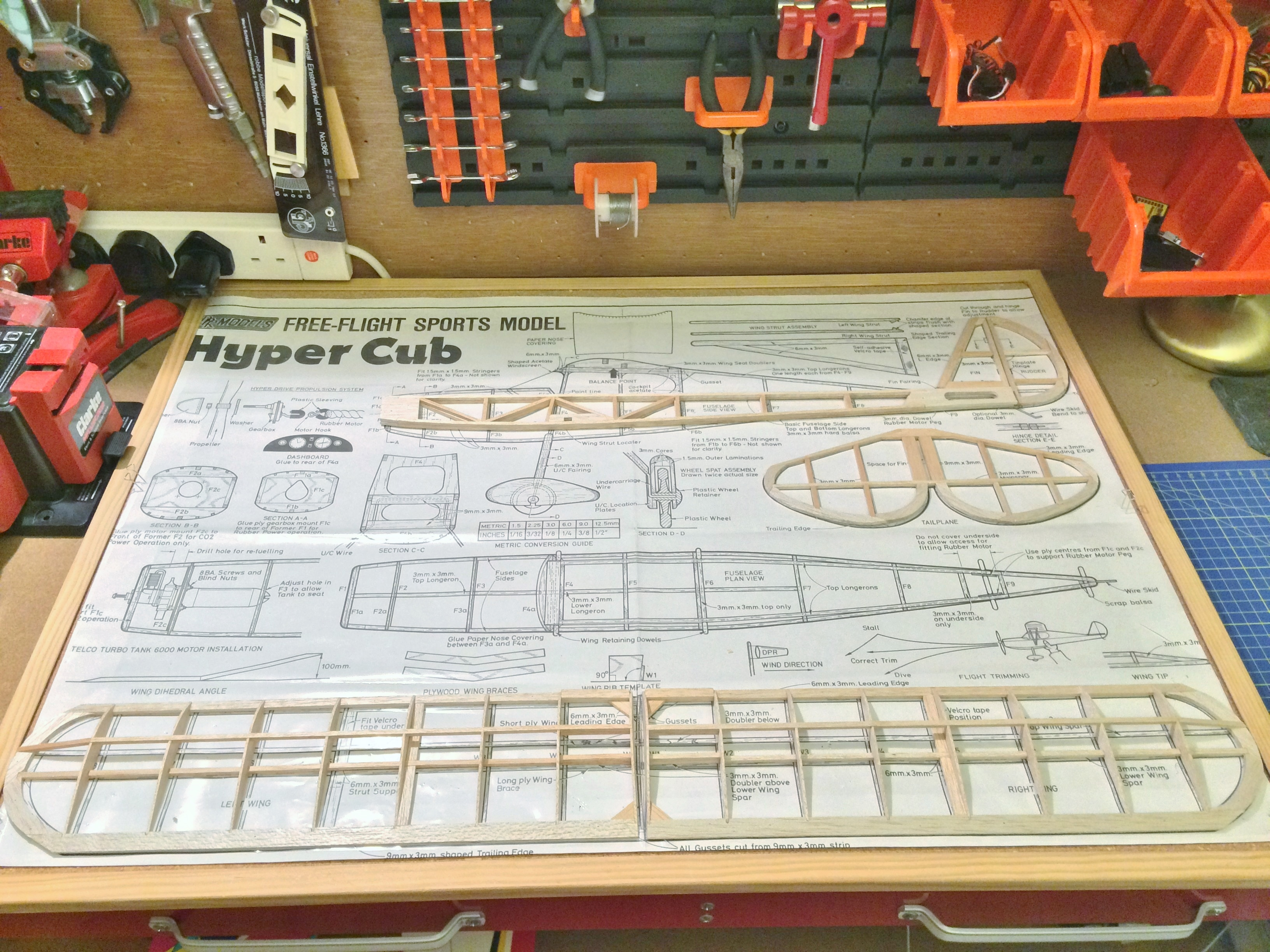
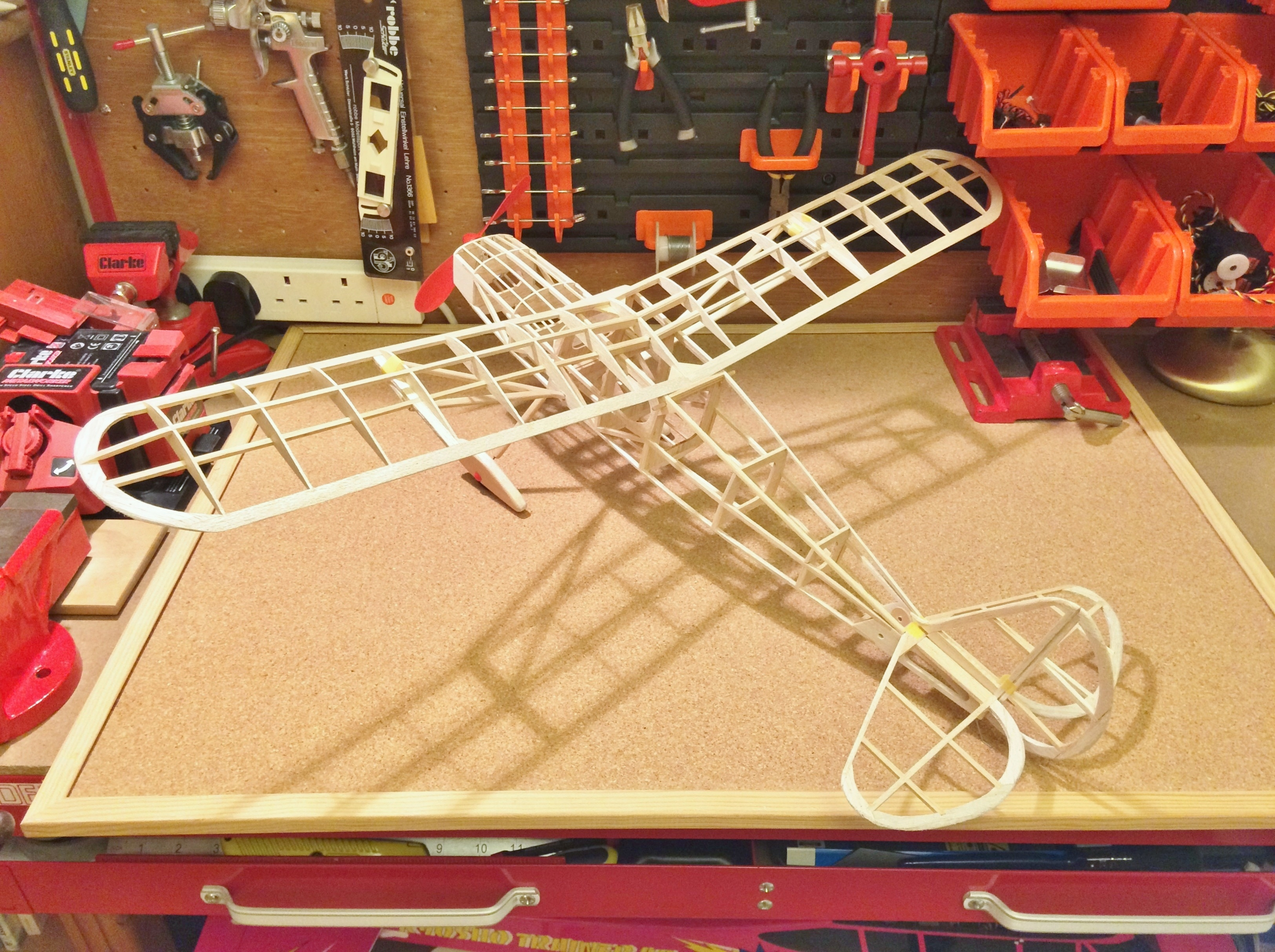
The flagship models within DPR’s range were the ‘Hyper Cub’ light aircraft and the ‘Rare Bird’ glider. Both were traditionally constructed stick-n-tissue free flight offerings, the former powered by a neat little rubber powered gearbox. Both of the models featured here were built from original kits, and apart from a lack of free time (I started these in December last year!), were straight forward to put together. Unlike the picture on the boxes, which display the models finished in a smart and colourful livery; I opted to leave mine as bare doped tissue. They do say beauty is in the eye of the beholder!

DPR Rare Bird 19.10.14

The rare bird is light and strong – particularly the front fuselage which benefits from a plywood keel/tow hook former.

DPR Rare Bird 25.05.15  (7)

The decals were in a poor way and needed resealing with Klear before they could be gently coaxed onto the wing. The same could not be said for the Hyper Cub’s set which were sadly beyond repair.

DPR Hyper Cub 28.12.14

The Hyper Cub’s fuselage sides are constructed in the traditional manner of one stacked upon the other.

DPR Hyper Cub 01.01.15  (2)

Dry Assembly

DPR Hyper Cub 25.04.15  (3)

DPR Hyper Cub 25.04.15  (8)

Wing struts, wheel fairings, small diameter propeller and a simple dash are all included in the kit and really aid in bringing the model to life.

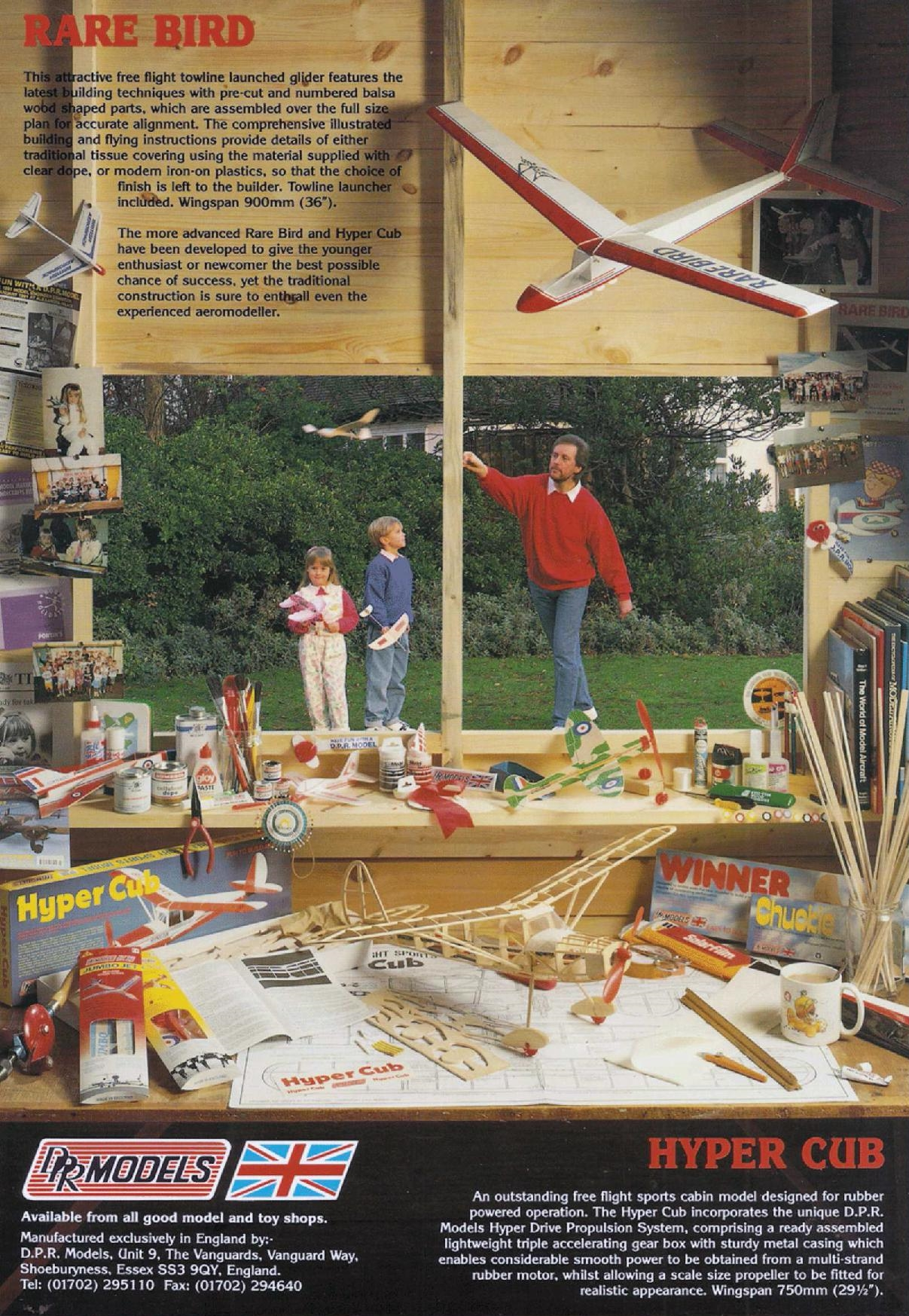
Lastly, some images just stick within the mind.  The advertisement picture of ‘the’ shed below is often brought up in conversation when discussing vintage kits. More often than not who made it cannot be recollected, but I can’t help but feel many still secretly organise their own hobby bench with this image lurking back there somewhere in the recesses of the mind.

DPR Models 1997 (2)

The shed of dreams – at least to those of a model aeroplane disposition

Balsa Flavoured Wings

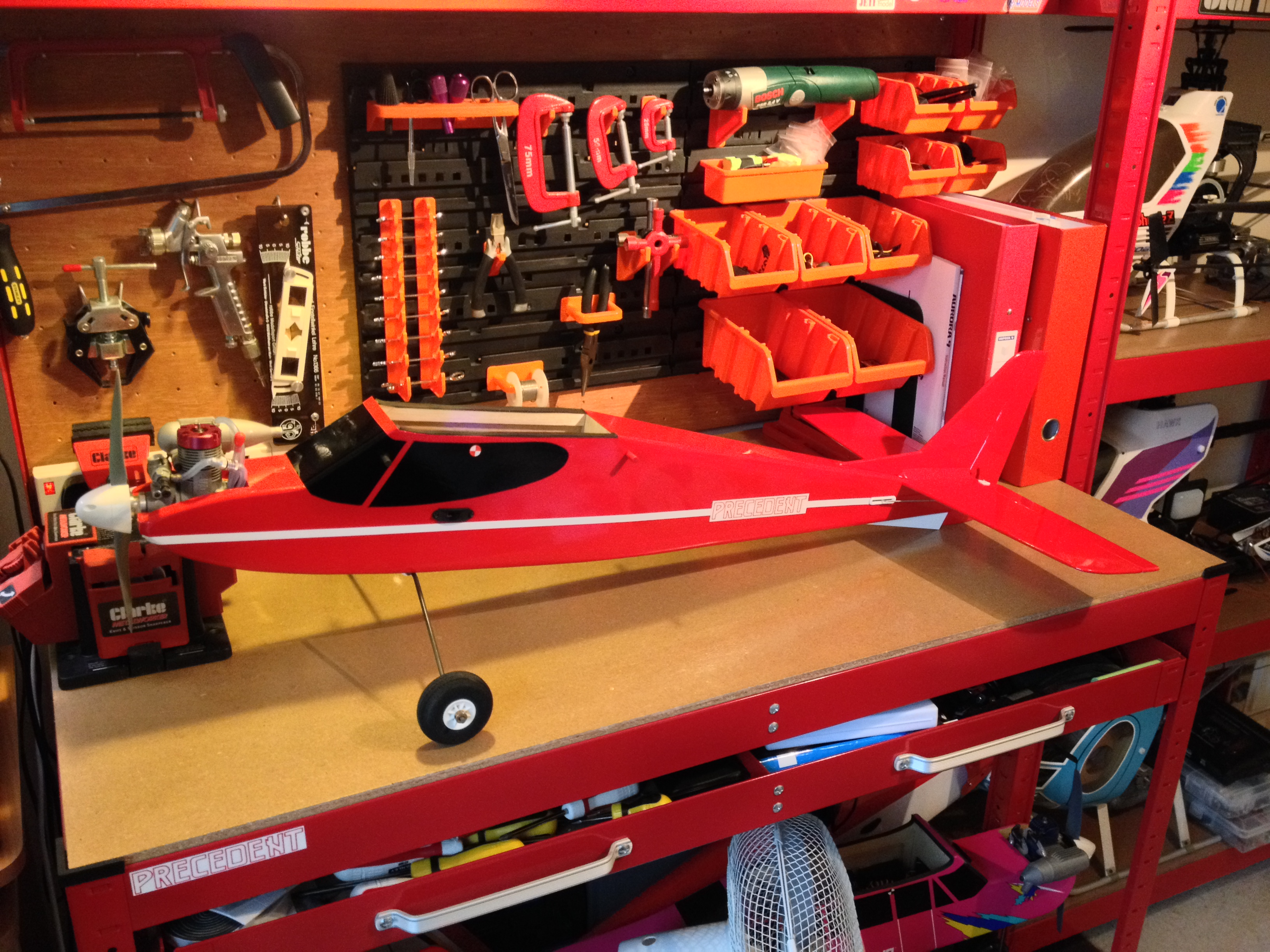
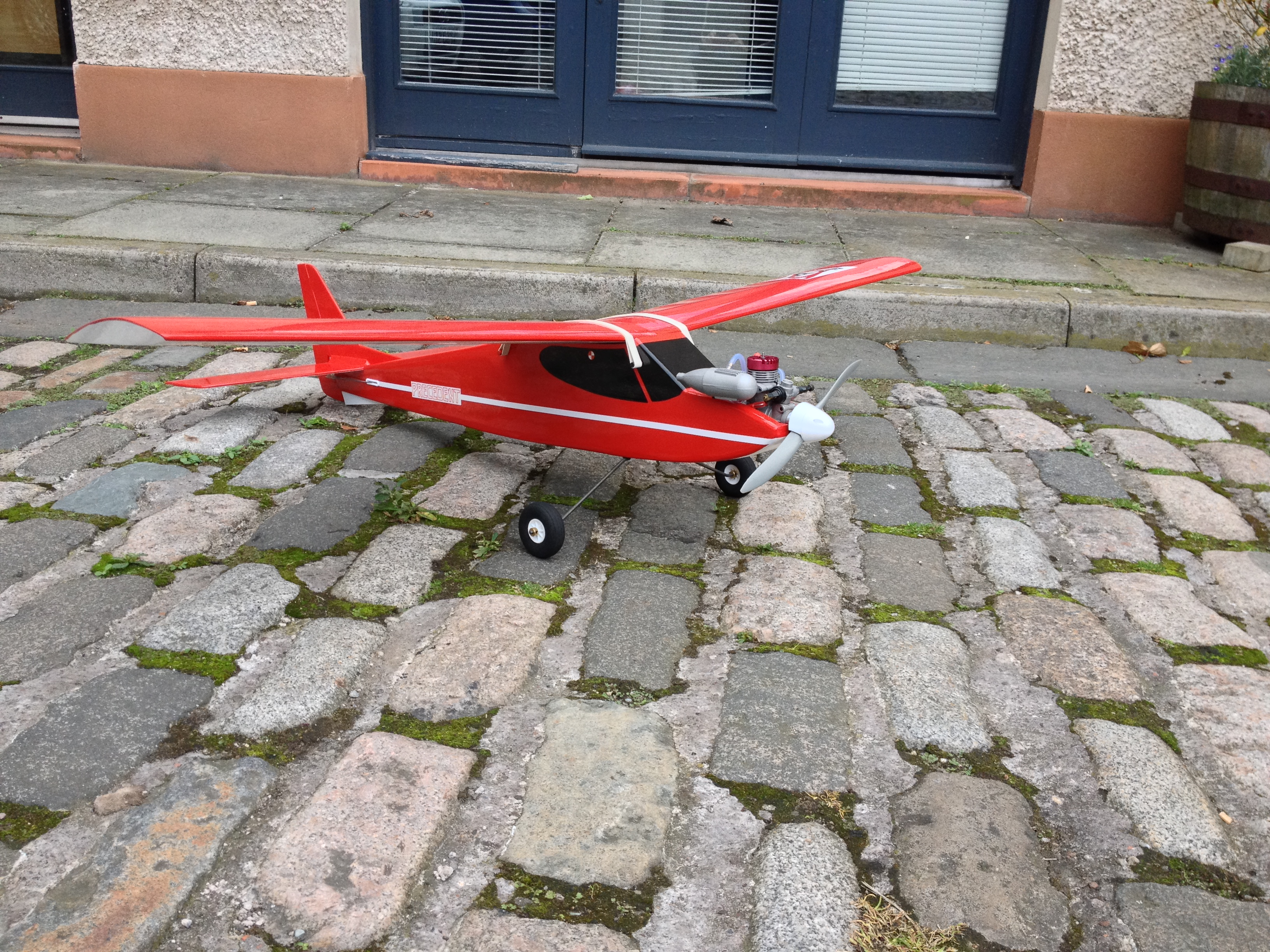
Today’s subject is another eBay purchase I’ve made; A Precedent Flyboy. My first attempt at this kit was back in 1997 when I was 15. Unfortunately it was never finished as I struggled with the build using the limited range of tools I had to hand. To cap it all, the half-finished wings were then chewed up something rotten by a teething miniature Dachshund puppy. That little dog (Millie) actually put paid to a few models that day including a just completed Thunder Tiger Eagle 30H ARTF, my birthday present for that year, that was all ready to go and would have been my first flying model. Not funny to me at the time but it was amazing just how much damage a dog that was no higher than the undercarriage could do. Needless to say I quickly learnt not to leave anything balsa flavoured on the floor! The good news was my parents took pity and bought me a replacement in the guise of a Kyosho Trainer 40 that I learnt to fly with – the bad news was it was bright ‘in-your-face’ pink.

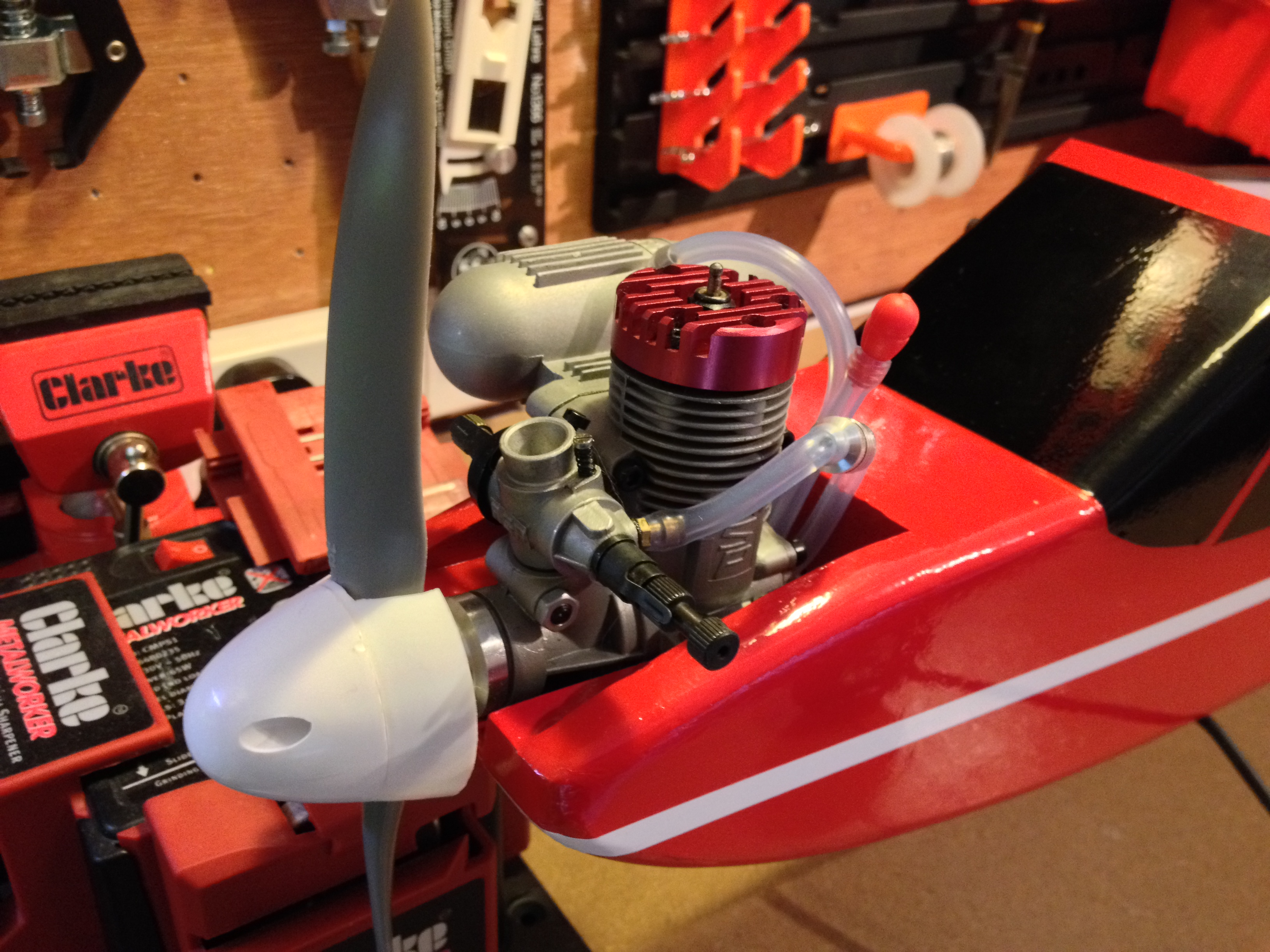
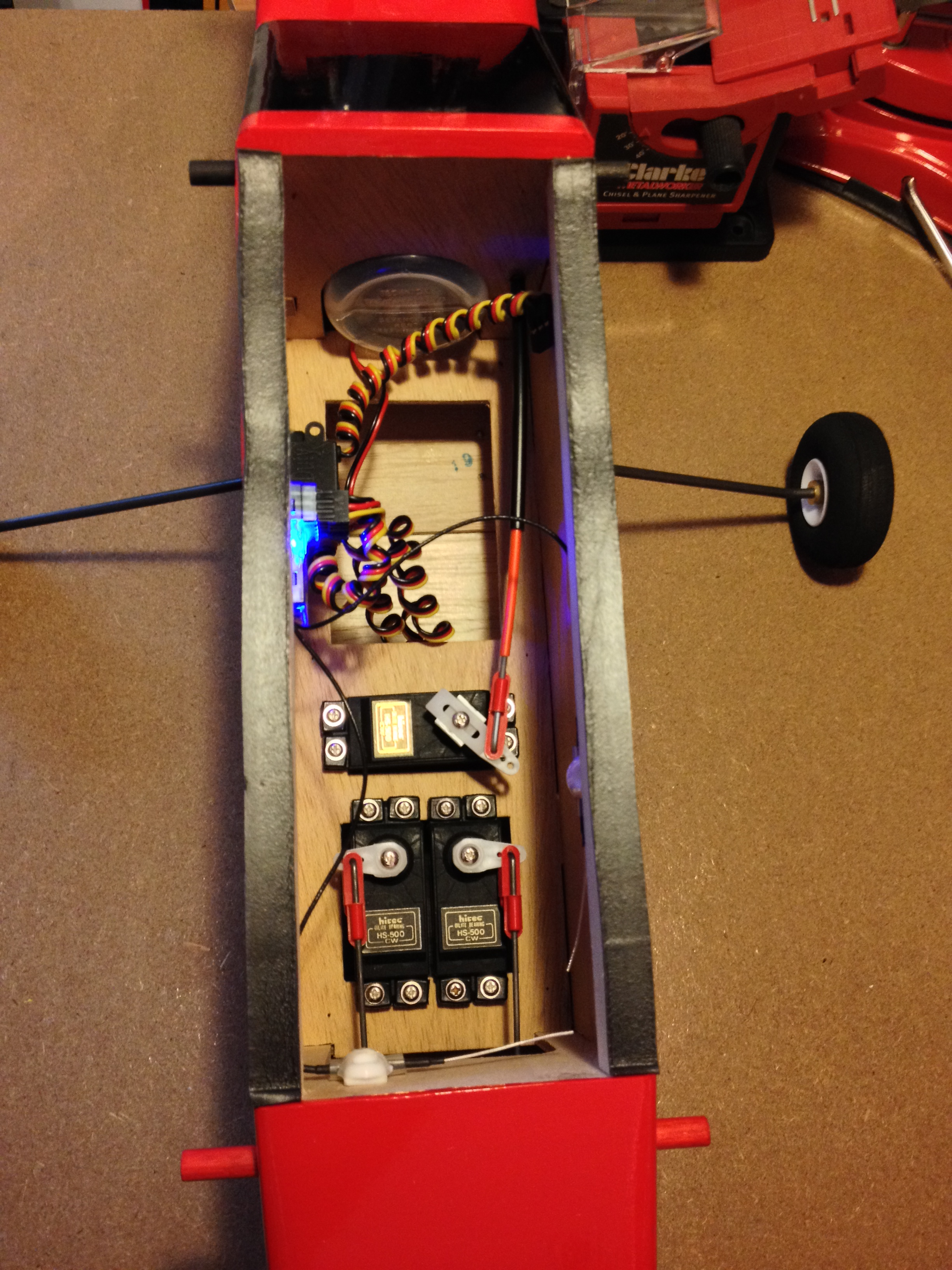
I’ve powered this particular kit with the same engine (ASP 25A) that was to power my original Flyboy. Heavy duty switches are a matter of course on helicopters but I now use them throughout my aeroplanes. It you ever want convincing open up a standard switch and see for yourself how flimsy the metal terminals are. Now throw in repetitive moment, vibration and dirt. The extra £5 in price to upgrade to a stronger switch is suddenly well worth the peace of mind. A set of unused oilite bearing Hitec standard servos operate the control surfaces and compete the avionics.

Precedent Fly-Boy  06.09.14

On the bench

Precedent Fly-Boy  06.09.14

ASP 25A installed in the nose.

Precedent Fly-Boy  06.09.14

Hitec Minima 6S receiver makes this small fuselage seem cavernous!

Precedent Fly-Boy  06.09.14

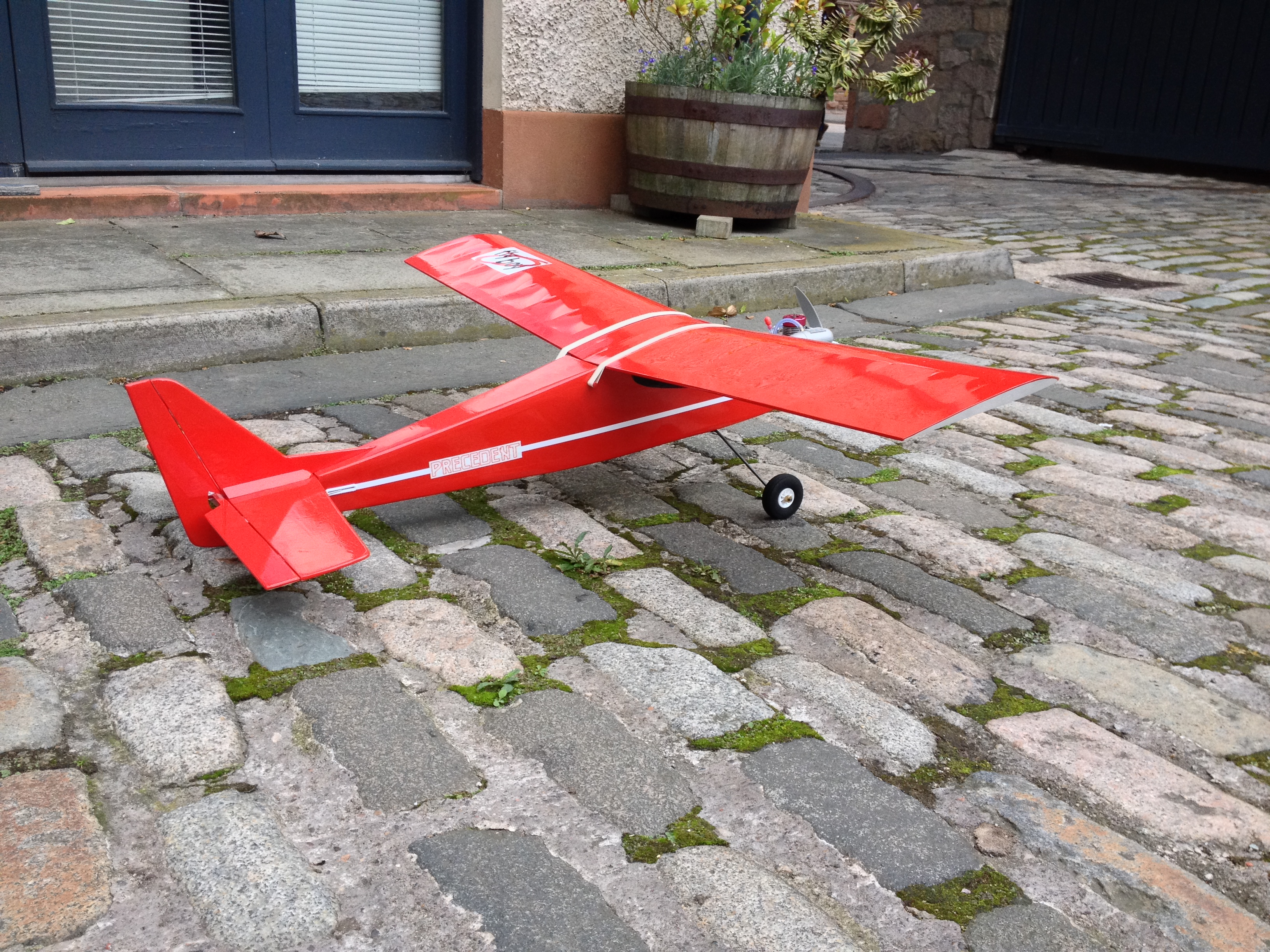
All ready to go

Precedent Fly-Boy  06.09.14

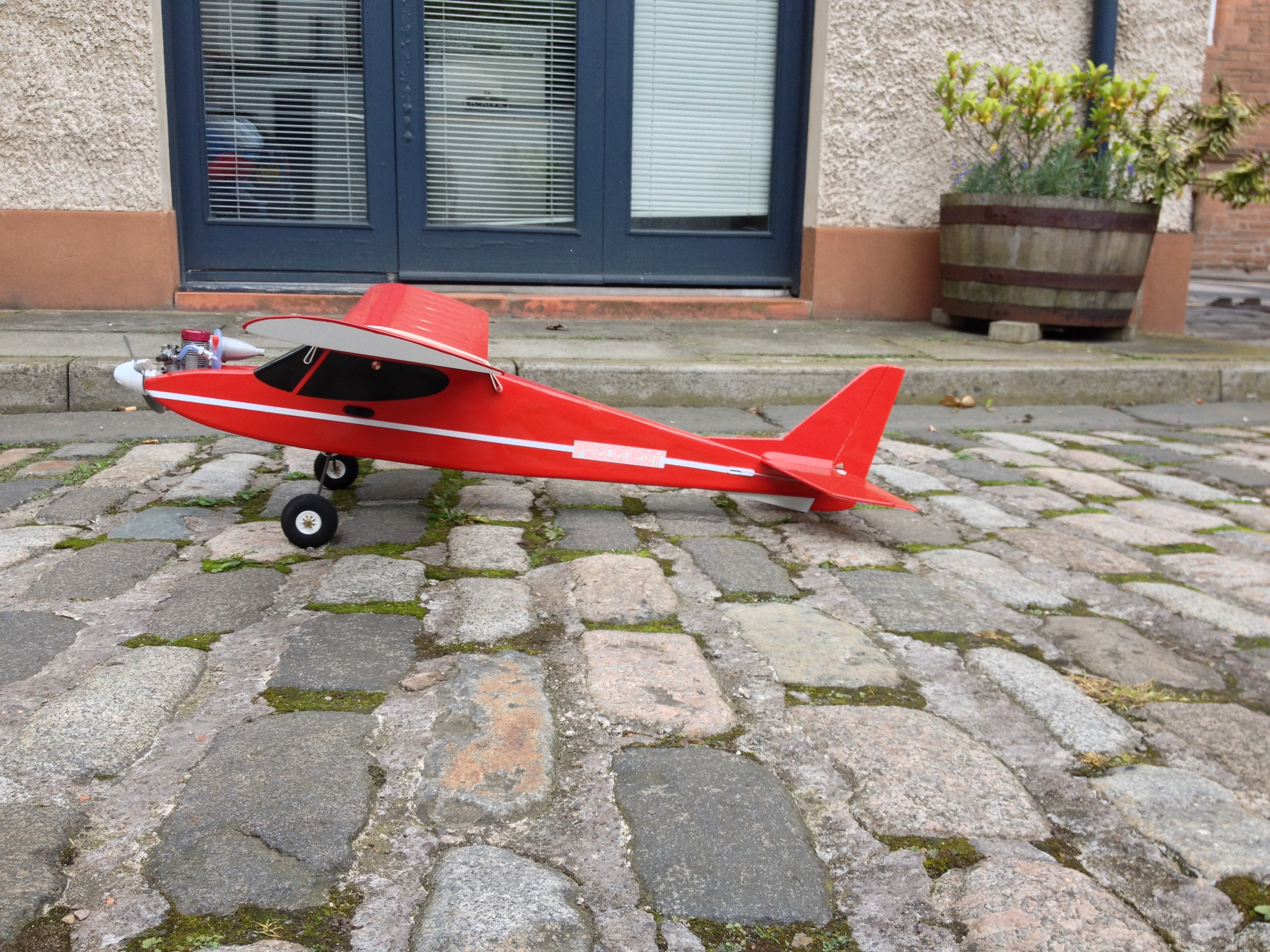
Nothing beats the purposeful look of a tail dragger

Precedent Fly-Boy  06.09.14

The lower surfaces are covered in white to give a bit of contrast.