Hawk’s Eye View

My original Hawk Mk1 heli suffered at my inexperienced hands. Not belonging to a club and not knowing anyone else who flew I learnt to fly the hard way through trial and error (this was before simulators were cheap enough for me to afford). That said it proved to be the ideal learning machine with an extremely stable hover and a solid feel in flight.

Following a big crash brought on by overconfidence I replaced it with a Hirobo Shuttle Z-TS primarily as I was getting fed up with the hawk’s one weakness; namely its starting cone. I didn’t realise at the time of course that a hex start upgrade was available that would have transformed the Hawk but you live and learn!

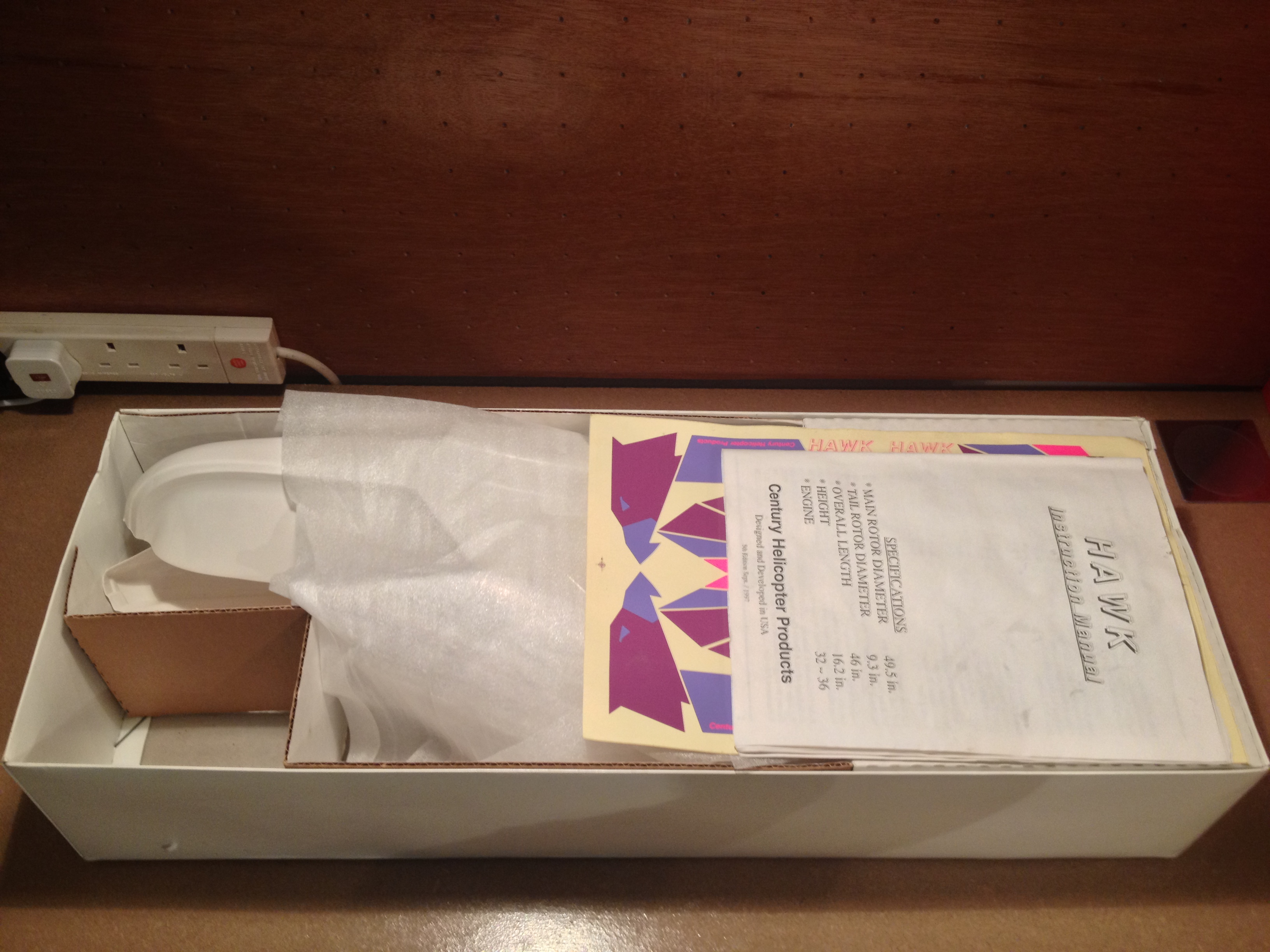
This new Hawk was purchased un-built on eBay following a fit of nostalgia. The Mk1 was only in production for 1 year (1997) and half of that was with the new style canopy so you don’t see many around built yet alone still unassembled. My original attempt at the ‘proper’ Mk1 ABS canopy looked like it had been cut out with garden secateurs. Experience takes time and this time around the canopy actually looks the part. I also made one concession and that was to replace that  starting cone with a hex adapter!
IMG_0255

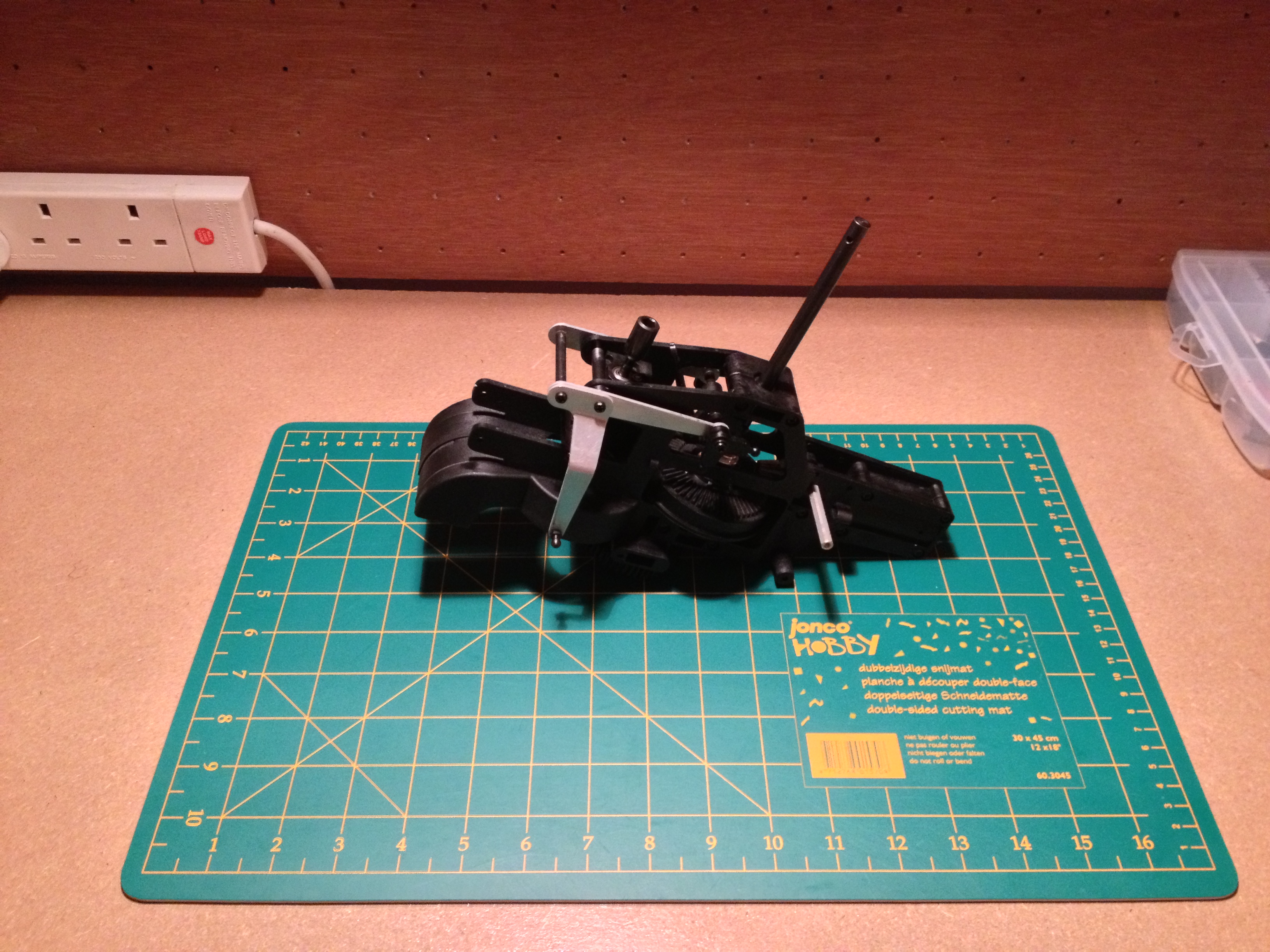
Upper stacked frames incorporate the planetary ring gear system; sounds great in flight.
IMG_0257

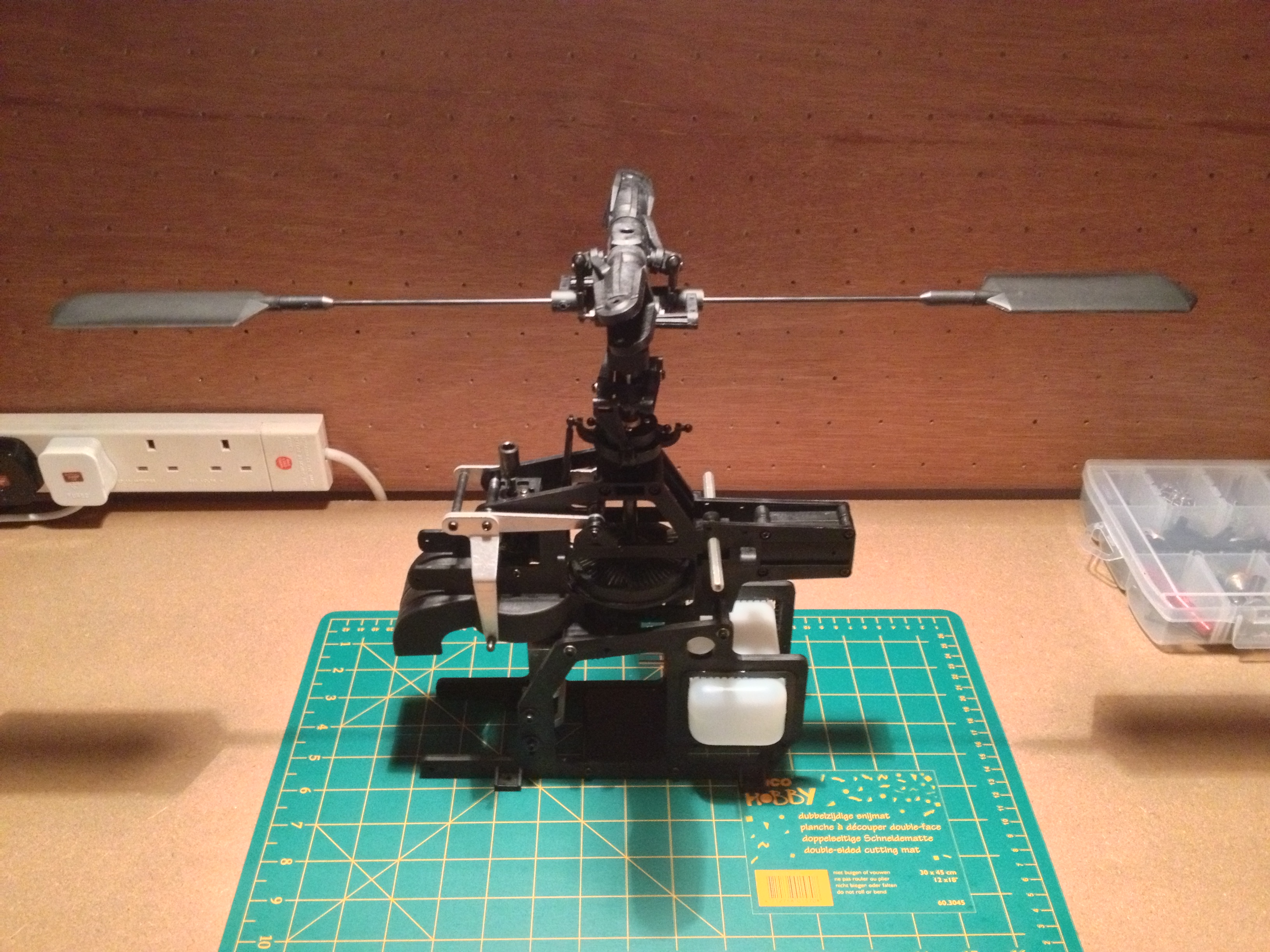
Rotor head and lower stacked frames attached. Compared to more modern machines the fuel tank is tiny.
IMG_0358

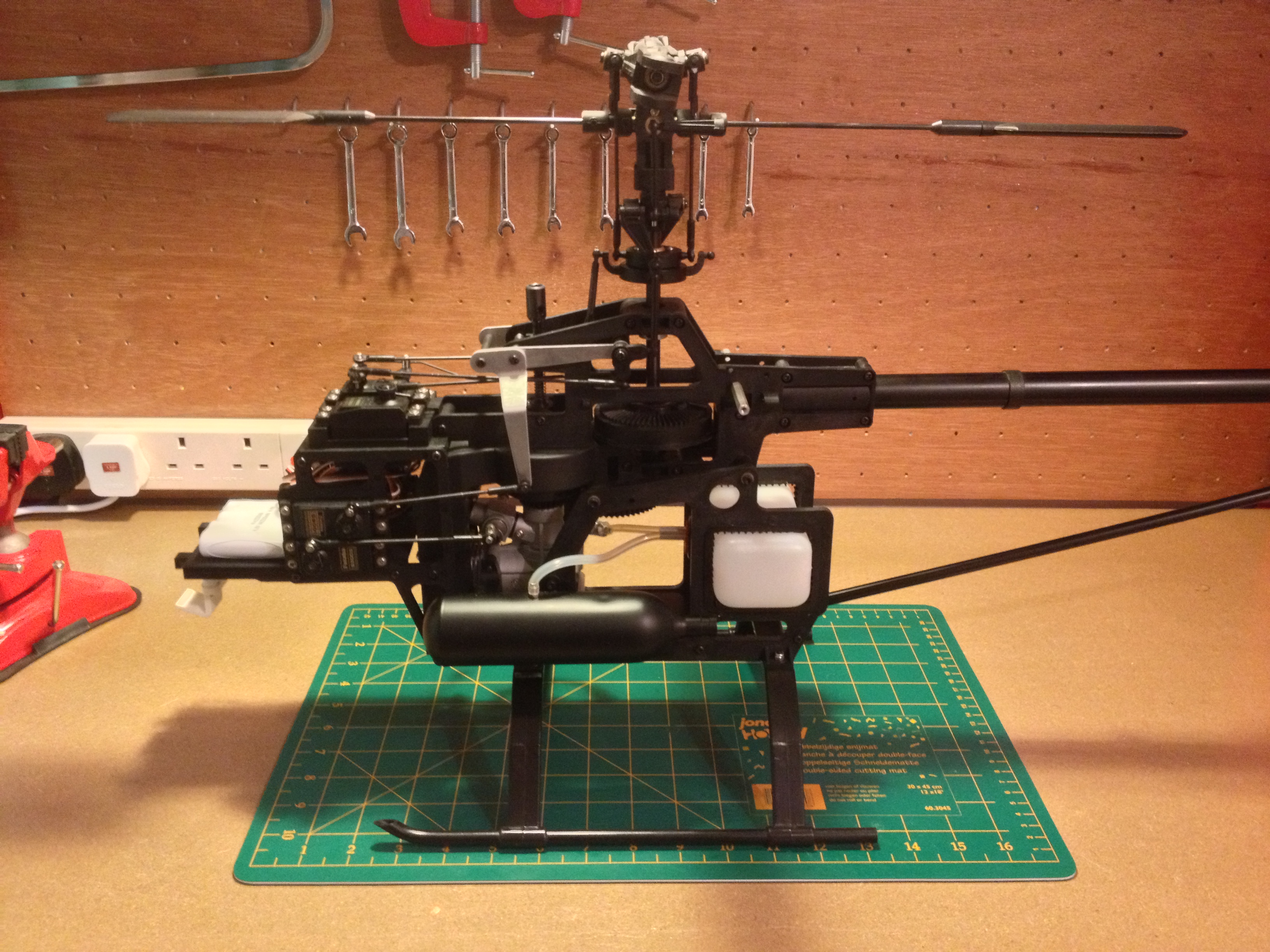
Mechanics completed, servos and engine fitted. As I don’t really intend to fly this I decided to fit a cheap but new and shiny SC32 engine. To be fair to SC I’ve always found them reliable if slightly short lived and like all engines respond to the fuel used. It pays to get the good stuff and for the sake of repeating myself: No castor.
IMG_0243

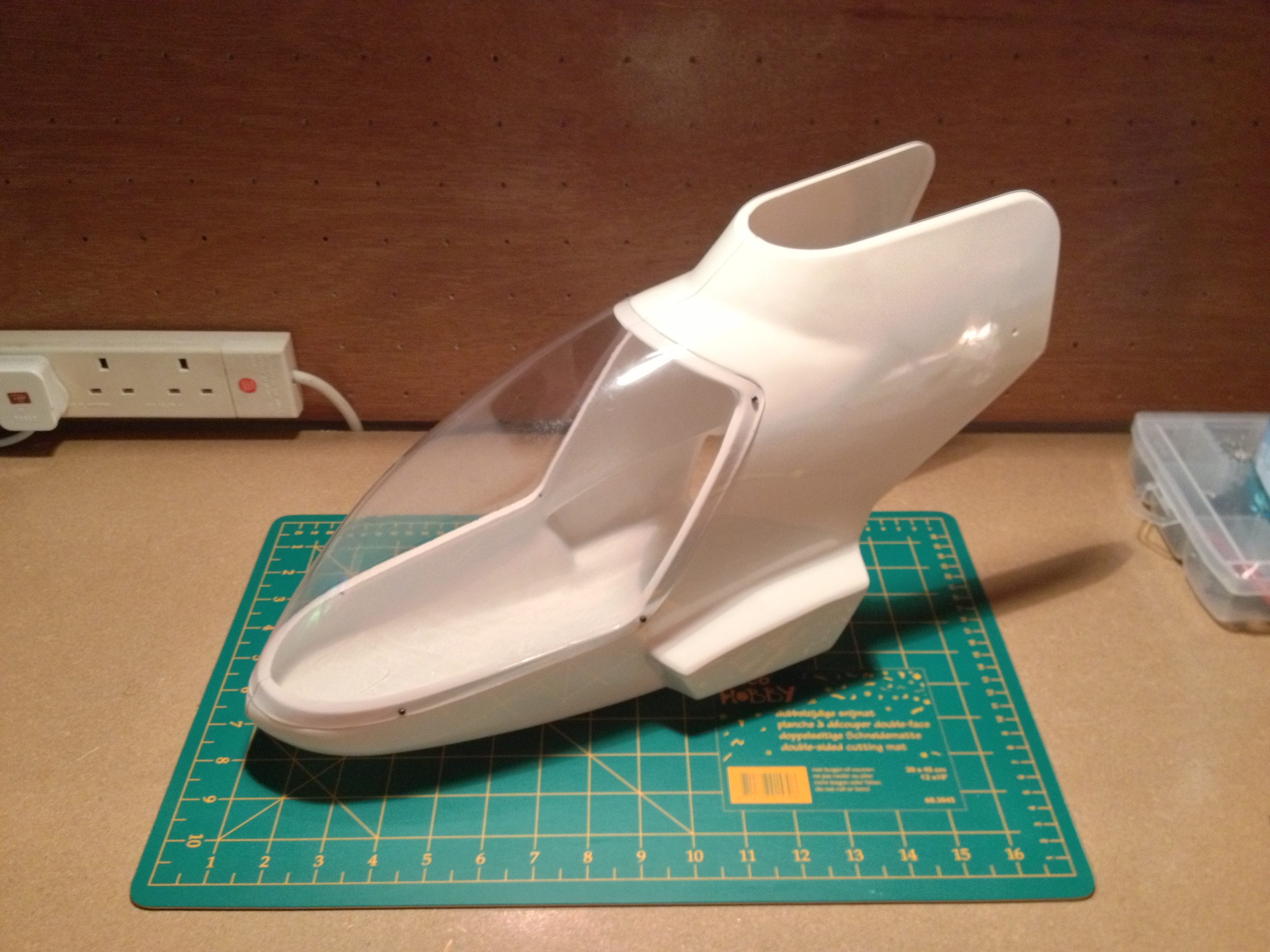
Canopy halves cut out and carefully glued together. When cutting ABS, rather than use scissors, score with a scalpel then flex back and forth to gently break the piece away. Finish off the edges with fine grade paper and glue together with thick cyano a short section at a time.
IMG_0248

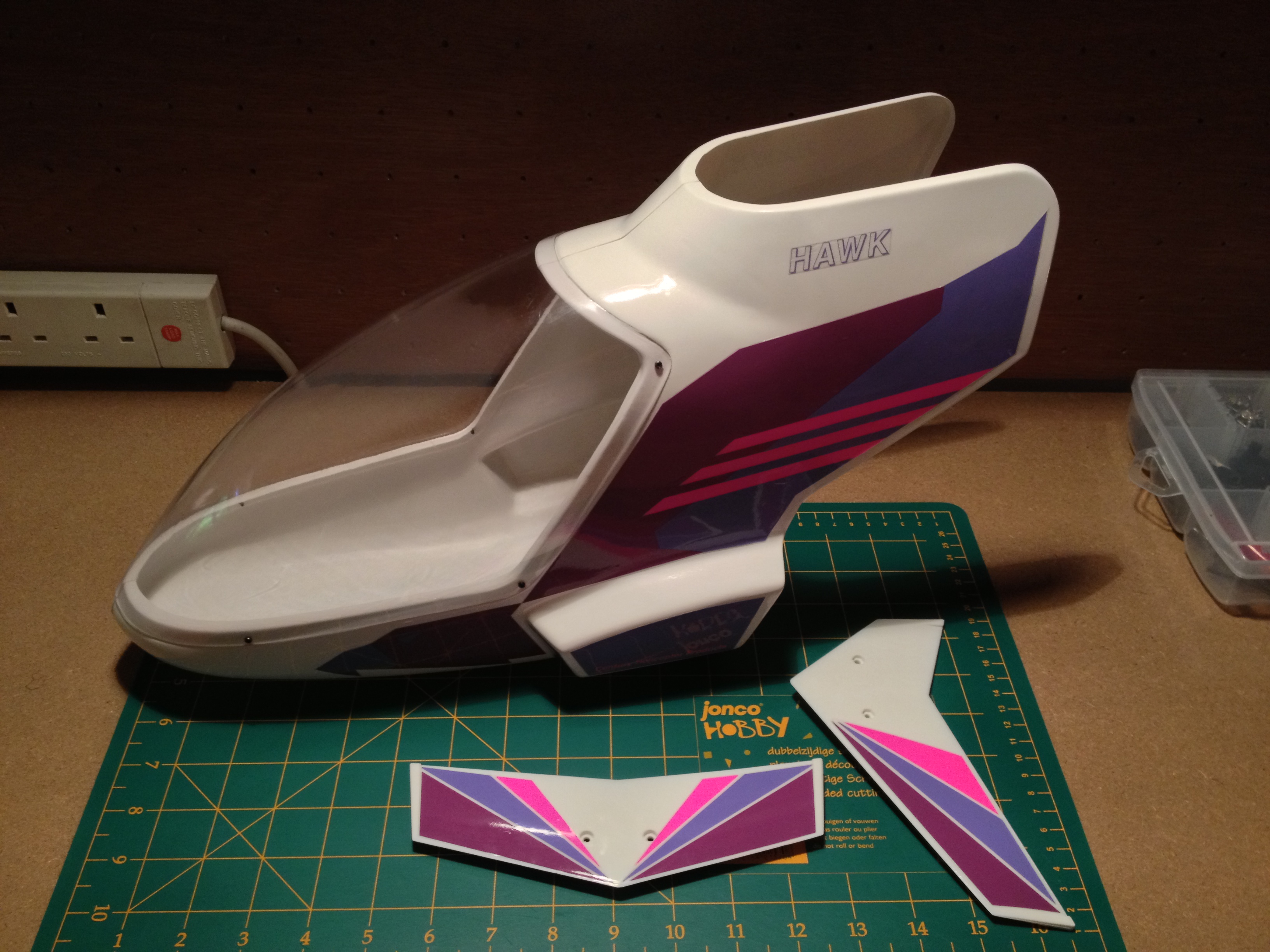
Decals are large and best applied using the corner tab method. I did debate soapy water but considering the age of the decals I decided not to put the adhesive at risk.
IMG_0361

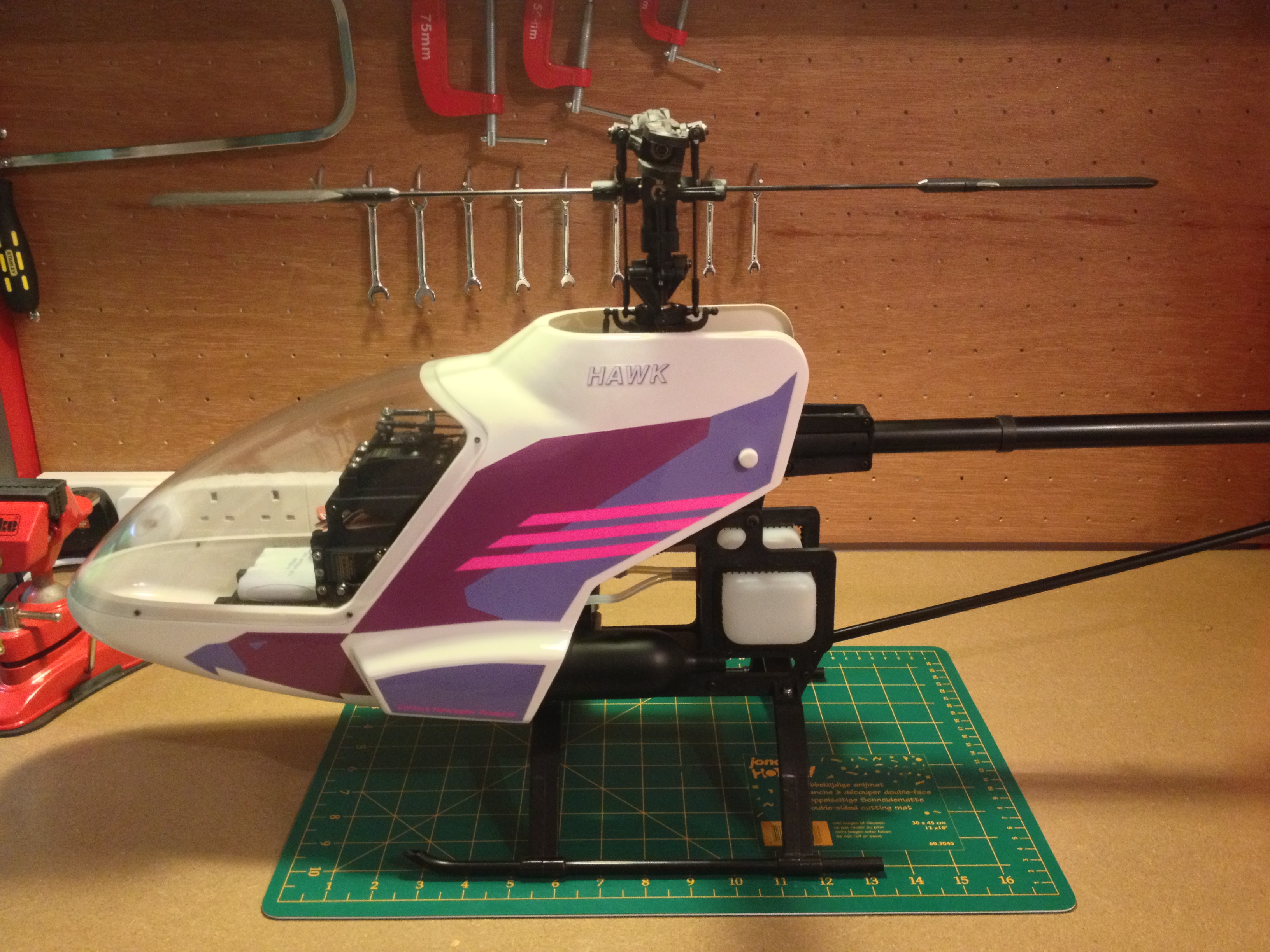
Canopy fitted and carefully trimmed to fit around the muffler and the collective servo horn. As mentioned the MK1 canopy was soon replaced by the moulded polypropylene type which, while solving these problems, lost the original Hawk shape.
Century Hawk MK1 06.02.13 (9)

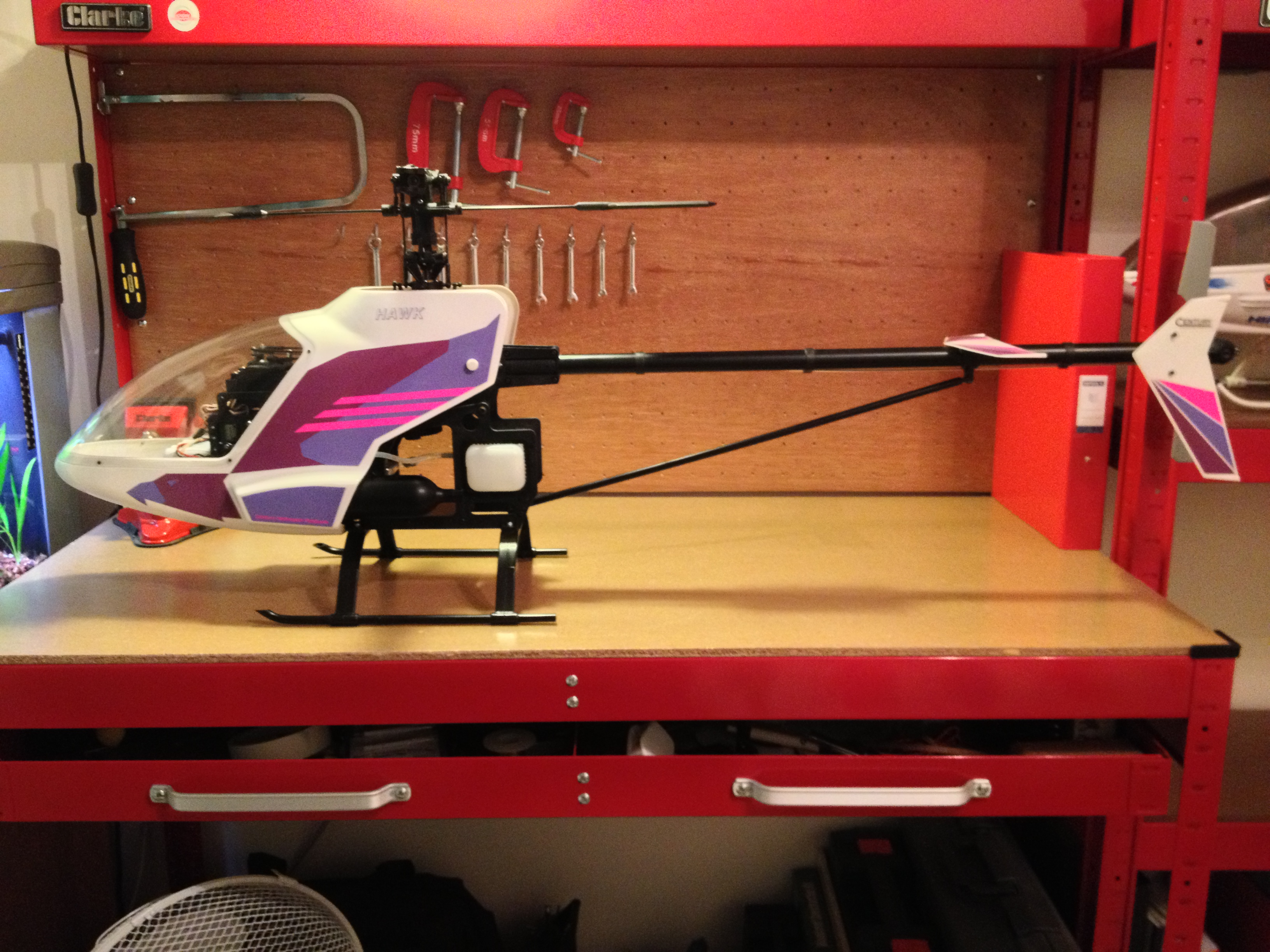
So there we have it, a nice Hawk MK1 model exactly how I remember and some.
Shuttling About

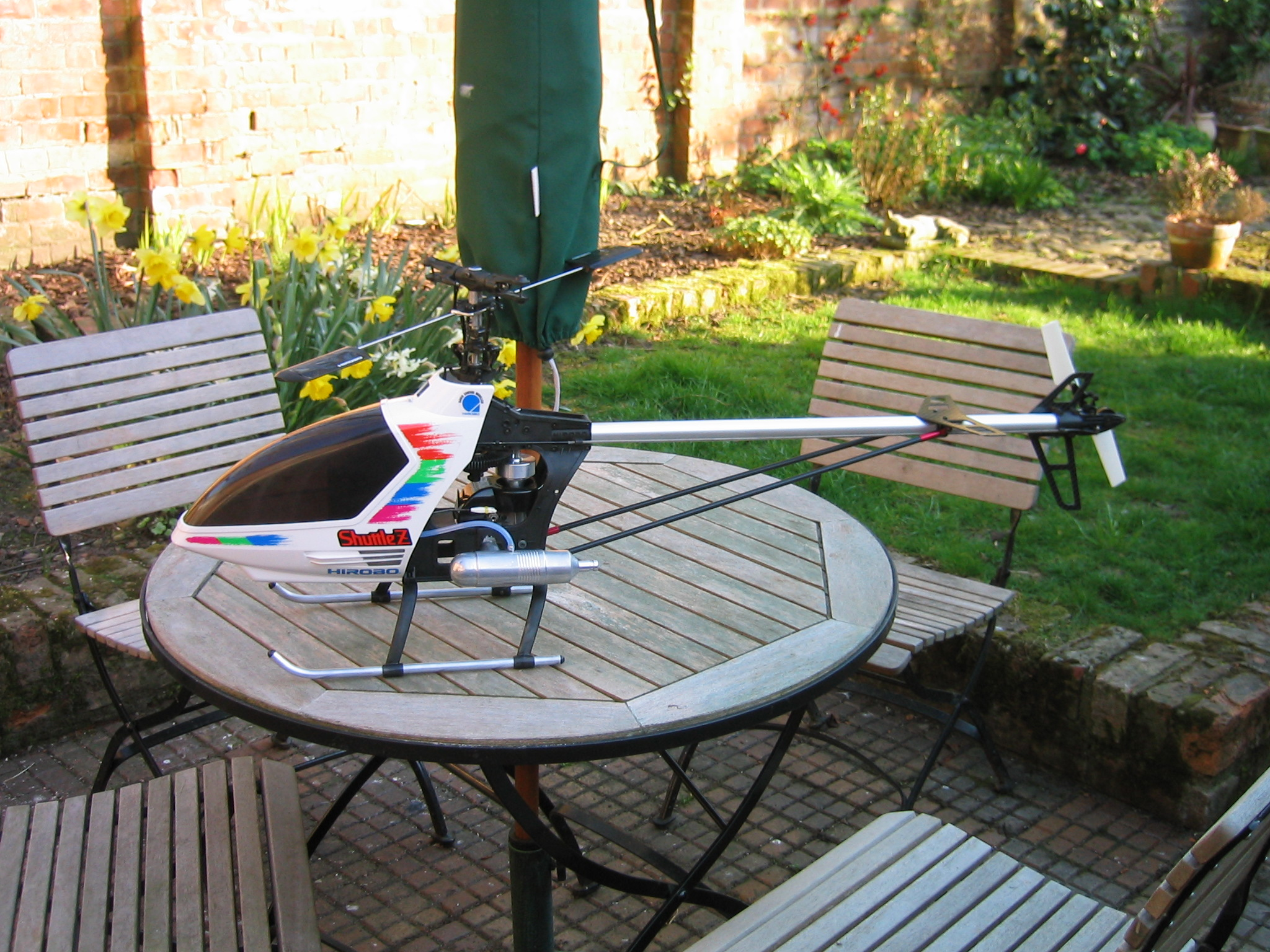
In 1999 I bought my Hirobo Shuttle Z-TS as a successor to my Century Hawk MK1. The quality of the Shuttle, particularly the canopy, was superb and it was extremely reliable. The shuttle was the machine with which I learnt basic aerobatics and inverted hovering. With such a hard life (this was before flight simulators dropped in price) it was often on the work bench being ‘maintained’.

Picture 002

My old Shuttle Z-TS ready for a days flying pictured back in spring 2000

It was on one of these days that a friend at my local club had bought a second hand shuttle and wanted me to check it over. Buying second hand is fine but you really need to scrutinise the advert very carefully. Unfortunately not knowing anything about helicopters my friend had bought a lemon. I stripped it down and kept finding fault after fault. Upon removing the engine it was revealed the frames were cracked and that was where I should have left things and supplied a list of parts he would require. Unfortunately I felt so bad for him that I ‘raided’ my parts drawer which happened to include my own partly disassembled shuttle.

My own shuttle was soon rebuilt and sold a few years later as I progressed to more 3D capable machines. However it was while searching on eBay that I noticed a shuttle for sale in the location of my old home town. Closer look at the pictures and an email to the seller confirmed it was indeed my old friend selling his old shuttle. It was not in a happy state but thrown into the sale was a considerable quantity of hobby related tools and hardware. Despite the risks I decided to take the plunge and bid.

I ended up paying slightly more than I would have liked (eBay fever took over) and my parents (who still lived in the area) kindly agreed to pick the heli up for me until I could arrange to visit them. My mother described it as ‘a load of dirty junk’ but fingers crossed I was right about the gems hidden within.

Ebay Shuttle 02.11.12

eBay’s auction image: Oh dear, just what had I bought!?

My first impression was yes it was dirty. Putting the heli aside I soon uncovered the spare engine with a claimed ‘cracked cylinder’ and an inch thick layer of nuts, bolts and screws covering the floor of the original box. It cannot be under estimated just how valuable a good collection of hardware acquired over many years is in this hobby. Since by departure in 2005 I sold the lot and this new ‘hoard’ would instantly give me a head start. I set about cleaning everything. Metal parts including the engines were stripped down and cleaned using a method I came up with years ago that removes even the most stubborn of burnt on castor oil. (NEVER use castor oil in a modern RC engine despite what the manuals might say; It really has no place in the hobby now as far better synthetic lubricants are out there and these won’t burn onto the muffler/head either).

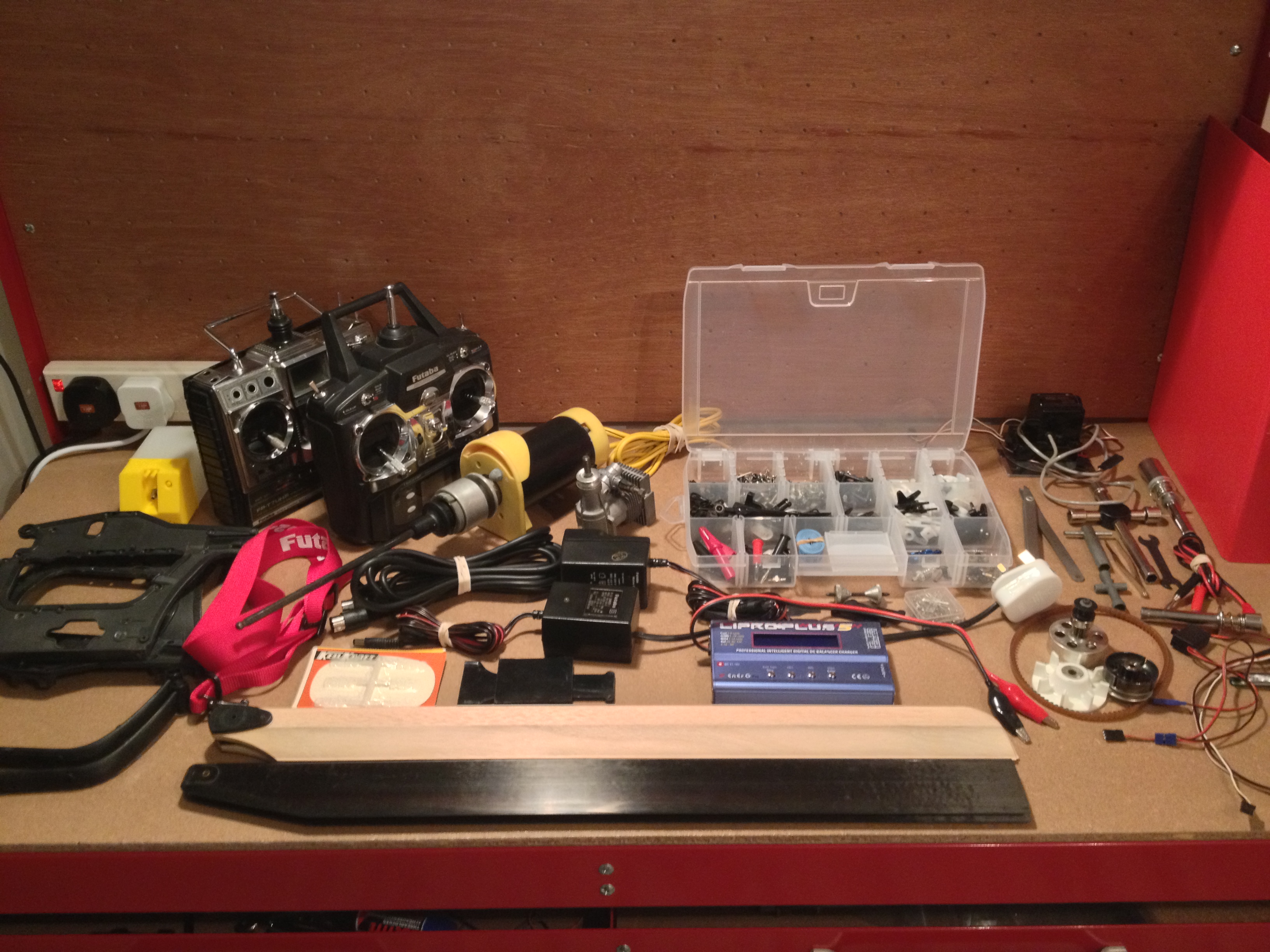
Once everything was cleaned, polished and oiled I took stock of just what I’ve bought:

  • Shuttle Z-TS
  • Spare parts
  • OS 32SX-H
  • OS 32F-H (no cracked liner that I could see so a ‘free’ engine)
  • Futaba 6ex-H transmitter, receiver and 5x standard servos
  • Futaba FF7 transmitter
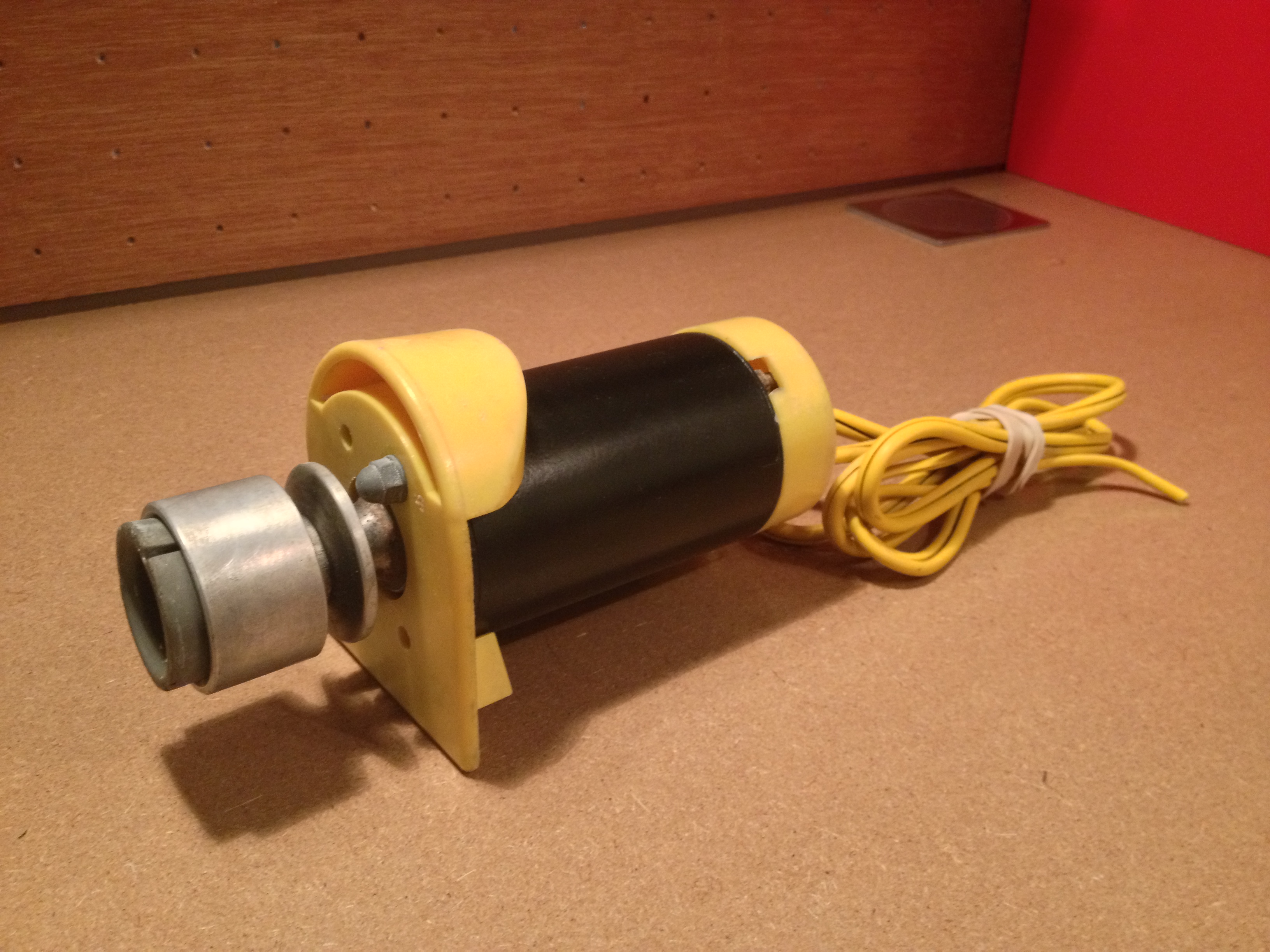
  • Sullivan starter motor
  • Radio Chargers and a multi-charger
  • NHP 550 mm carbon main blades
  • Wooden 550 mm main blades
  • Flight Box with power panel
  • Selection of tools including ball link pliers, sockets and glow starters
  • Lots of hardware

The radio is fully working but on 35 MHz so I will use this for now to set up the Shuttle and my other recent eBay purchases. Once I’ve finished my PhD I’ll take the plunge and get something more modern. The starter motor like all Sullivan’s is indestructible but this one looked a mess with a covering of rust and dirt. It took a while but once cleaned and re-sprayed in black high temp paint I think it now looks the part.

IMG_0224

One Sullivan starter cleaned and re-sprayed to an acceptable standard

IMG_0202

The two engines following strip down, clean and rebuild. One OS 32SX-H and an OS 32F-H described as suffering from a cracked liner. I didn’t find any evidence of this and suspect it was inexperience combined with too lean a mixture on cheap castor based fuel.

So why had I bought this particular Shuttle? Well I guess that parts of it including the main frames were once my old shuttle. In my last post I talked about Nostalgia; well this was the closest I was going to get to re-own the helicopter I liked the most. The frames really are my old ones too as I found the same small hole I once drilled to attach a tuned pipe mount! Now I just need to track down a few parts on eBay and I’ll soon have this shuttle restored to it’s former glory.

IMG_0220

Everything laid out once cleaned. Not a bad hoard and more than makes up for the price paid.  Indeed I managed to sell the two 35 MHz transmitters and recoup some of the cost.

Nostalgia

I recently read on the BBC news website that the younger generations are getting nostalgic earlier.  This is thought to be due to the onset of digital media where the ability to take, organise, share and carry around your entire photo library on a smartphone has transformed the way memoirs are organised.  Nostalgia then extends to physical objects portrayed in the photos and before you know it you are prowling though eBay for long lost items you used to own.

For me this has taken the form of an attempt to rebuild those models I remember most fondly from my early ‘fleet’ when I entered the hobby in my early teens.  Back then I was on a tight budget of pocket money and weekend jobs, although a lack of experience was the biggest hurdle and contributed to most of the set-backs I experienced.  My desire to ‘go it alone’ didn’t help either and my advice to anyone is to always join a club.

It began innocently enough a few months ago when I started downloading all the instruction manuals for every plane, helicopter, radio and servo I’ve ever owned.  A number of the manuals took some finding and it was typical that those I most wanted I couldn’t find anywhere.  It was then that I was very lucky to find un-built examples on eBay and before I knew it I’ve won the auctions and was the proud owner of kits I had spent hours of my youth trying to get flying.  I can’t easily describe in full how much these mean to me but while other boys were outdoors playing football, I was alone indoors pouring over advertisements and magazines carefully researching what I was going to buy; I had amassed quite a scrap book in the end.

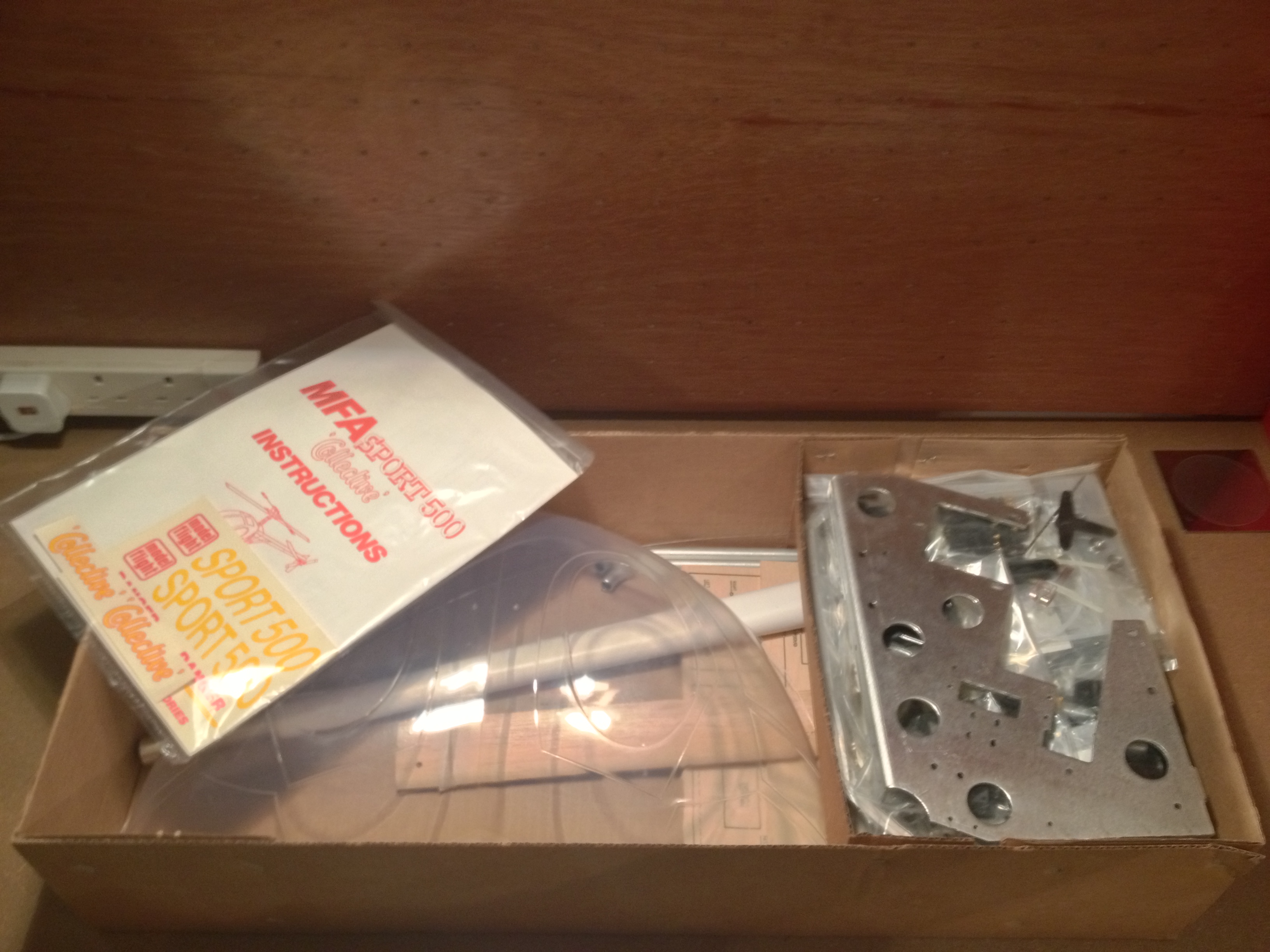
My first helicopter was an MFA Sport 500.  Primitive by design and outdated even then but to me it was a thing of beauty.  Unfortunately the design really required a bit of helicopter experience to ensure the pitfalls of an all metal construction didn’t surface.  This machine consequently acquired a bit of a bad reputation that perhaps wasn’t really deserved.  I acquired mine right at the end of its production run and although I never actually got it into the air my poorly built example gave me a crash course in assembly and maintenance.  Now I have another and this one I intend to build more carefully.

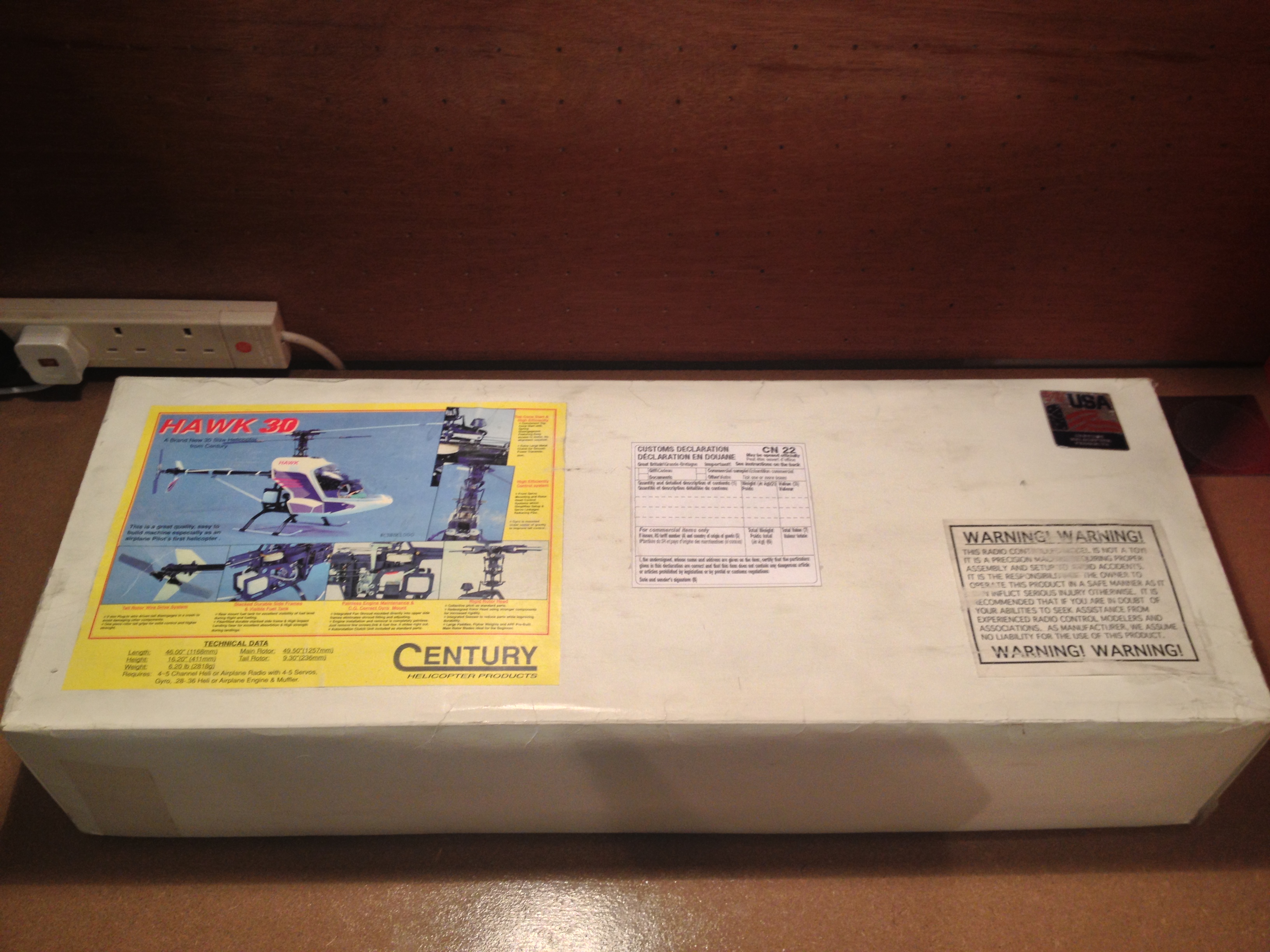
A few years later after having diverted to RC aeroplanes, a new helicopter appeared on the market that combined the modern all-plastic construction with a reasonable price tag.  More importantly it was able to use my standard aeroplane radio.  A bit of research later and I’d purchased a Century Hawk MK 1.  After the Sport 500, this machine was a revelation and it even came part built.  I learnt to fly circuits on this machine and finally laid it to rest following an over ambitious auto-rotation that ended in a nasty boom-strike.  I was unable to find the MK 1 manual online and checked eBay only to find an un-built boxed example exactly like I remembered it!  The number of manufacturer’s and helicopters on the market has changed since I left the hobby in 2005 but its pleasing to see the Hawk has stood the test of time and is still in production at MK IV spec.

I’ll leave for now with pictures of my new purchases and will report on the building later.

An Early Obsession with Flying

I first saw a radio controlled model aeroplane parked on top of the wardrobe at my Great Uncle David’s house in Edinburgh.  Further exploration revealed aircraft were hiding all over the house and many were as long as I was tall.  As a practicing doctor and researcher at the university he really did not have the time to answer all the 1001 questions that an over-active 8 year old with an aeroplane obsession bombarded him with.  However the bug had bitten and I would go on to talk about nothing else for many years.

Around this time we had close family friends and used to visit them every few months.  One of their two sons was close to my age and the other closer to my sister. Visiting them would entail a long car journey and sometimes even the ferry if we or they were stationed overseas (both families were in the forces at the time).  To this day I suffer from motion sickness, but back then when 5 minutes seemed to last an hour it was close to unbearable. It was worth it however as the two brothers had the coolest toys, the latest computers and a whole room full of completed ‘Airfix’ plastic model aeroplanes.

On one journey when they were stationed in RAF Waddington I found on their shelves two amazing new toys, a pair of ‘Keil-Kraft’ balsa wood model aeroplanes.  One, the Cadet, a beautiful glider, the other, the Eaglet, a rubber powered high-wing cabin type.  Like the airfix kits, the bother’s father was the builder.  It was a shame as they never developed much interest in aviation.  My absolute obsession with these models was such that I spent hours just test gliding them across the bedroom exploring how they flew and what adjustments impacted on the (very!) short flight path onto the bed.  Naturally again came 1001 questions and I soon found out model aeroplanes that could fly weren’t just big expensive radio controlled aircraft but came in small relatively inexpensive versions within reach of my pocket money.

Catching the ‘tail-end’ of the traditional model aviation hobby as a child meant that finding kits like these became harder and harder for me. A different story now as there is a burgeoning online market in vintage and replicate kits.

My first attempts at model aircraft, both plastic and balsa were not exactly successful.  Having an obsession that was several generations out of date and that no one else shared meant I didn’t have any friends with which to share ideas and skills.  I was also reclusive and would spend a lot of my time researching aircraft and what I was going to purchase next.  With parents not online this meant school lunch breaks were spent in the local library with its limited resources.  With a strict pocket money determined budget it would take me a while to save up enough pocket money for each tin of paint or glue let alone an actual model.  I therefore wanted to ensure that I made the correct purchase.  Unfortunately impatience and frustration would take over and in an effort to finish a model I would ‘substitute’ with often undesirable results.  However my repertoire of model making skills steadily increased and I would later come to value this.