Balsa Bashing a P40 (Part 2)

Guillow’s Series 400 P40 Warhawk Build:
Cockpit Detail:

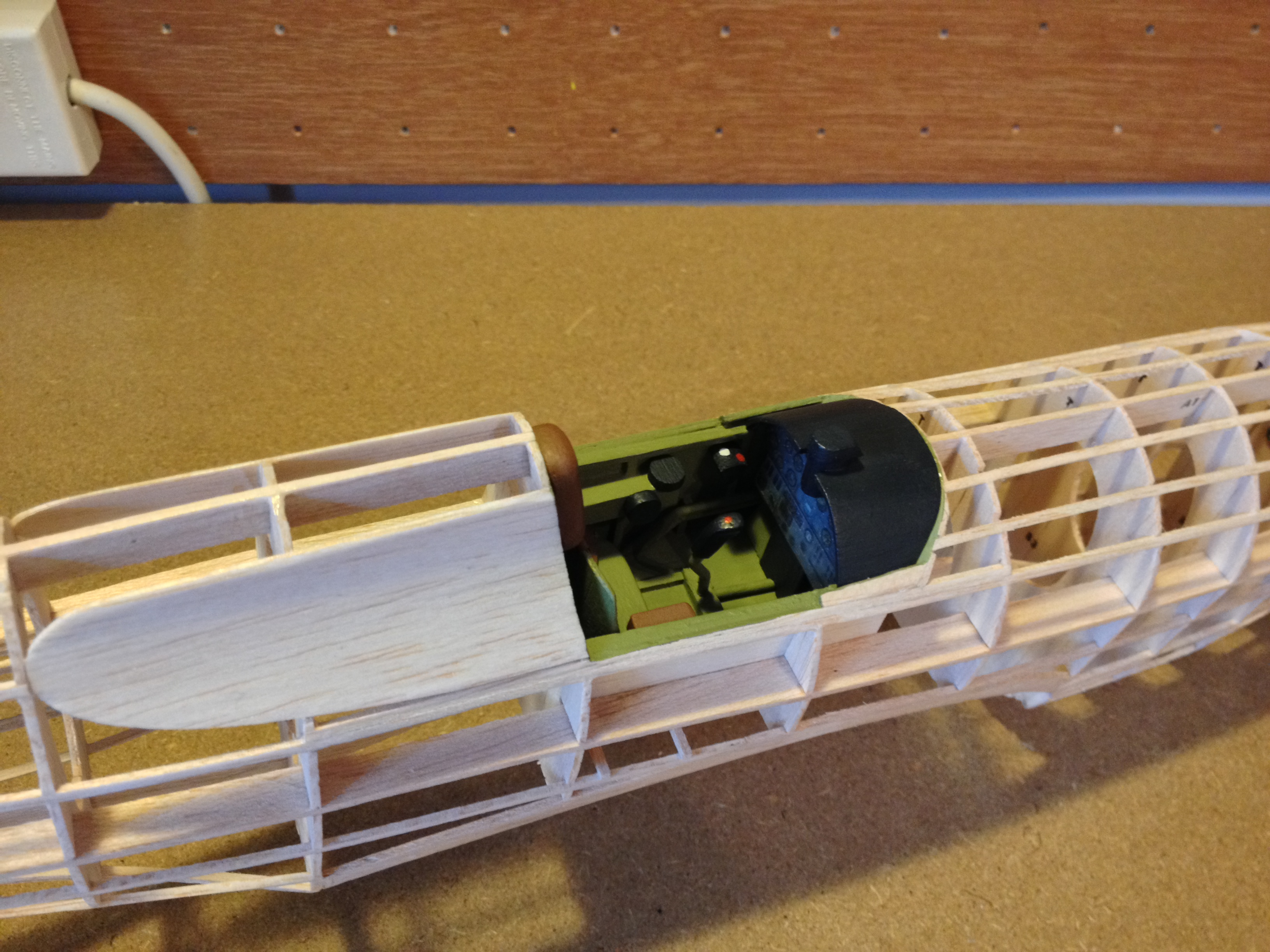
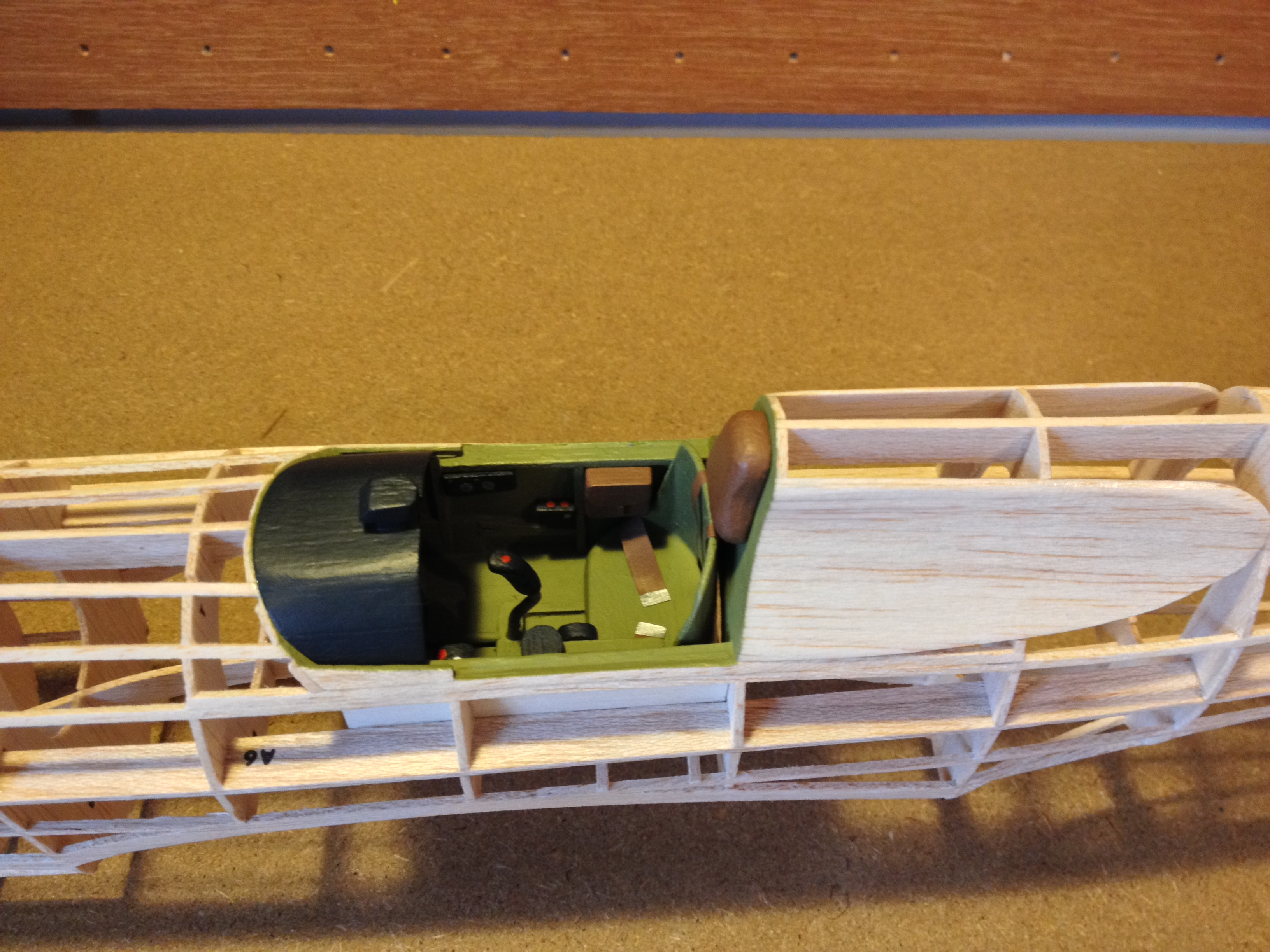
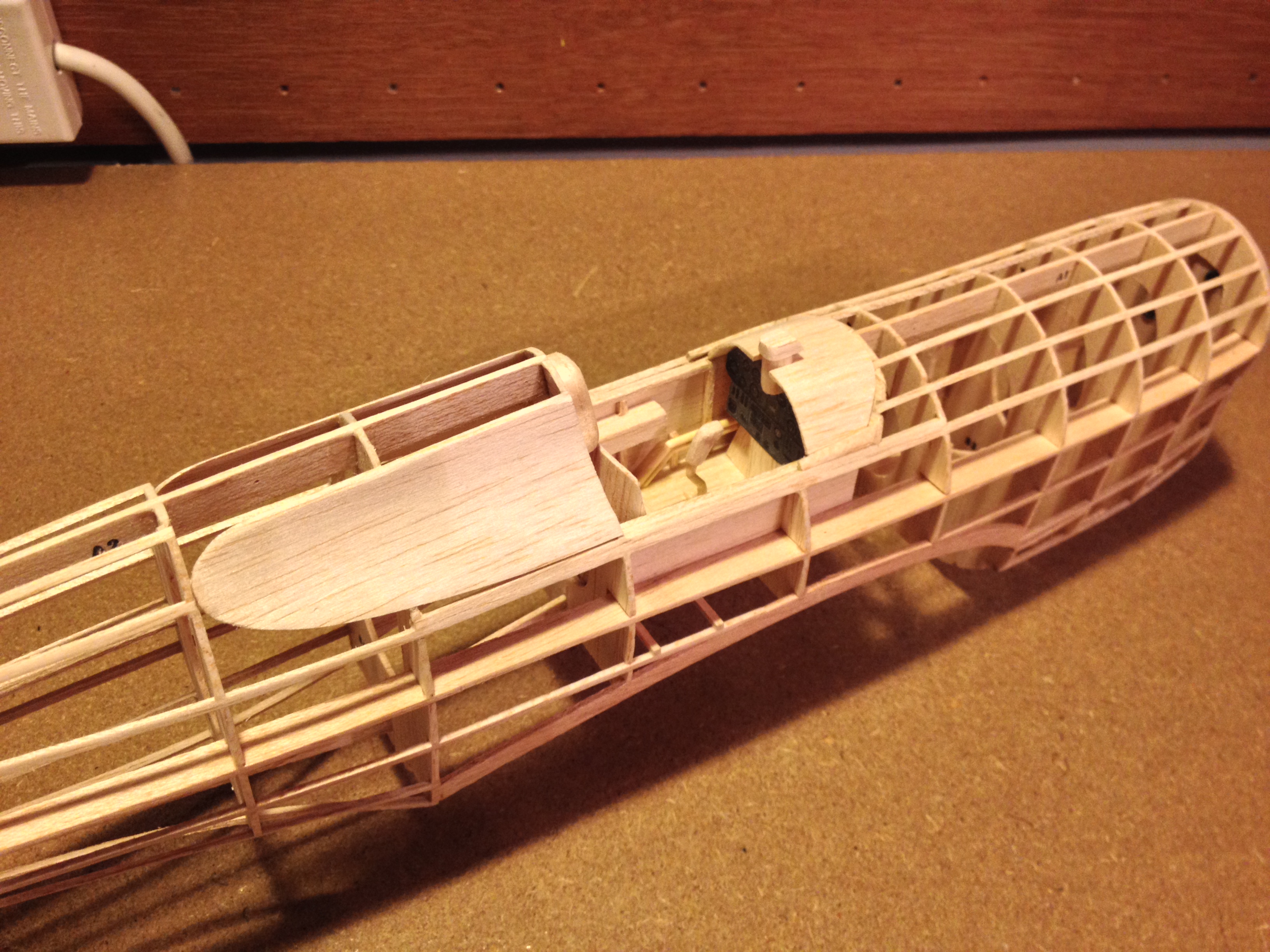
I decided to deviate from the plan’s suggestion of using thin cardboard and instead made the dummy bulkheads behind the cockpit from balsa sheet.  This may add a bit more weight but I feel the trade-off for additional durability worth it, particularly as I’m going to be trimming the canopy side windows from the main moulding and attaching them separately.

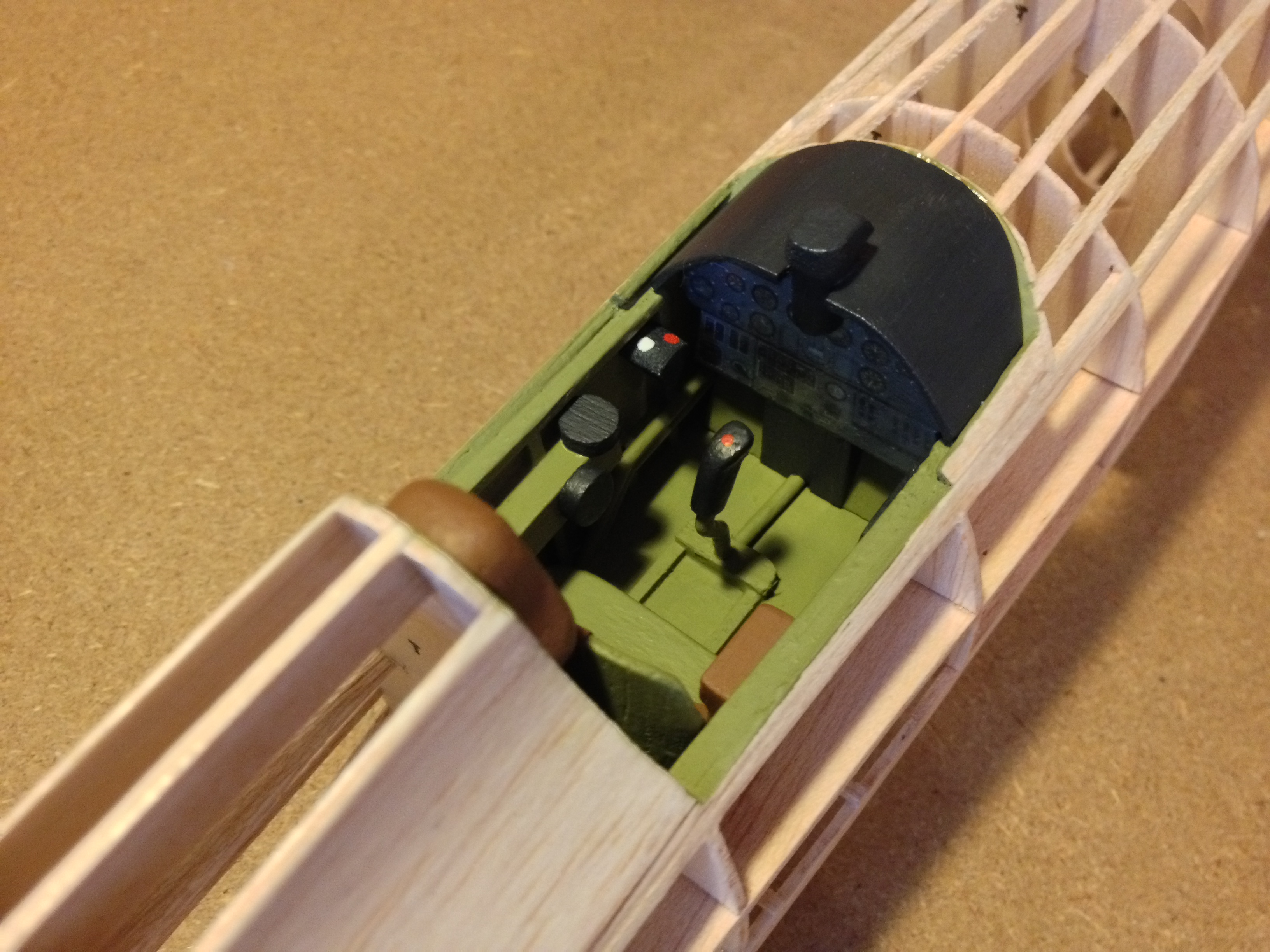
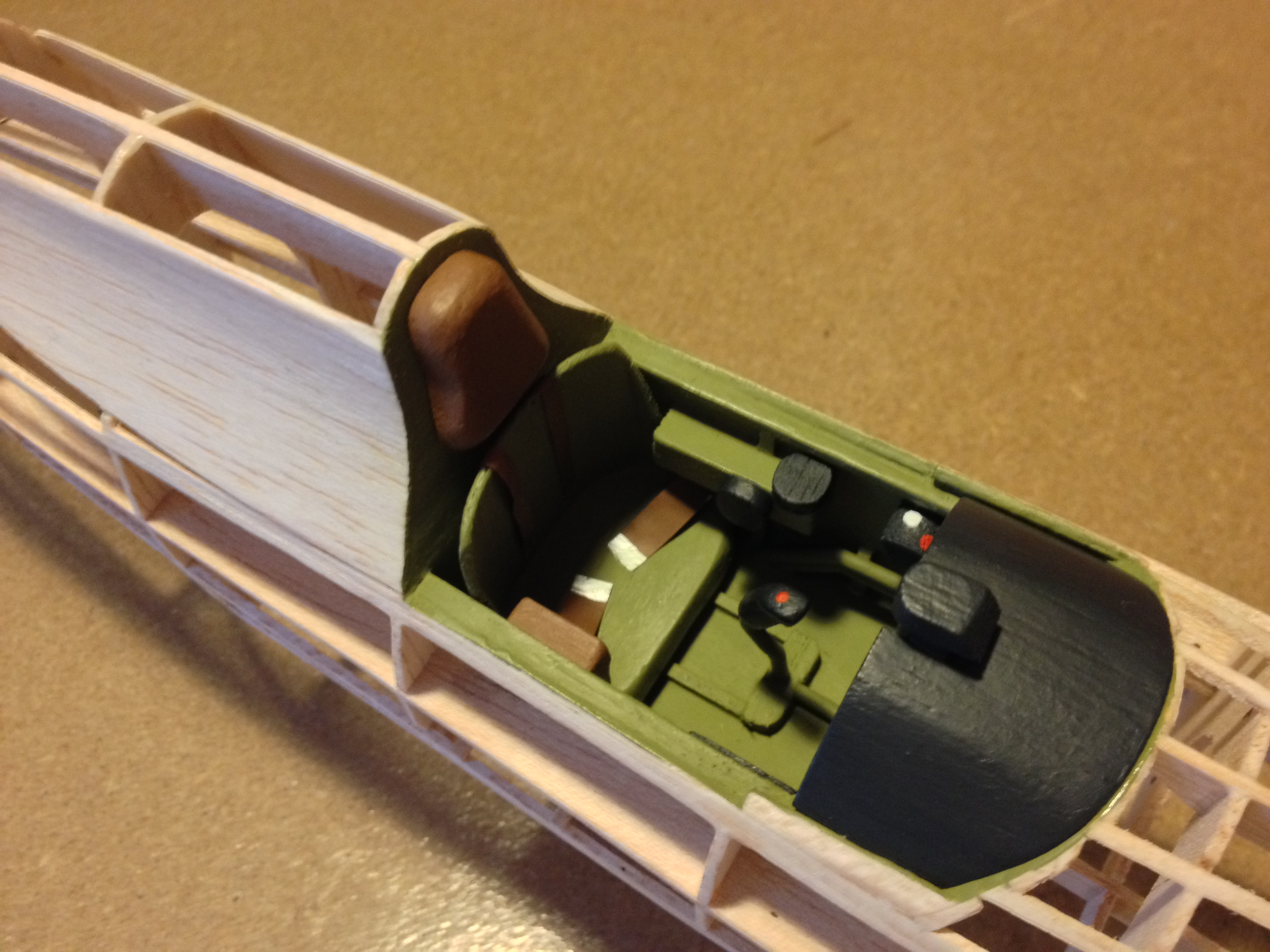
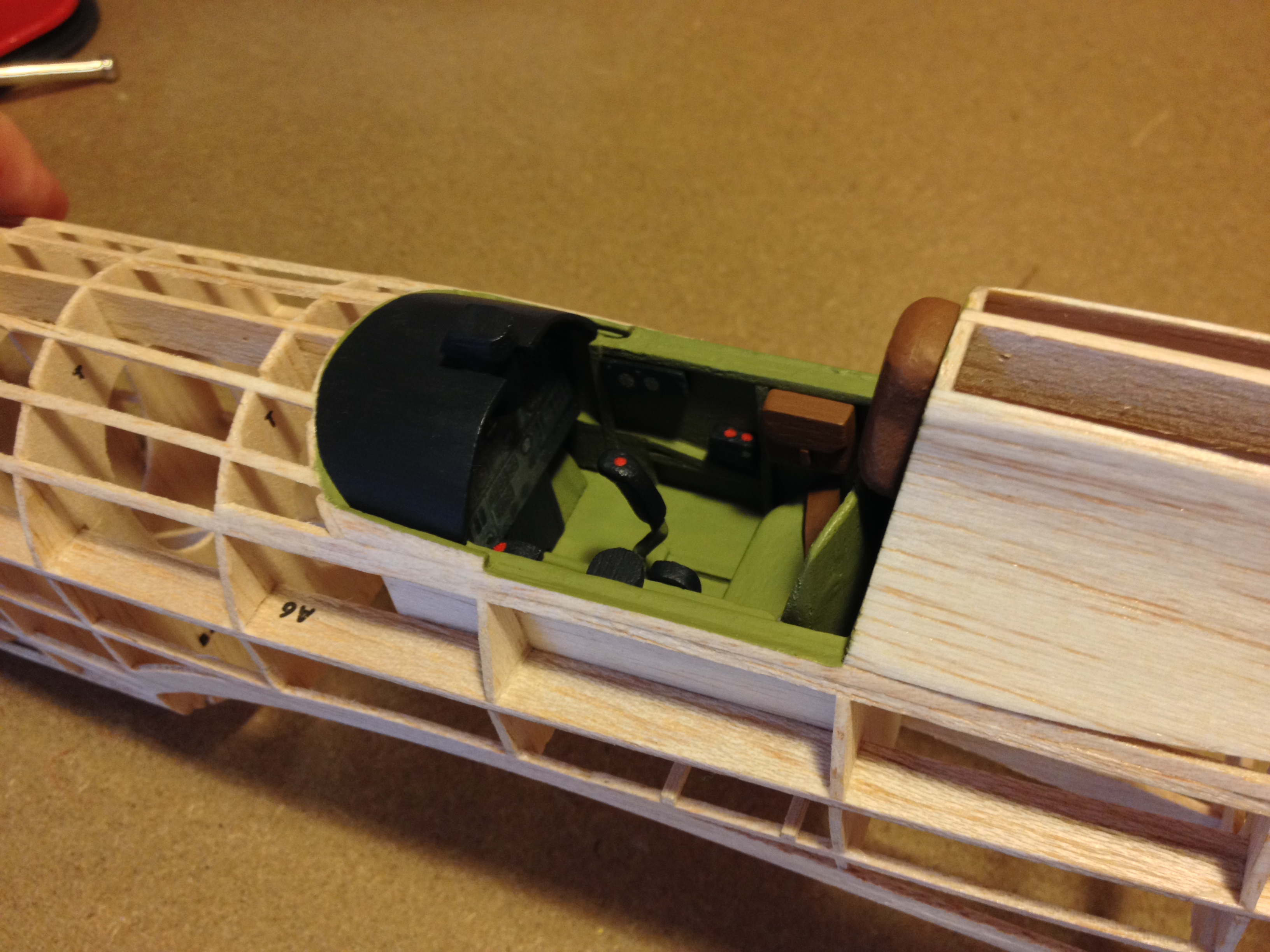
The cockpit detail has been crafted from scrap balsa, doped to seal, and then painted.  The instruments I’ve represented with a photo of the real thing glued to the panel – simple but effective.  My aim was to make something attractive to pass off as ‘semi-scale’ with minimal weight penalty and I’m quite pleased with the final result.

Guillows P40 Cockpit Crafted

Cockpit detail and dummy bulkheads crafted from scrap balsa

Guillows P40 Cockpit Completed

Instrument panel

Guillows P40 Cockpit Completed

Cockpit left side

Guillows P40 Cockpit Completed

Seat and trim adjusters

Guillows P40 Cockpit Completed

Cockpit right side

Guillows P40 Cockpit Completed

Documents pouch

Balsa Bashing a P40 (Part 1)

Guillow’s Series 400 P40 Warhawk Build:

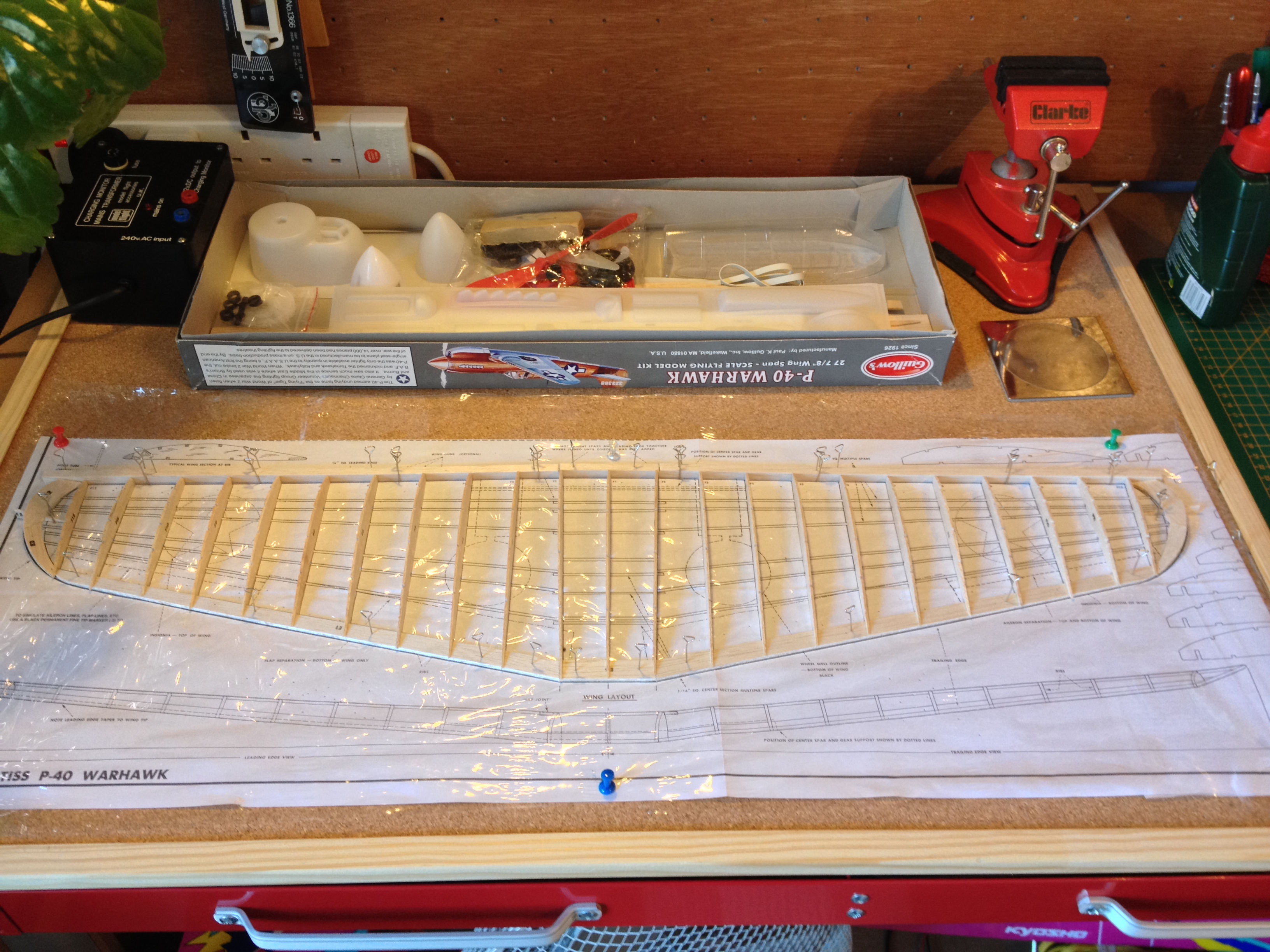
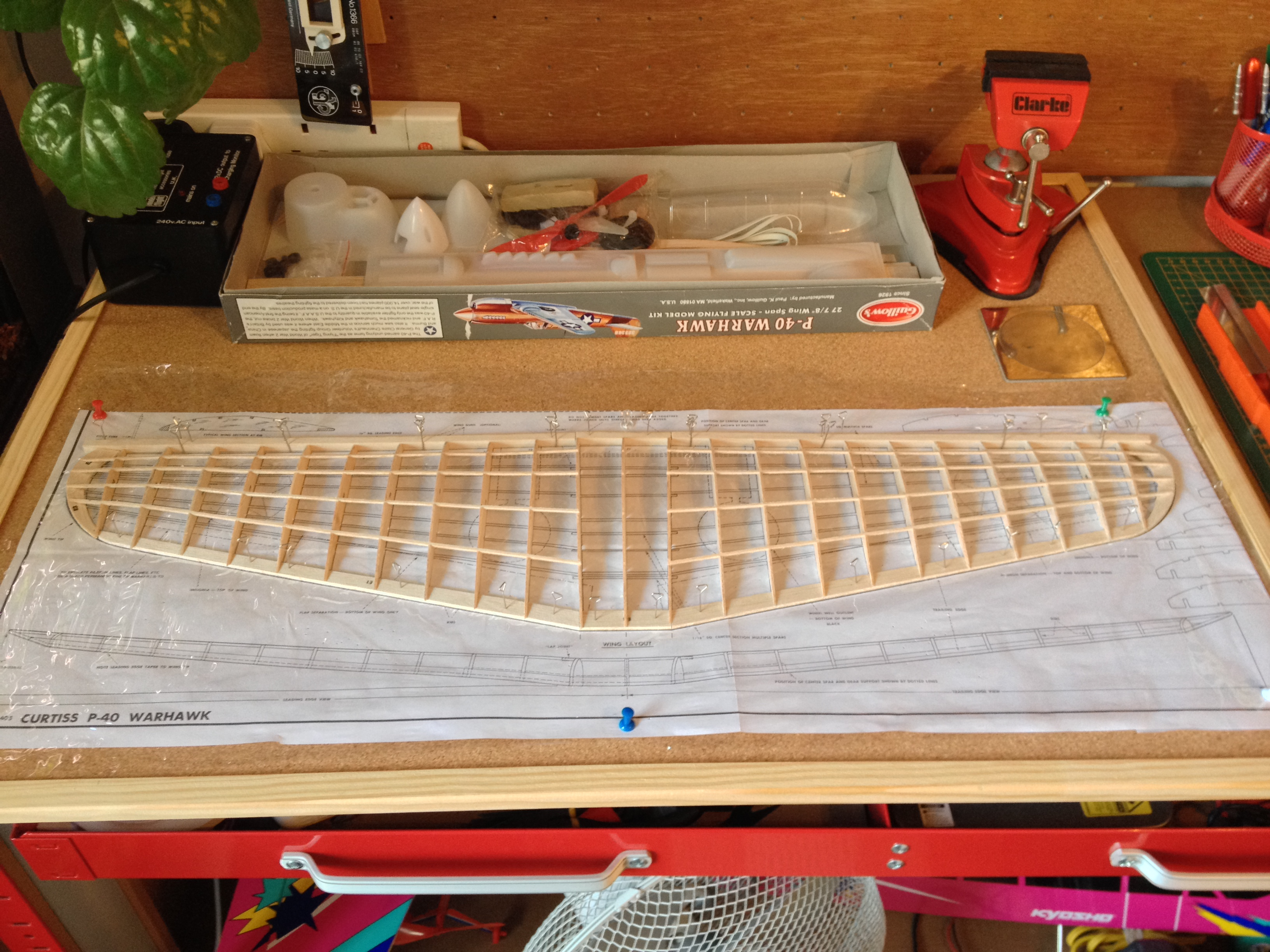
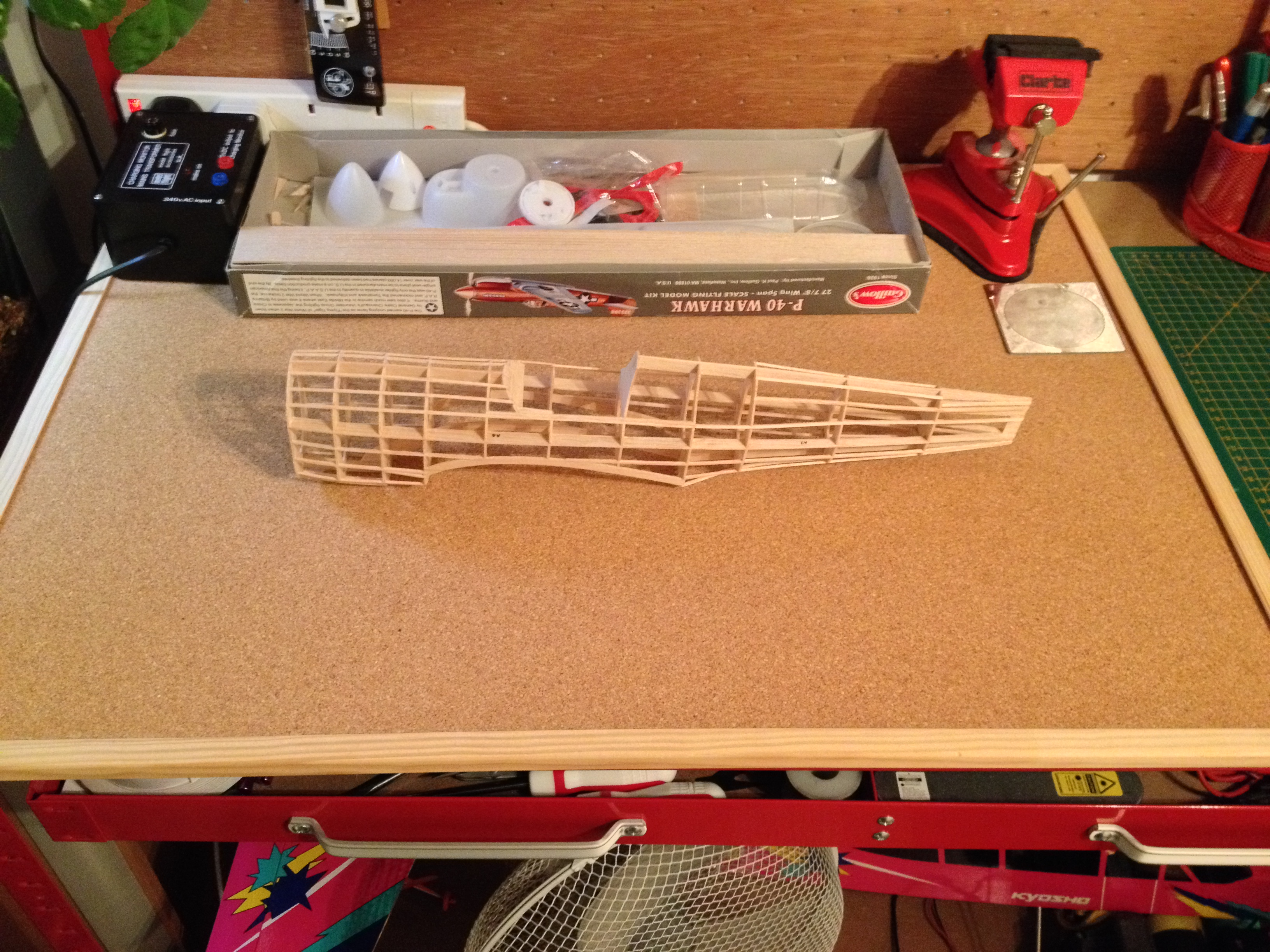
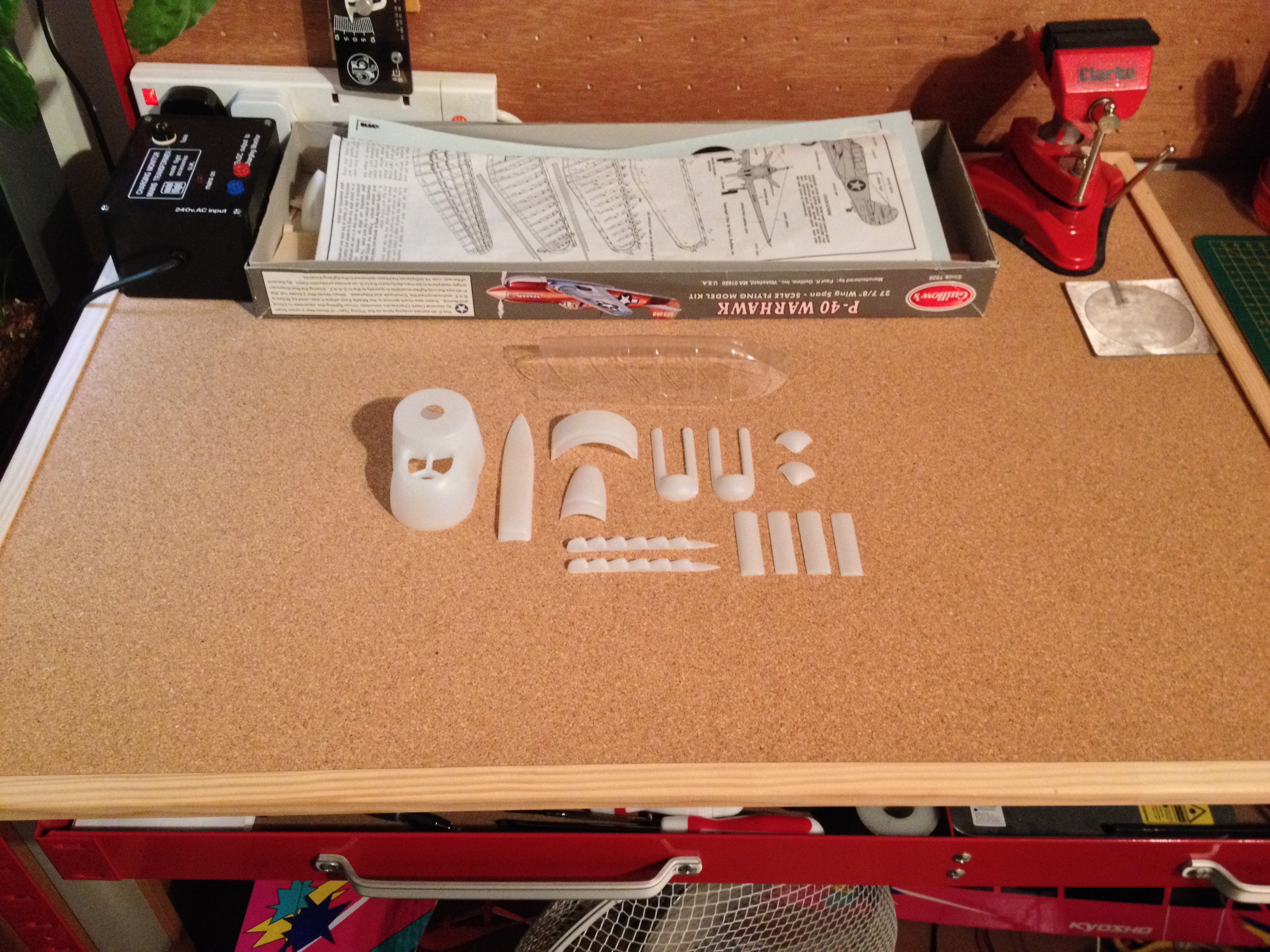
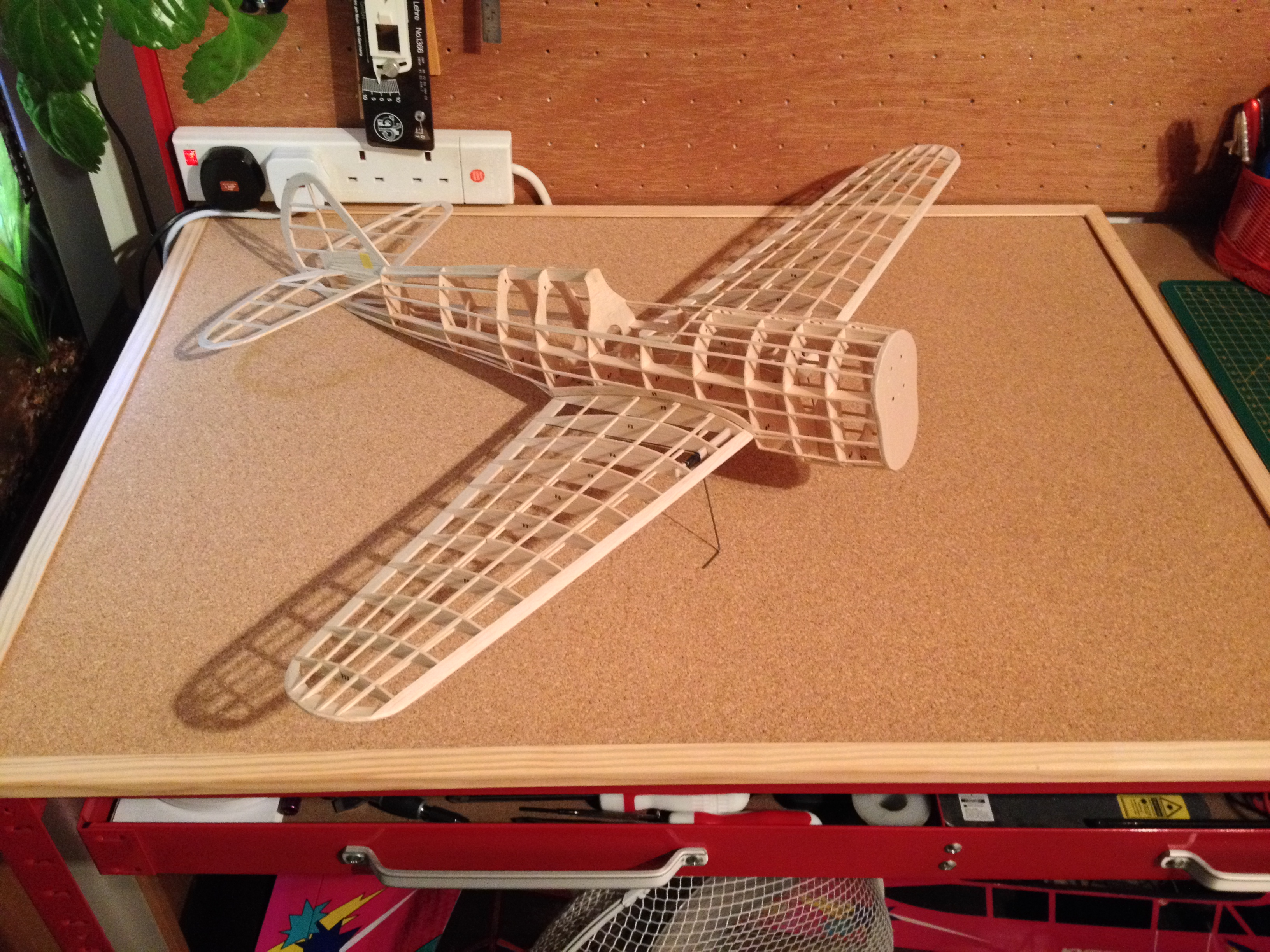
I’ve always been a fan of Guillow’s kits finding them well engineered and very comprehensive.   Many are now converted to micro RC and I did toy with doing this but in the end I decided to build this one as a glow powered free flight/display and will build it for the most part as per the instructions.  The current series 400 kits include laser cut parts but my particular kit must have passed through the net and contained the traditional die-cut parts.  Not to worry though as the parts were soon released from the sheets.  Some formers and spars did need a little work to reduce the size of the stringer slots but overall the frames went together smoothly using white glue throughout.  I always start with the wings.  If I start with the fuselage I spend so long admiring it that I never get around to the rest!

Guillows P40 (A) Ribs Glued

Ribs glued in place

Guillows P40 (B) Top Spars Glued

Top spars glued in position

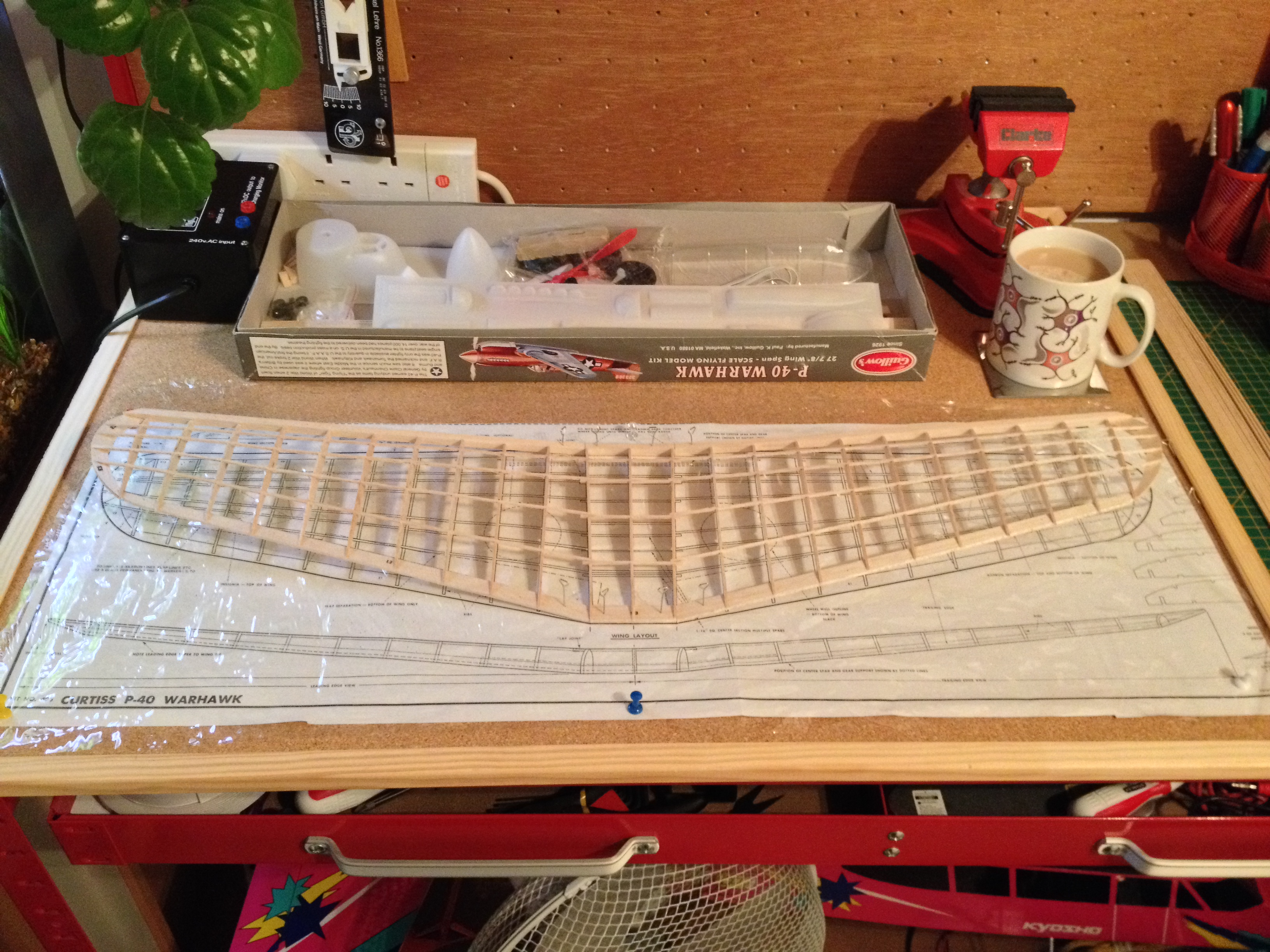
Guillows P40 (C) Dihedral Set

Dihedral Set (and obligatory tea in my favourite Edinburgh Neuroscience mug)

Guillows P40 Completed Wing

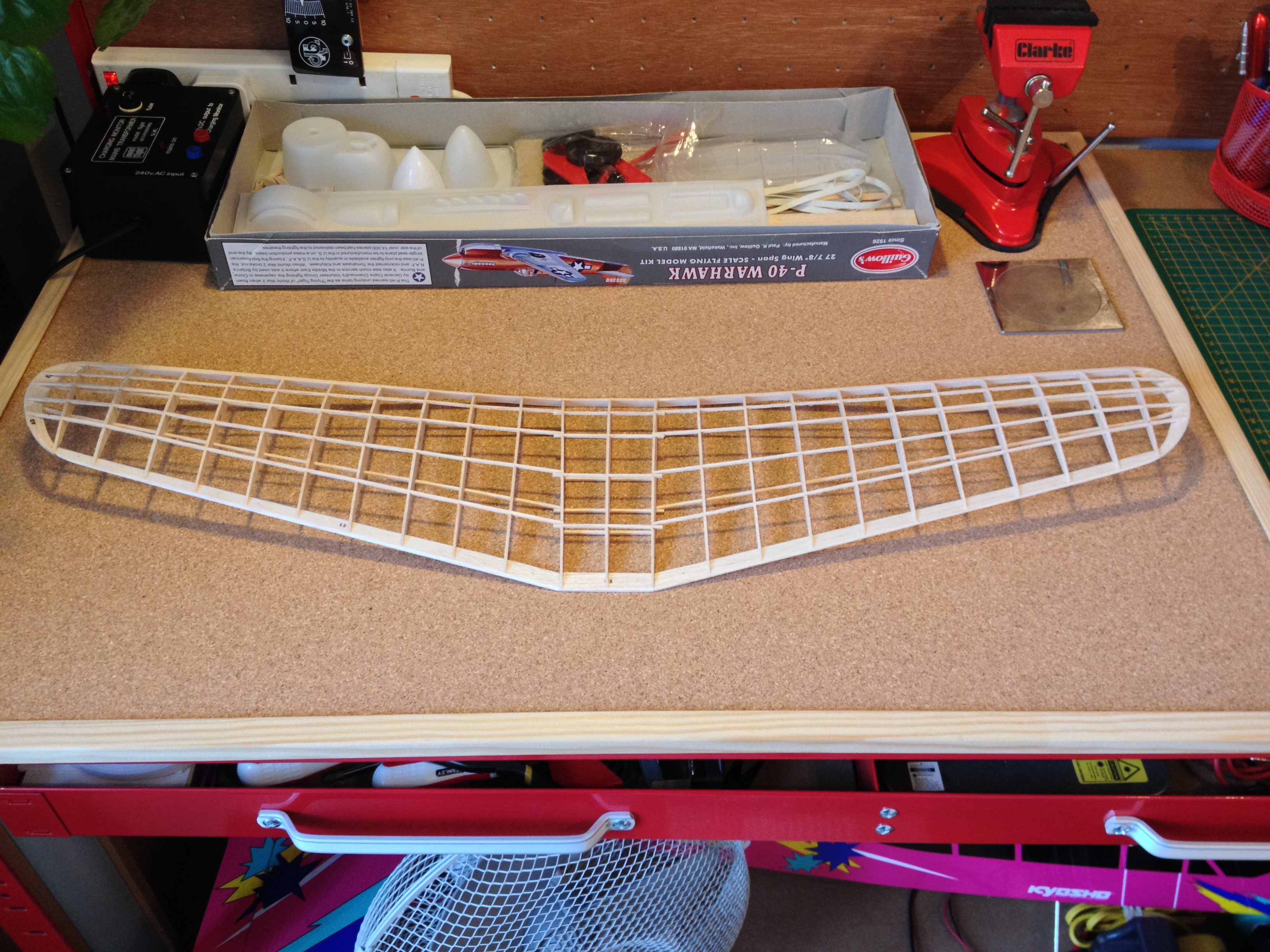
Completed Wing

Guillows P40 (E2) Tail Surfaces Construction

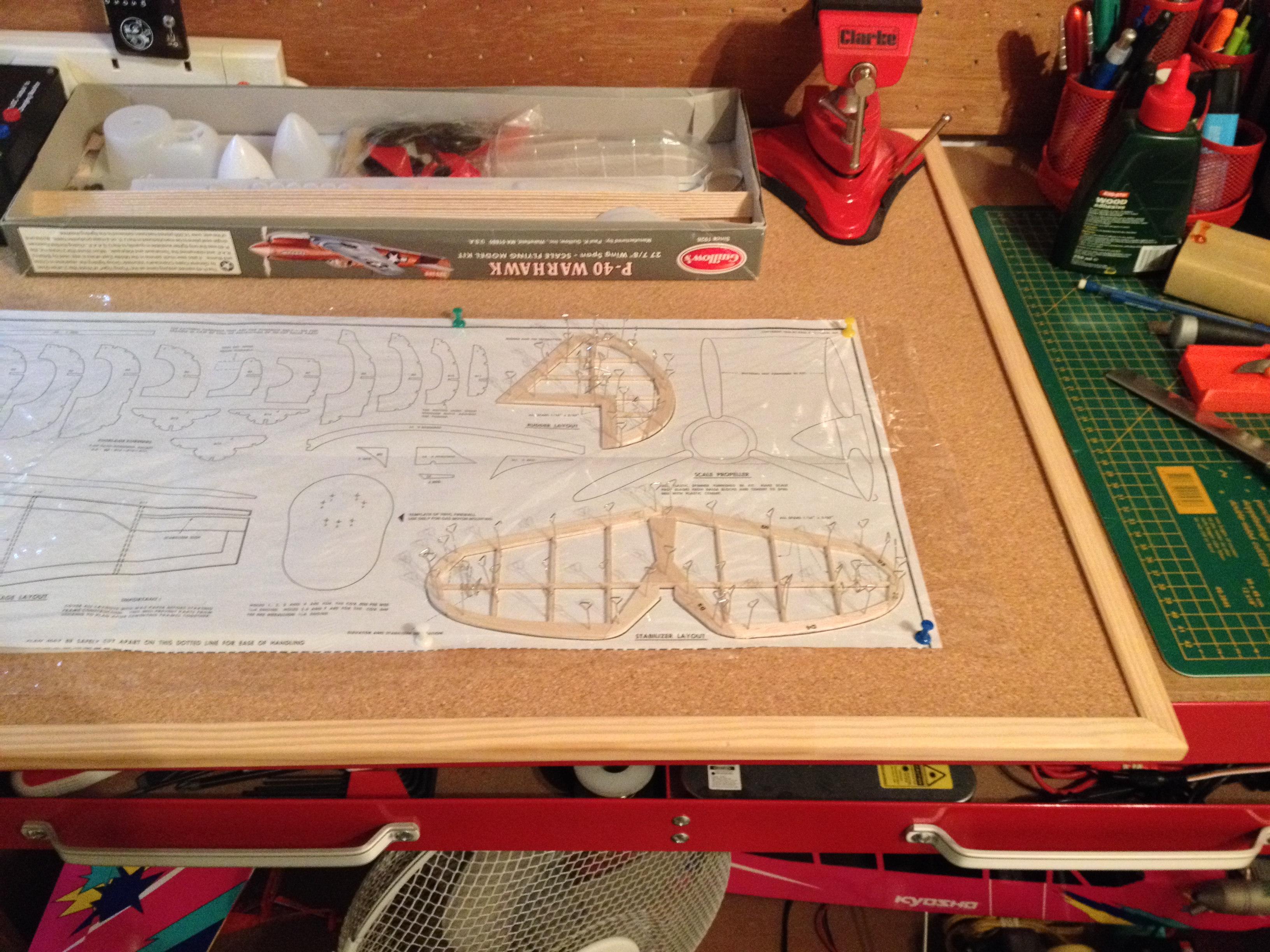
Tail surfaces constructed – nothing complex about these

Guillows P40 (F) Tail Surfaces Sanded

Tail surfaces completed and sanded smooth

Guillows P40 (G) Fuselage Formers

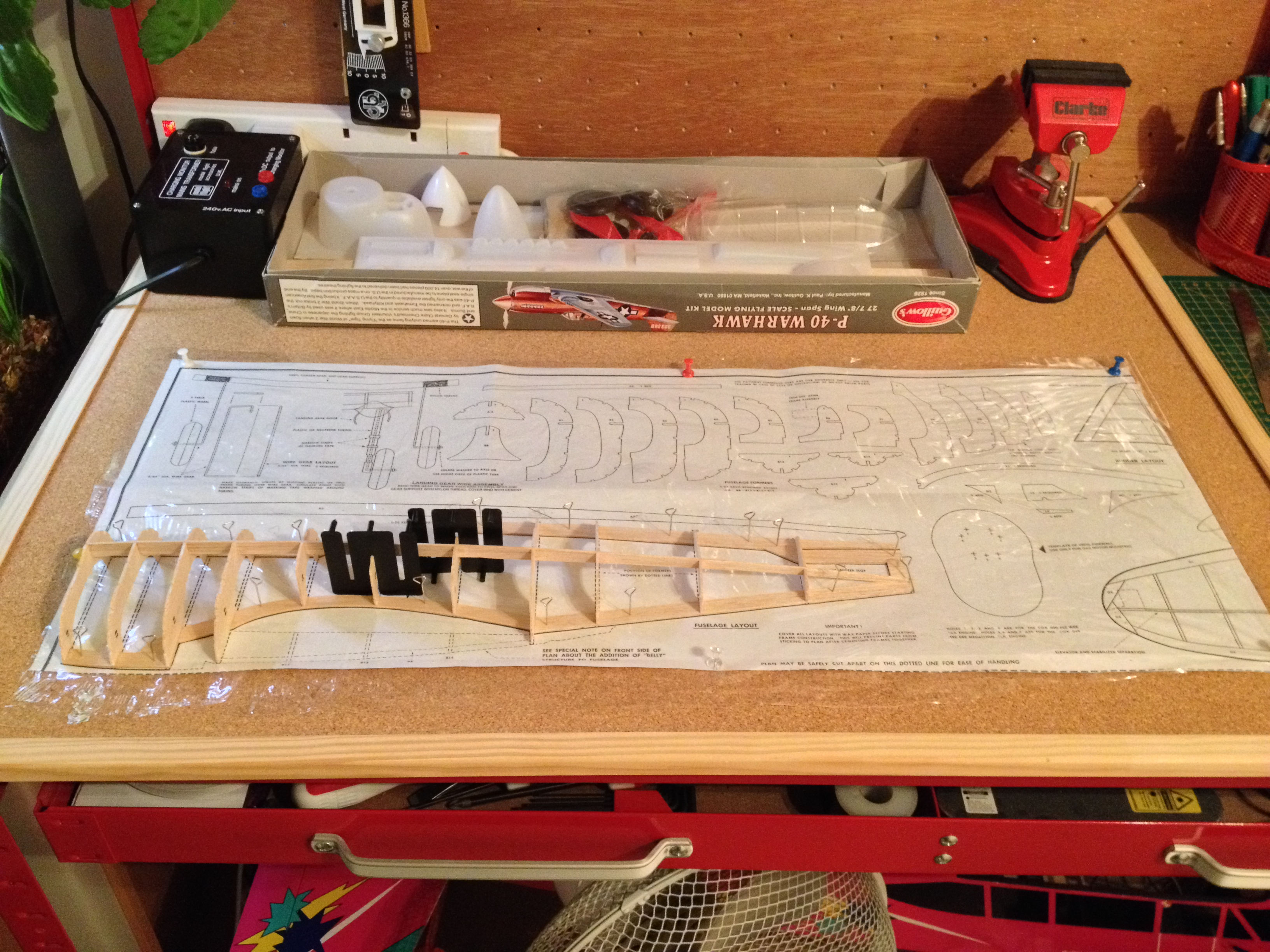
Fuselage formers glued into place. ‘All-Square’ gauges ensure everything is at 90 degrees.

Guillows P40 (H) Opposite Fuselage Formers Added

Opposite fuselage formers added

Guillows P40 (I2) Fuselage Stringers Completed

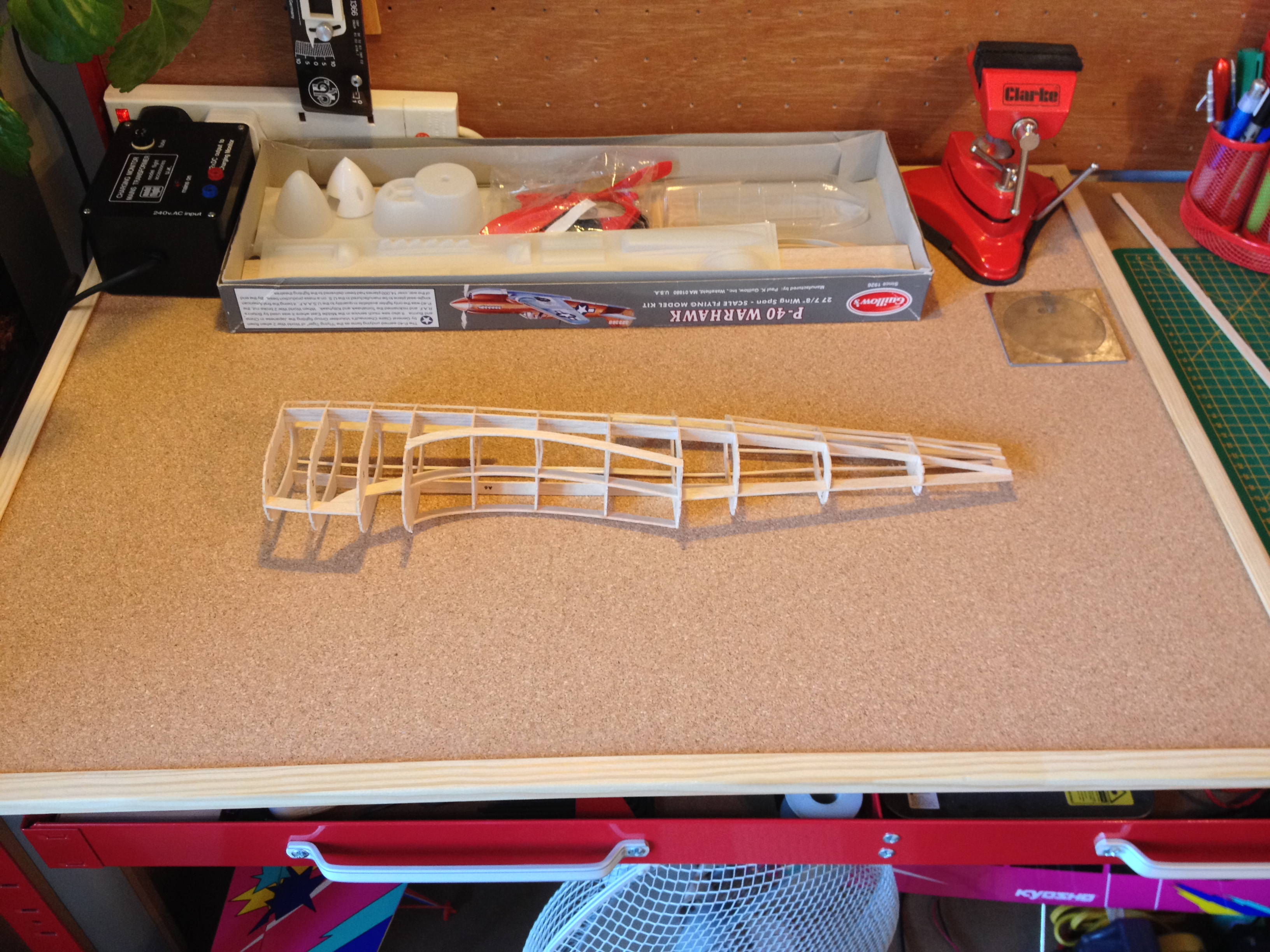
Stringers added to complete the fuselage

Guillows P40 (J) Plastic Parts Cut Out

Plastic parts cut out and sanded to shape

Guillows P40 (K) Dry Assembly

Dry assembly prior to covering

Guillows P40 (K2) Dry Assembly

Looking good already!

Power Packs

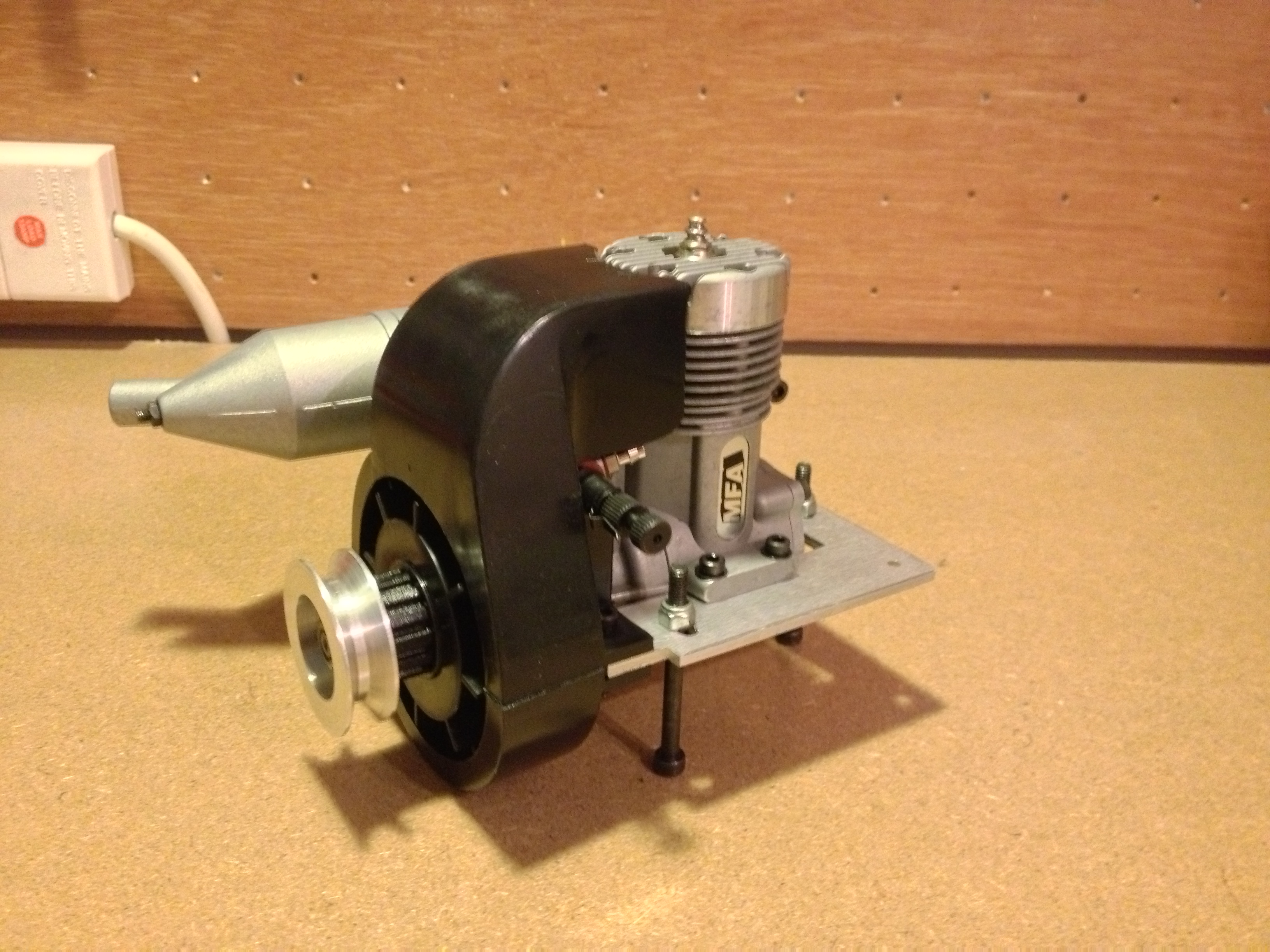
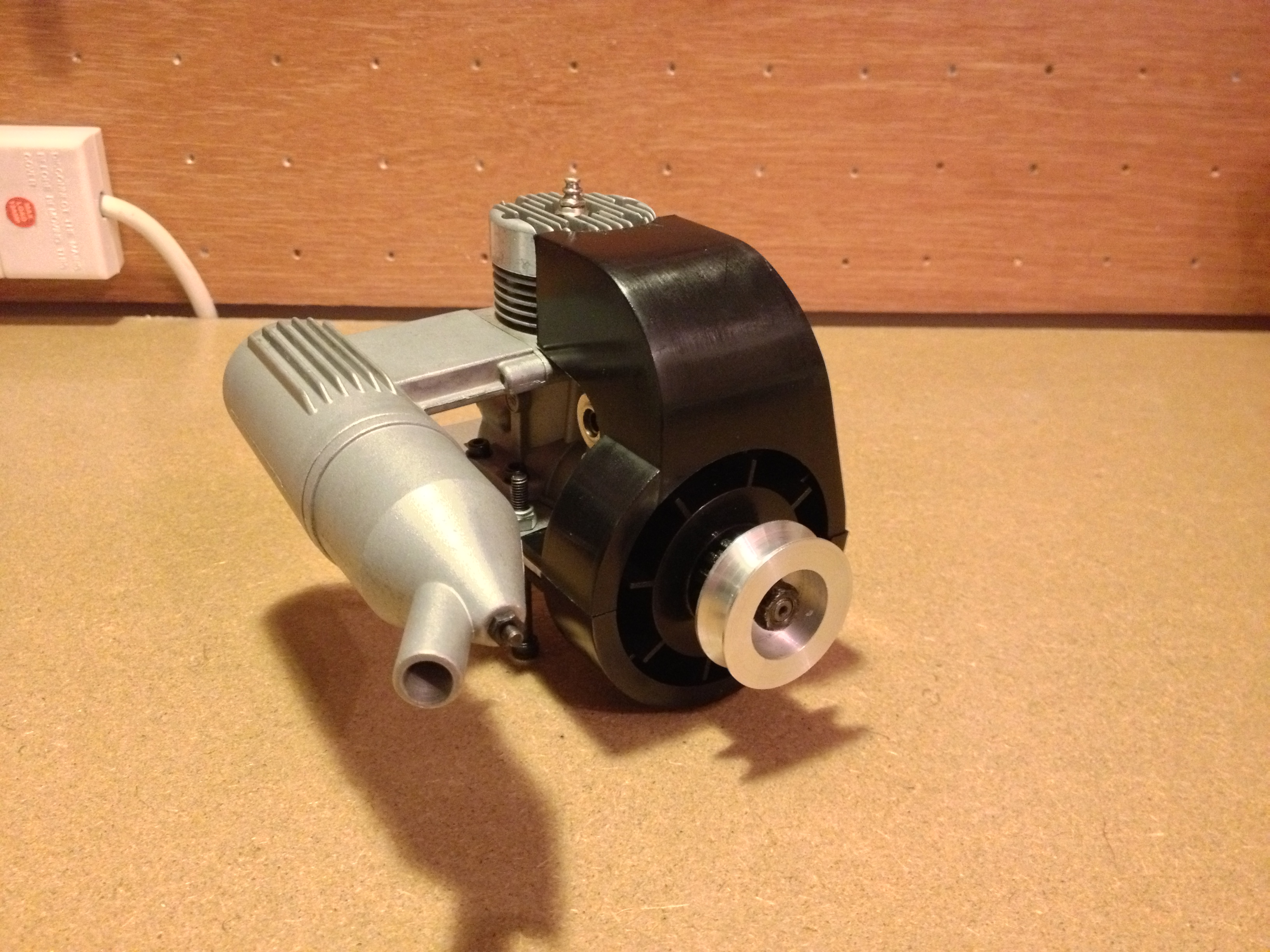
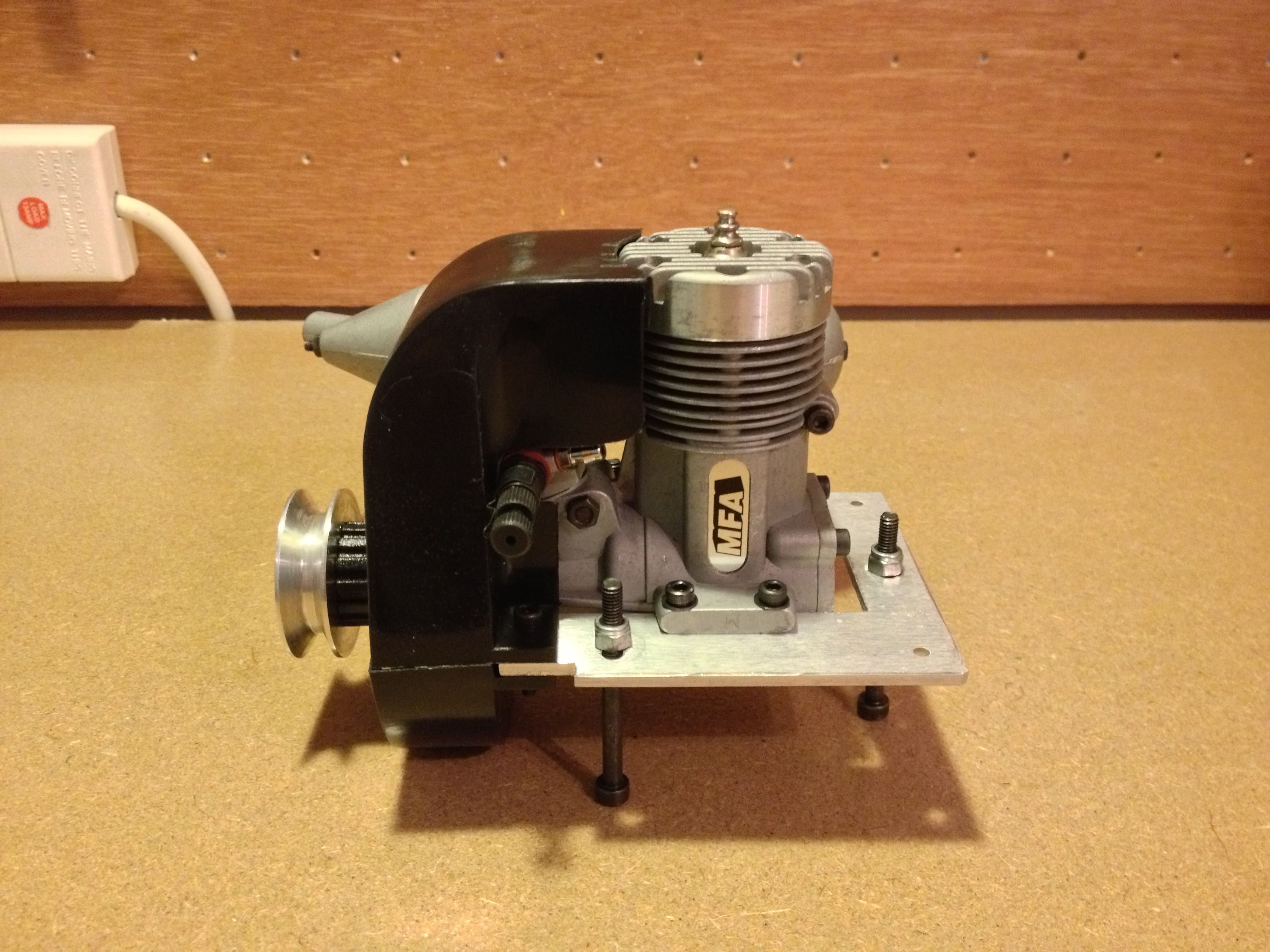
For no further reason than that I like engines, I’ve put together an MFA Sport 500 ‘power pack’ from an original MFA Panther 46A engine and a collection of spares.  The aim was to make a good educational tool at talks and airshow display stands but overall I just think it looks nice sat on my workbench shelf.

MFA Panther 46 Power Pack

MFA Panther 46 Power Pack

MFA Panther 46 Power Pack

Gear’s Up!

The Kyosho Trainer 40 was introduced in late 1997 in two colour schemes: a rather shocking shade of pink and then two years later a second version in yellow was sold alongside the pink.  The yellow version had a host of minor improvements including changes to the nose shape, semi-symmetrical aerofoil and an option for securing the wings with rubber bands.  The part numbers were #11605 (pink) and #11805 (Yellow). The pink version was reviewed in RC Model World April 1998 by Peter Grey; Editor of Radio Race Car International. After reading this I bought mine that same year in an effort to actually get something flying. At the time I was forever trying to get my MFA Sport 500 into the air and while my progress with the Century Hawk 30 was going well, I did not know of any nearby dedicated helicopter clubs in which to seek further help. As a member of a plank fliers-only club I felt that I really should get a plane too, if only to quell some of the grumblings!

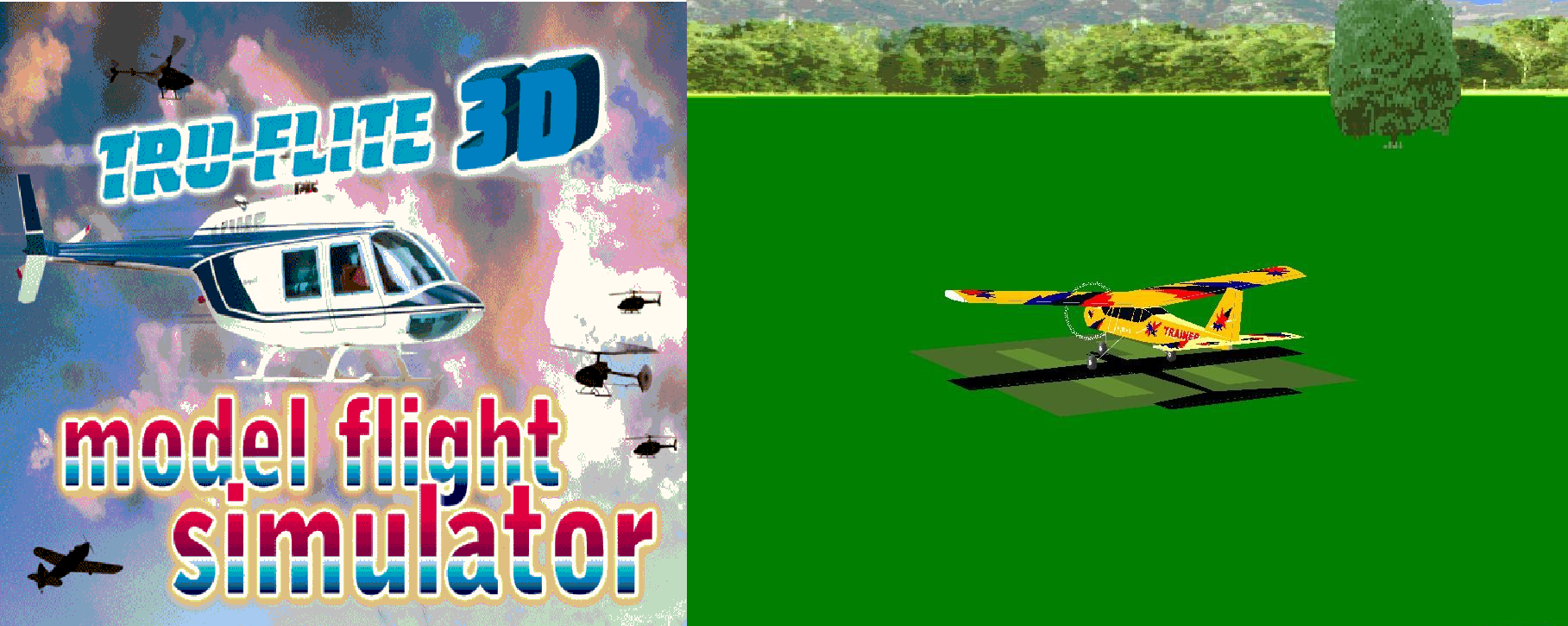
So enter one extremely loud coloured aeroplane (those grumblings just increased further!). Mine was powered by an Irvine Q40 which never missed a beat considering at the time I was pumping straight castor fuel through it (I shudder at the thought now…). A few sessions on the buddy-box with Mick the resident fixed-wing instructor and I was soon solo and trying aerobatics. Product support was good and the model was one of the first to actually feature as a ‘true physics’ copy in the Tru-Flite 3D flight simulator which aided my flying considerably.
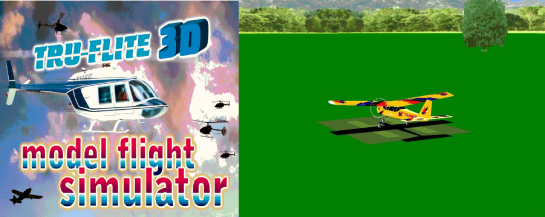
Tru-flite 3D Kyosho Trainer

The Kyosho Trainer 40 as featured on the Tru-flite Sim. Quite a few of the then current models in Ripmax’s line-up were also featured.

The Kyosho line of trainers right up to the current ‘Calmato’ versions have always had a reputation for being lively and will loop, roll, spin and tail stall all day with a decent engine up front.  Indeed the yellow version, reviewed in R/C Modeller October 2000, with it’s semi-symmetrical aerofoil and reduced dihedral would continue on it’s current trajectory without demonstrating significant auto-correction.  What they are not however is ‘precise’. As a high winged and floaty design it’s not so easy to place the plane exactly where you want and nor can you exactly guarantee where it will exit. All fine at high altitude but get lower and you enter the realm where you really should be flying a clean-lined low winged design. Cue some overconfidence and after several months of almost non-stop fun I attempted a slow roll a little too slow and ploughed into the deck.

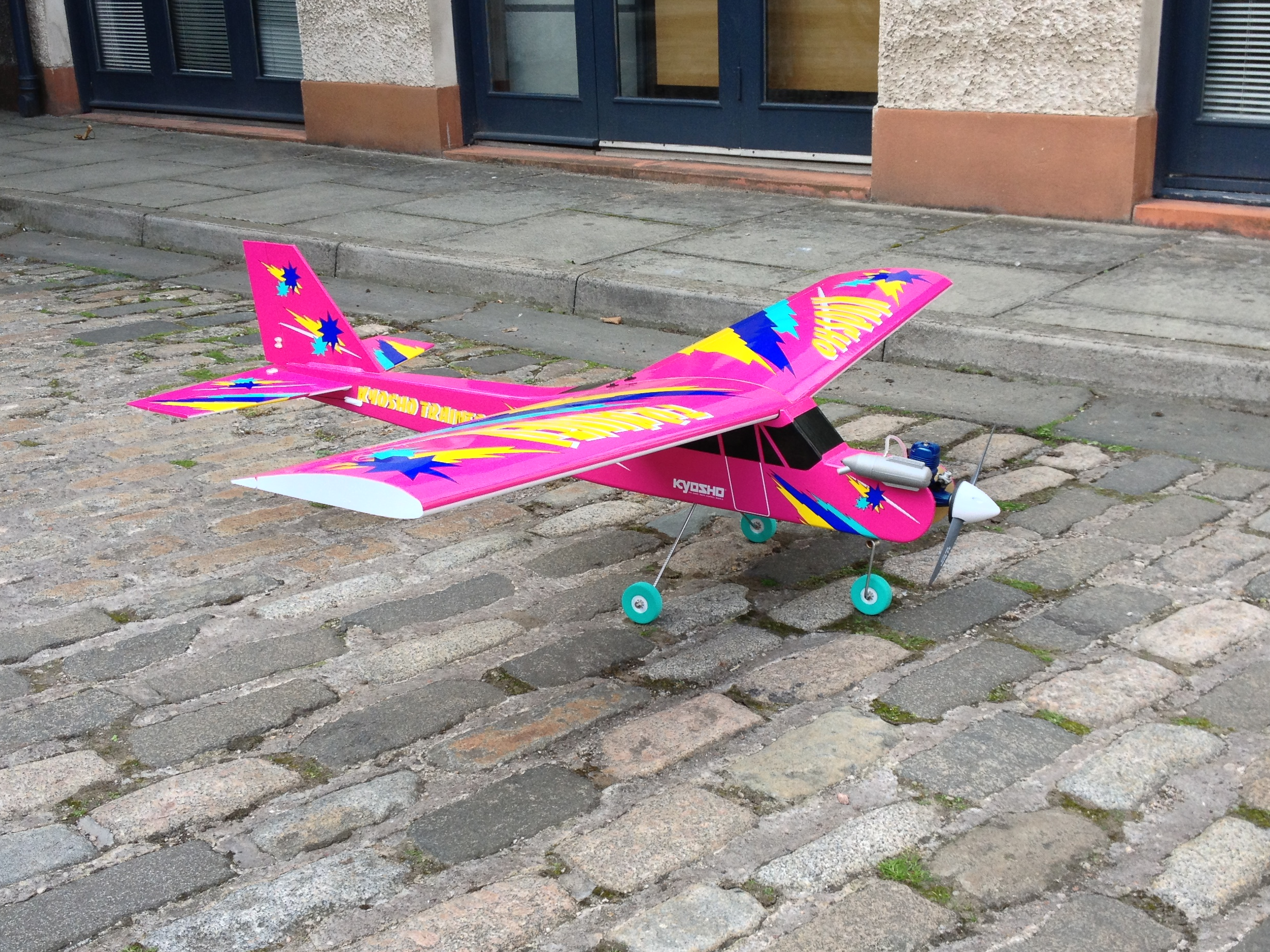
Whenever I visit other people’s hobby workshops I’m always secretly envious of those who still have their original trainer aircraft and have accorded it (a well-earned) pride of place on a shelf.  For the last year I’ve had a saved search term on eBay hoping another Kyosho trainer would come up; I was surprised this month to find one un-built in the box. While it wouldn’t be the ‘actual’ aircraft I learnt on, it was close enough. The auction ended much lower than I expected, I guess the colour put most off and it certainly seemed even ‘pinker’ than I remembered.

Although not my ‘first’ aeroplane the Kyosho Trainer was the first with which I actually flew. A couple of others were unfortunately damaged during construction including a Precedent Fly-Boy and another ARTF (Thunder Tiger Eagle 30H) that were both ‘re-kitted’ by a then teething miniture dachshund…. #pinkwasnotmychoice!
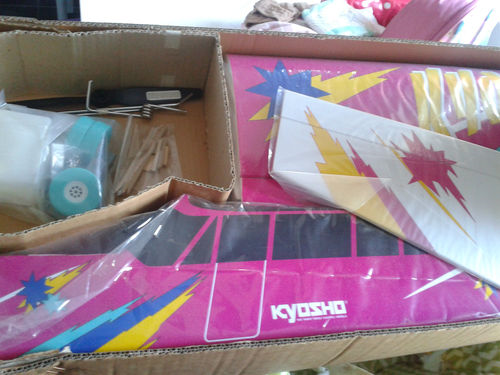
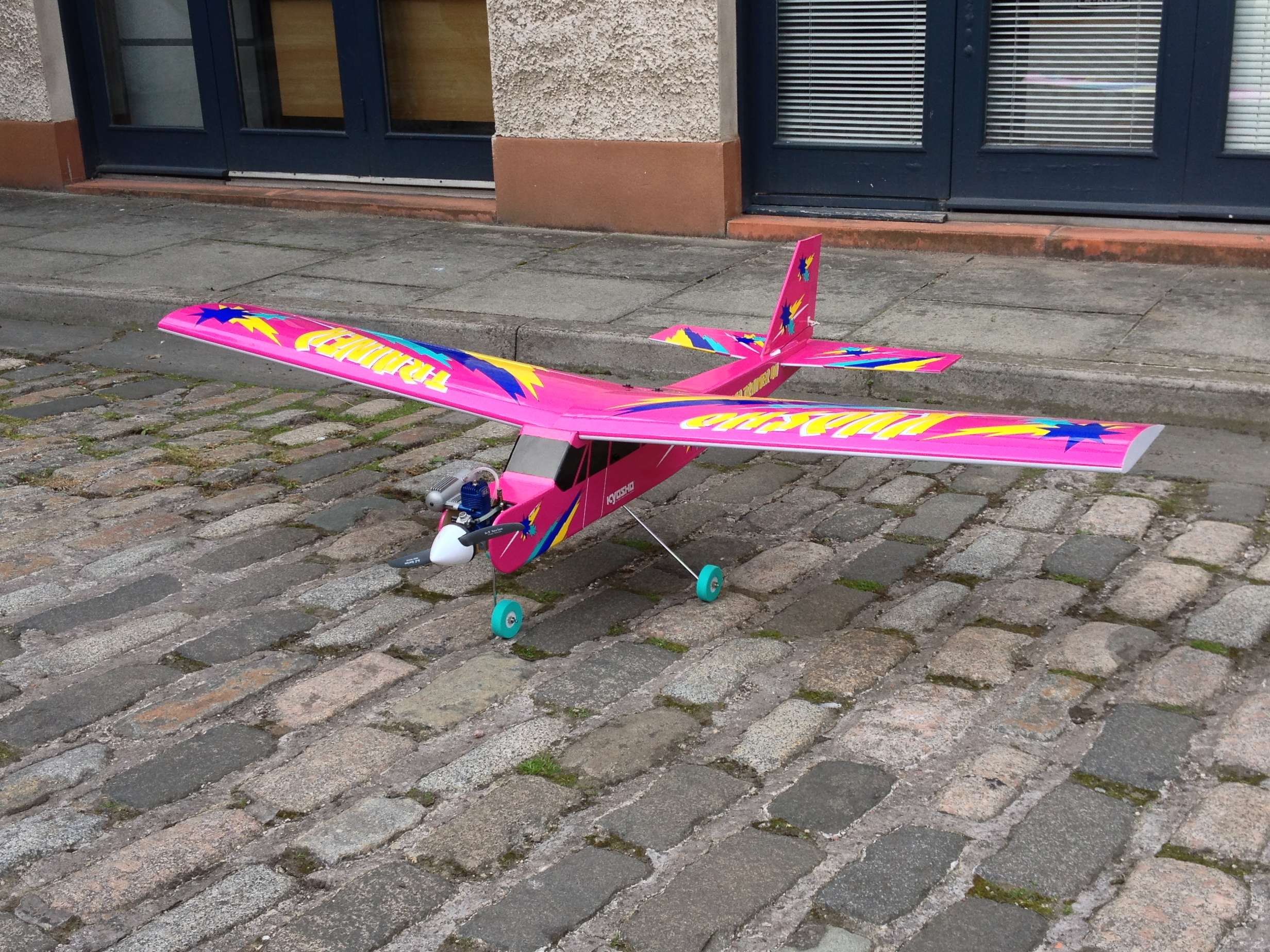
Kyosho Trainer 40

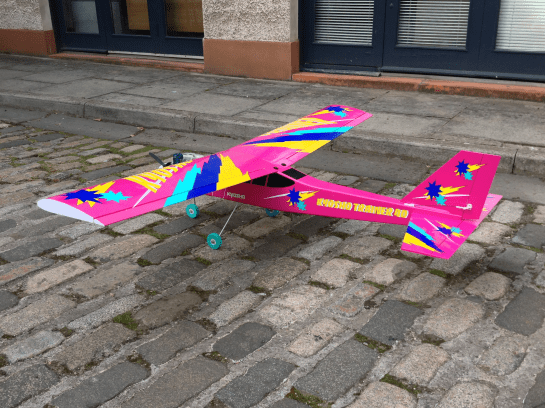
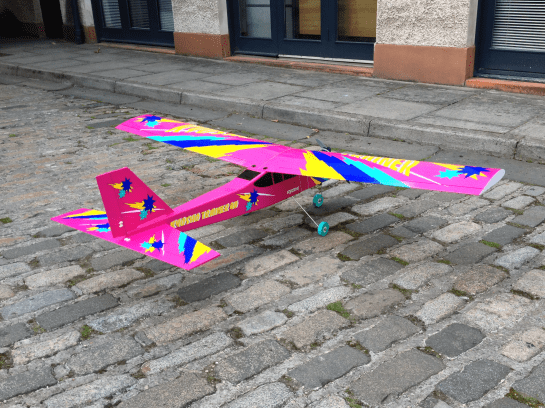
Very very Pink! Only snag was a lack of instructions: I eventually managed to source them online albeit in German… Still all the measurements I needed were there.
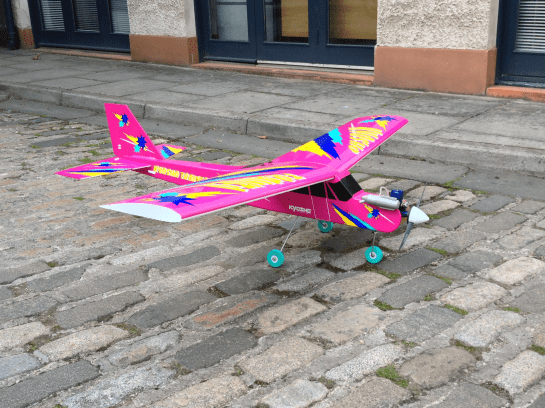
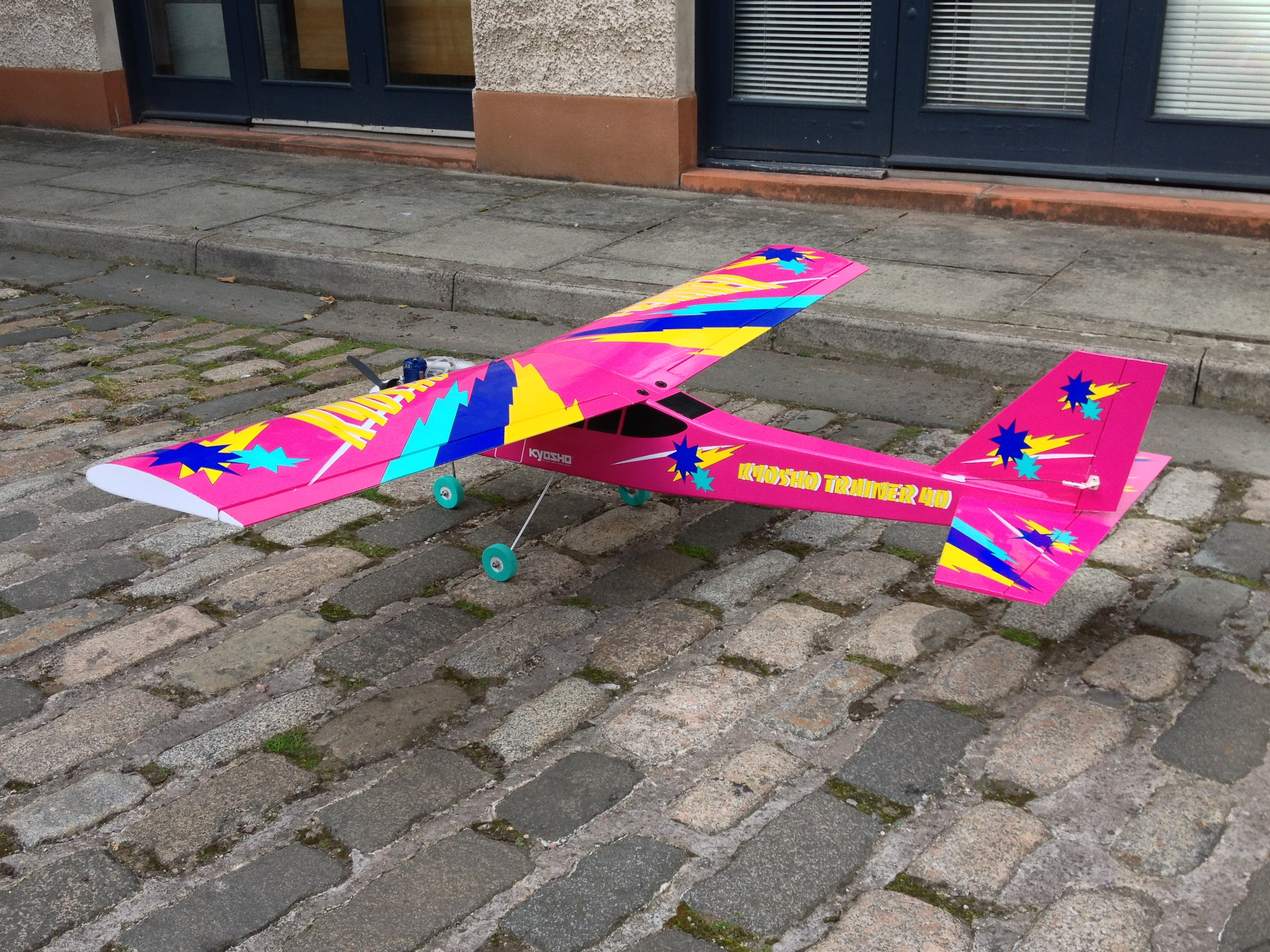
Kyosho Trainer 31.08.13 (3)

Late 1990’s Japanese colour schemes don’t get much more garish than this!
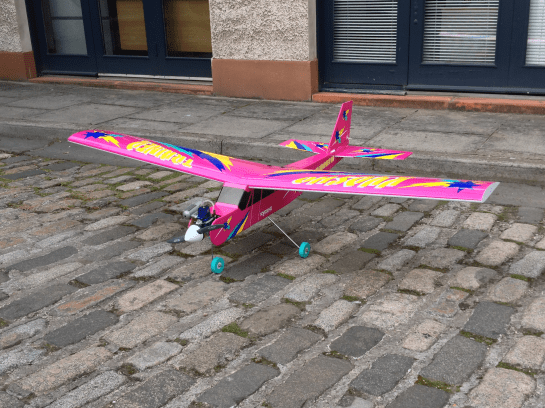
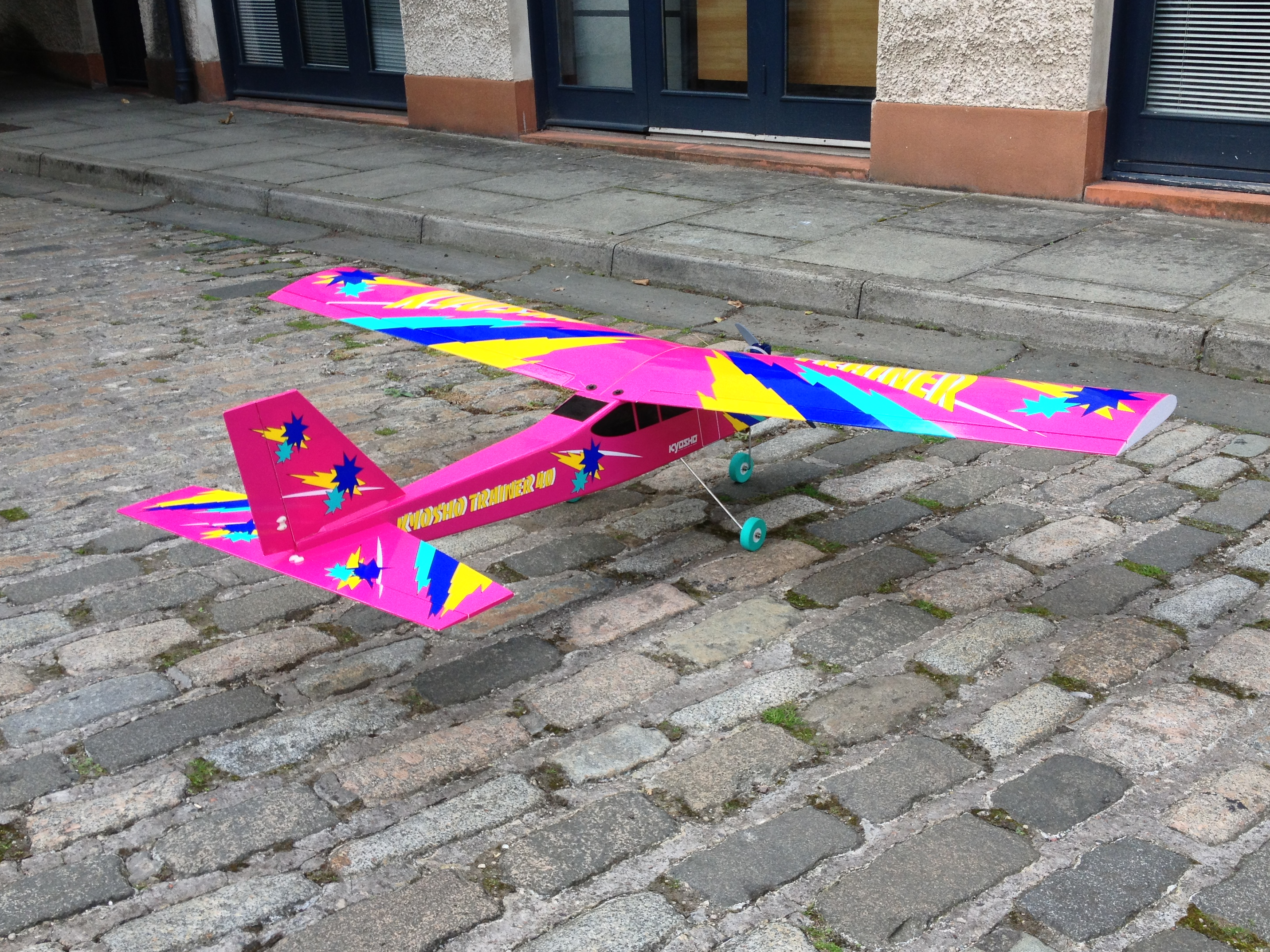
Kyosho Trainer 31.08.13 (4)

I’ve fitted an OS 40-LA up front. Not the most powerful in it’s class but it has more than enough power for this type of plane.
Kyosho Trainer 31.08.13 (2)

The only modification I made was to fit some push rod exit mouldings (Slec) to tidy up the exits and keep oil out.
Kyosho Trainer 31.08.13 (1)I’ve uploaded the manual for the Kyosho Trainer here.  Note this manual refers to the pink version #11605. The yellow version #11805 is very similar in construction apart from the balance point is further forward at 85-90mm.

Fixed a Fixed Pitch (Part 2)

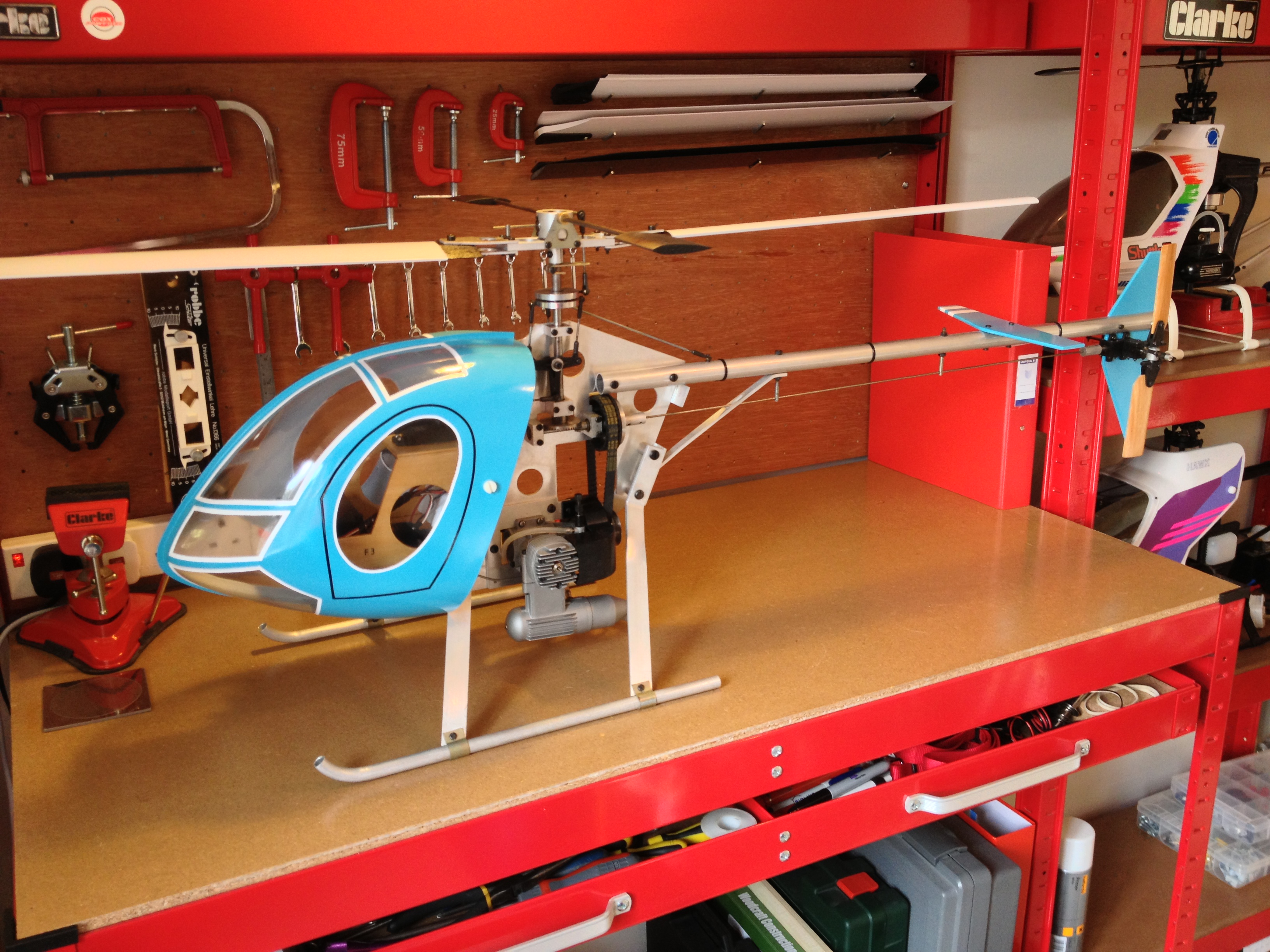
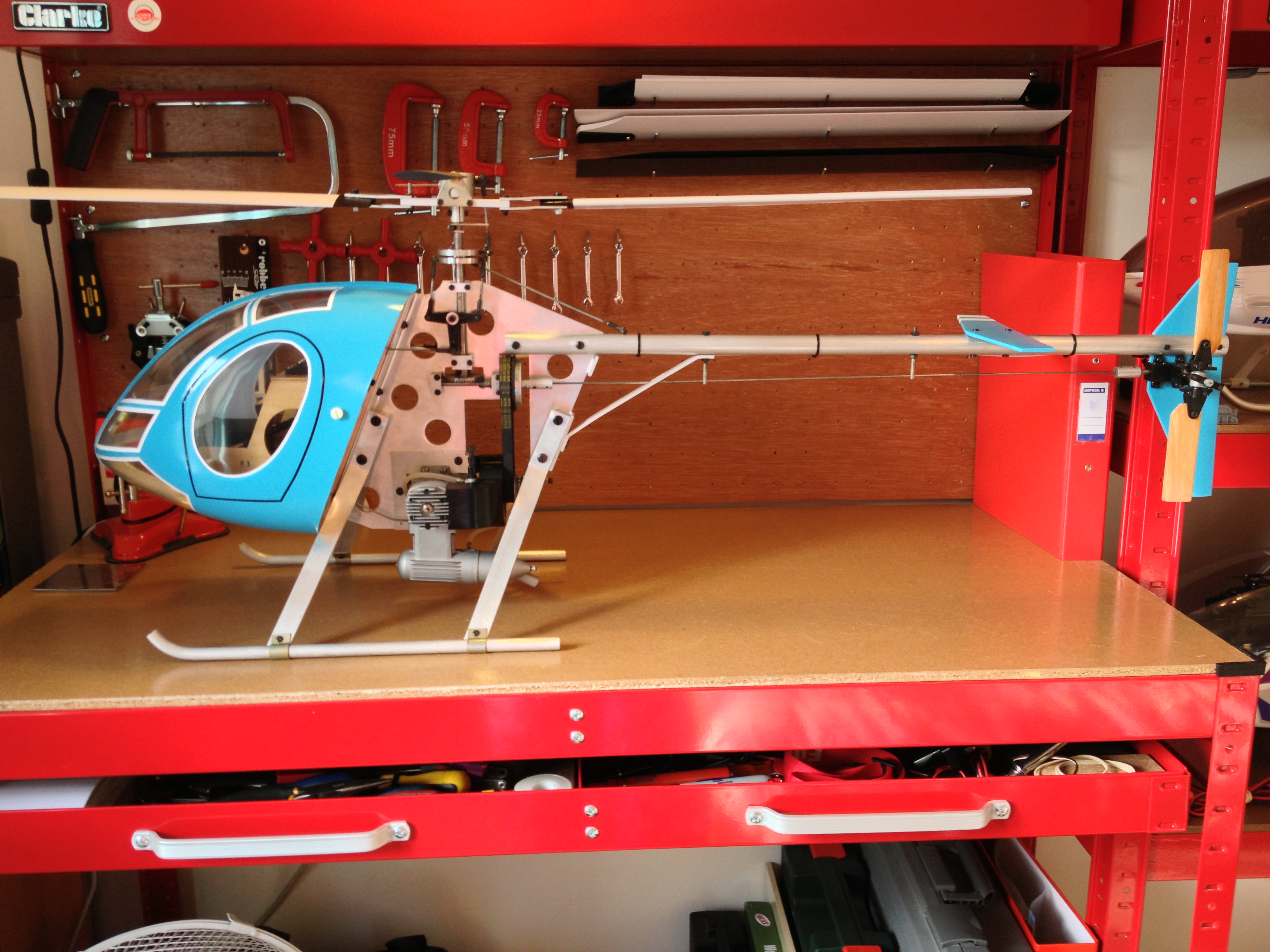
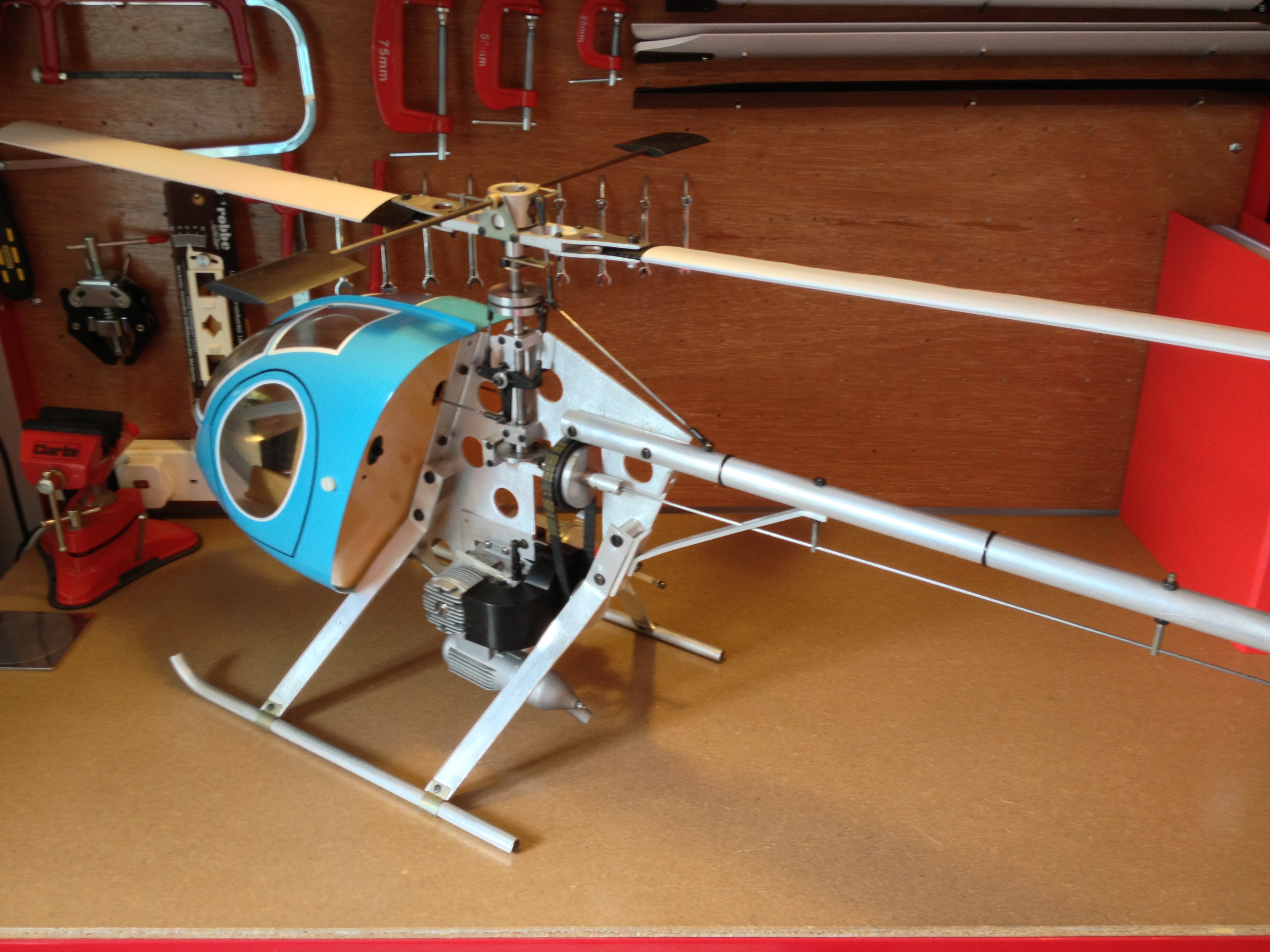
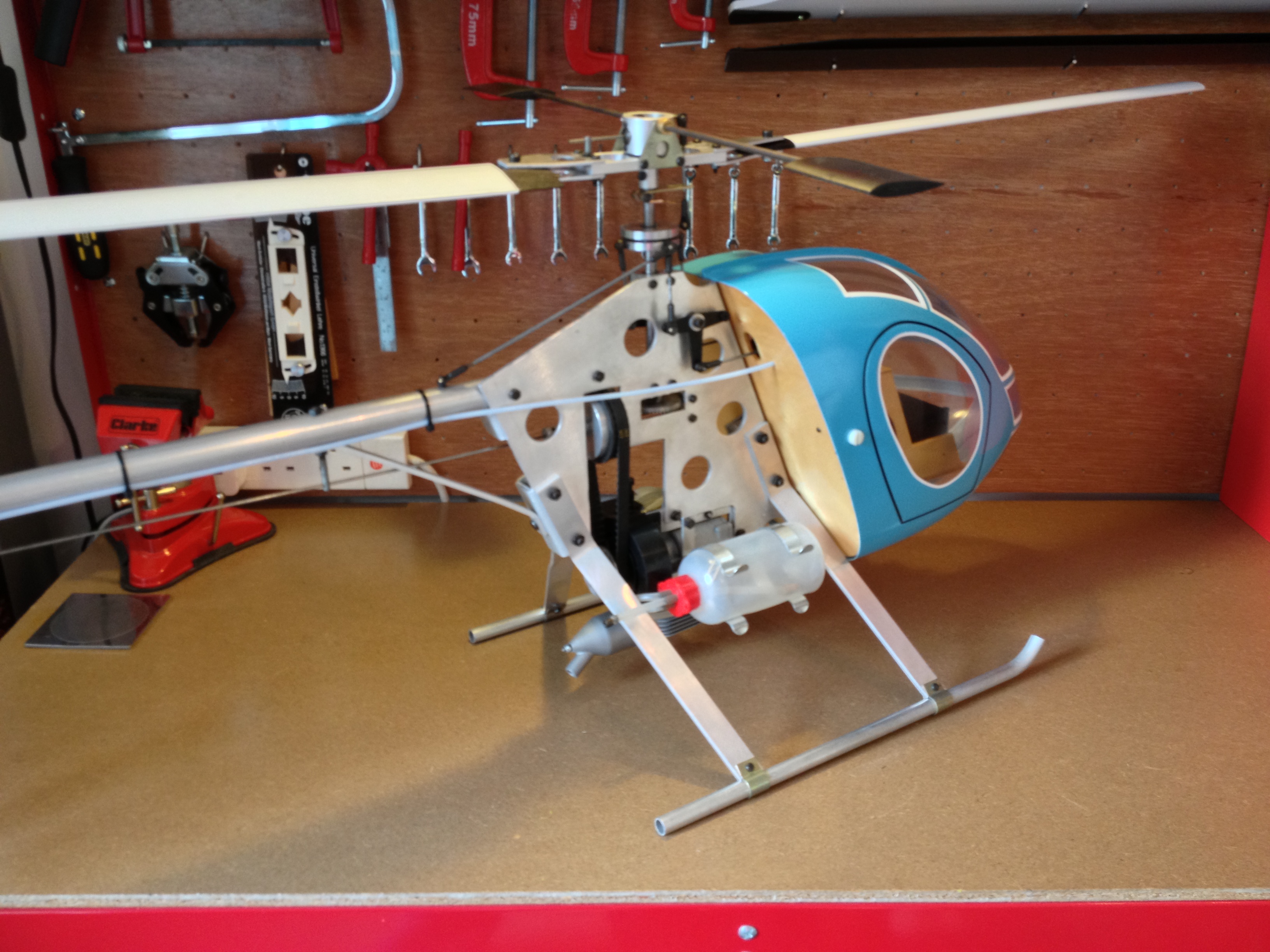
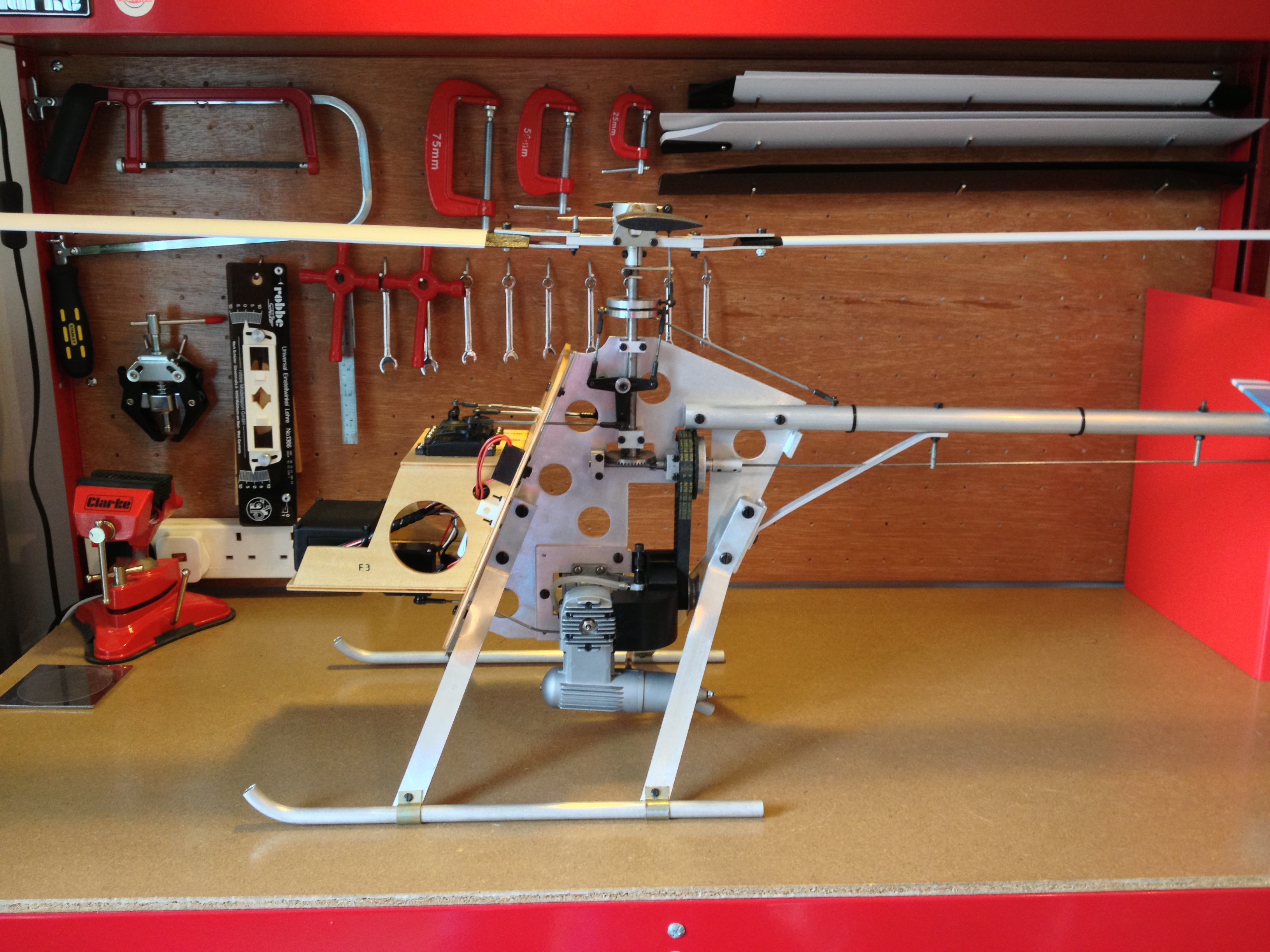
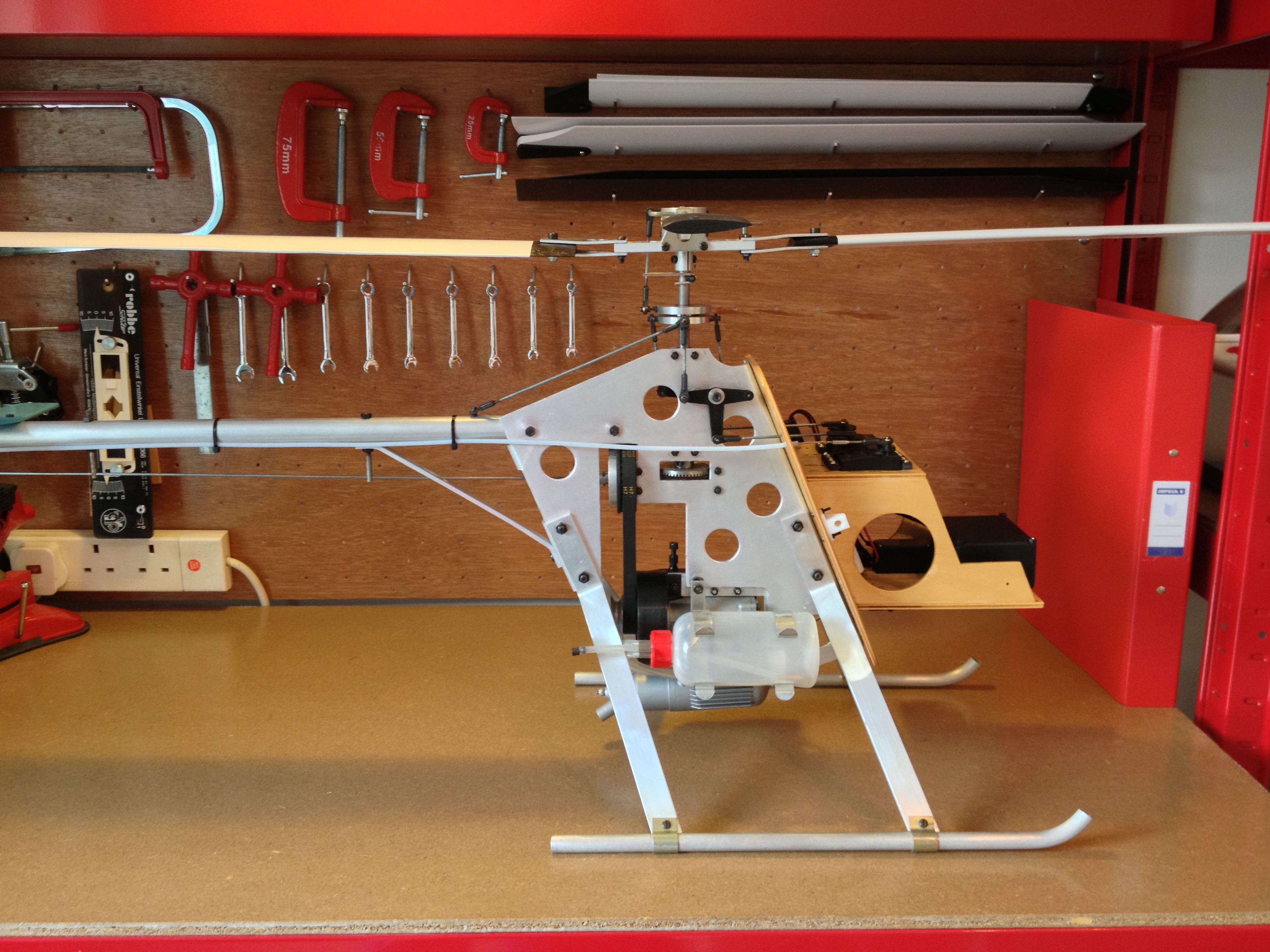
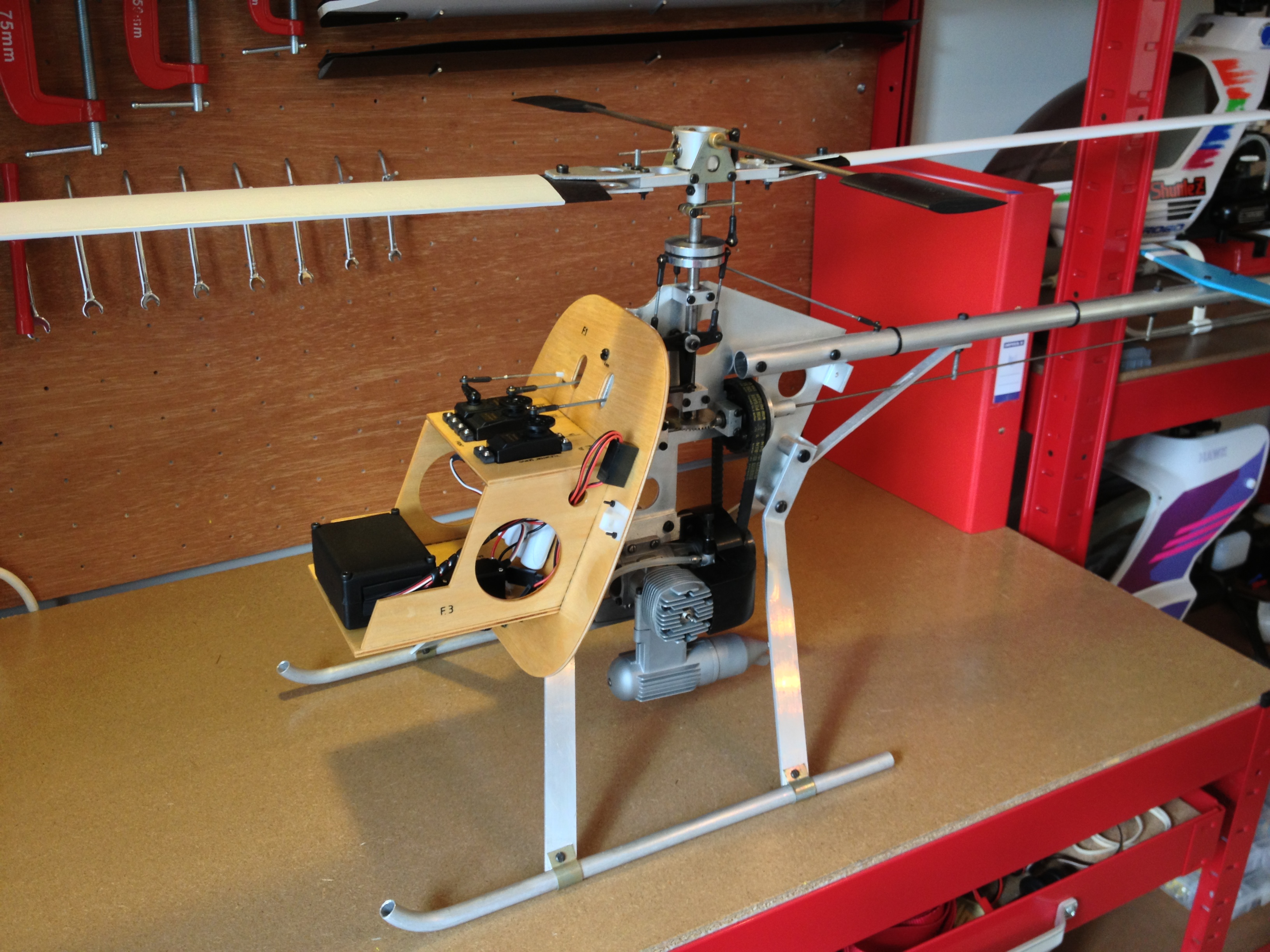
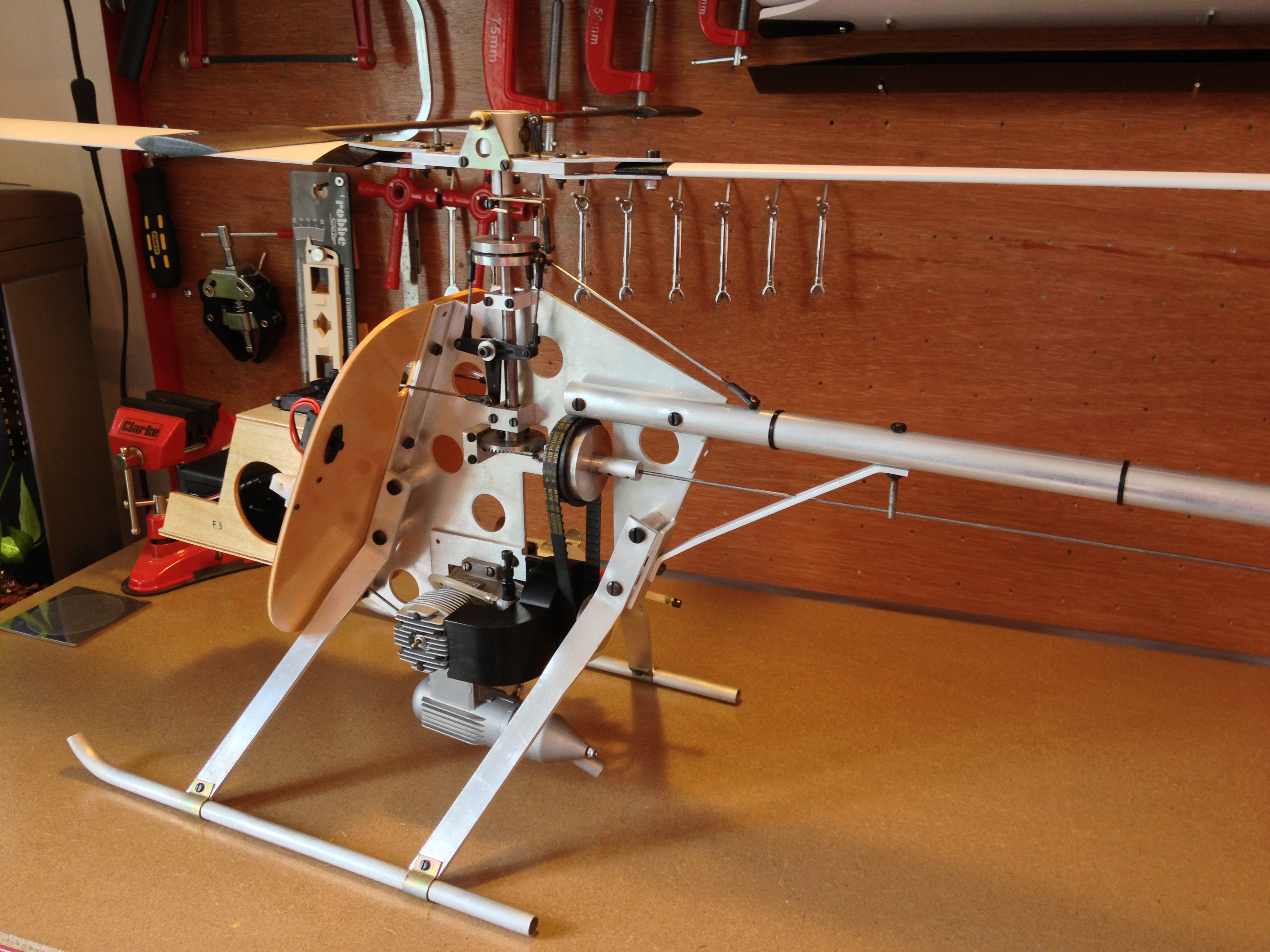
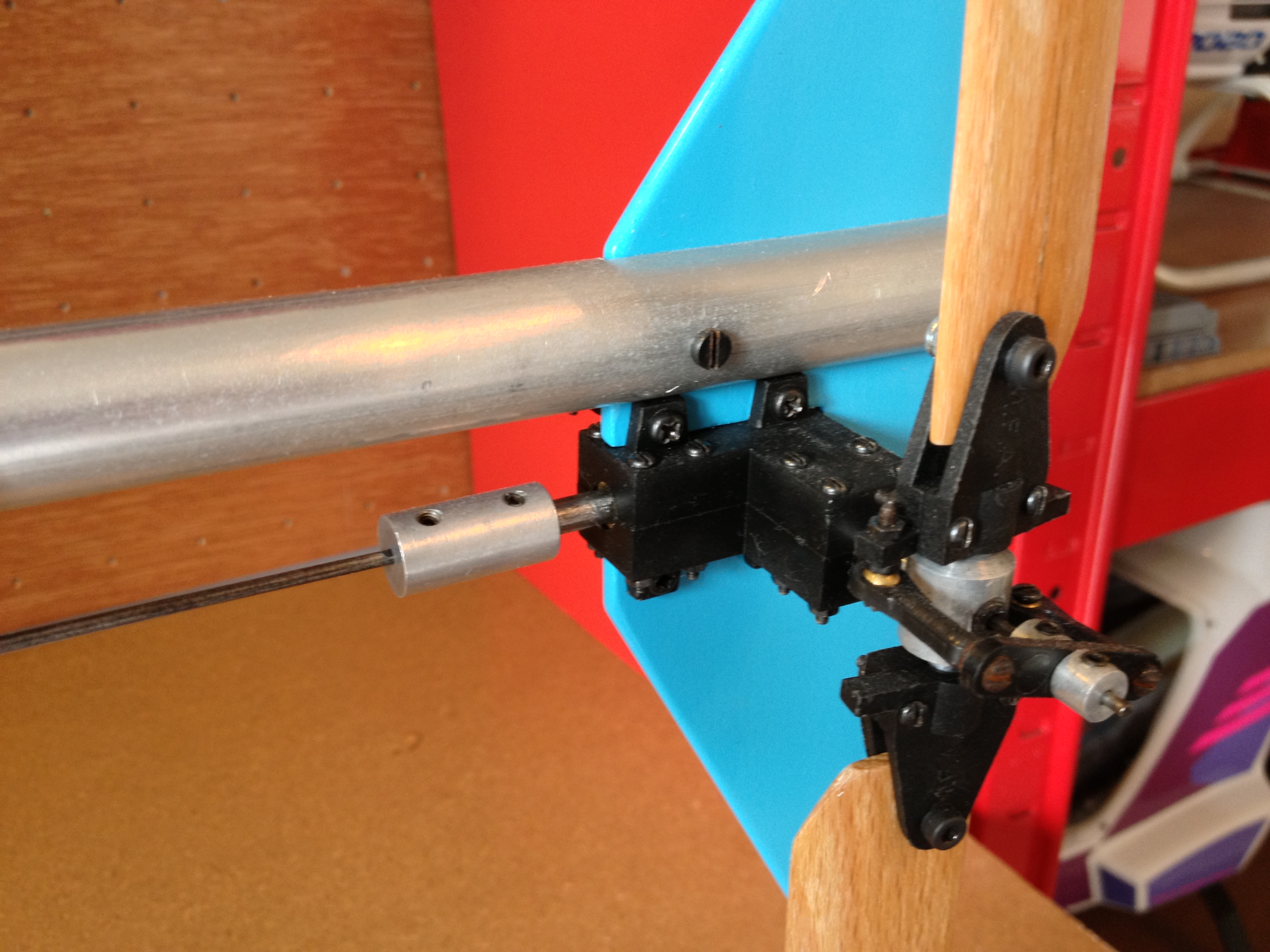
Writing up my PhD has taken most of my time but I’ve finally finished this project.  Comprising the best picks from a collection of second hand parts along with a new canopy and wood parts this machine is now like new.  The tail surfaces are from a pre-1990 machine and have the ‘high fin’ found on the first batches of the fixed pitch machine.  With the introduction of the collective pitch version in 1990 the wood parts were modified to suit both and the fin was reduced in size.  The Collective version couldn’t be flown without a gyro and so didn’t really benefit from the additional weather vane affect.  I was going to use another ‘period correct’ Guest mechanical gyro but the one I sourced turned out to be at the end of its service life so I will have to keep an eye out for something appropriate.   Considering my original MFA Sport 500 didn’t have a gyro installed I suppose it’s more authentic this way!
MFA Sport 500

MFA Sport 500

MFA Sport 500

MFA Sport 500

MFA Sport 500

Mechanics Left

MFA Sport 500

Mechanics Right

MFA Sport 500

Mechanics & Servo Tray Left-Front

MFA Sport 500

Mechanics Left-Rear

MFA Sport 500

This gearbox is made from the best parts of 3 others and is now silky smooth.

So that’s that really and I’ve got restored versions of the machines I learnt to fly including hovering/circuits (MFA Sport 500 and Hawk 30 MK1) and early aerobatics (Shuttle Z-ts).  I’ve been looking out for a little Raptor 30 V1 with which I started 3D but have so far drawn a blank.  Few have survived I guess, or perhaps the vast majority were converted to V2 spec.  Raptors went on to become my main 3D machines with a pair of identically set-up Raptor 50 V2’s being those with which I burnt on obscene amount of fuel.  Higher education then took over but not long to go now….

Thunder Tiger Raptor 2003-2005 (19)

Limited Capacity

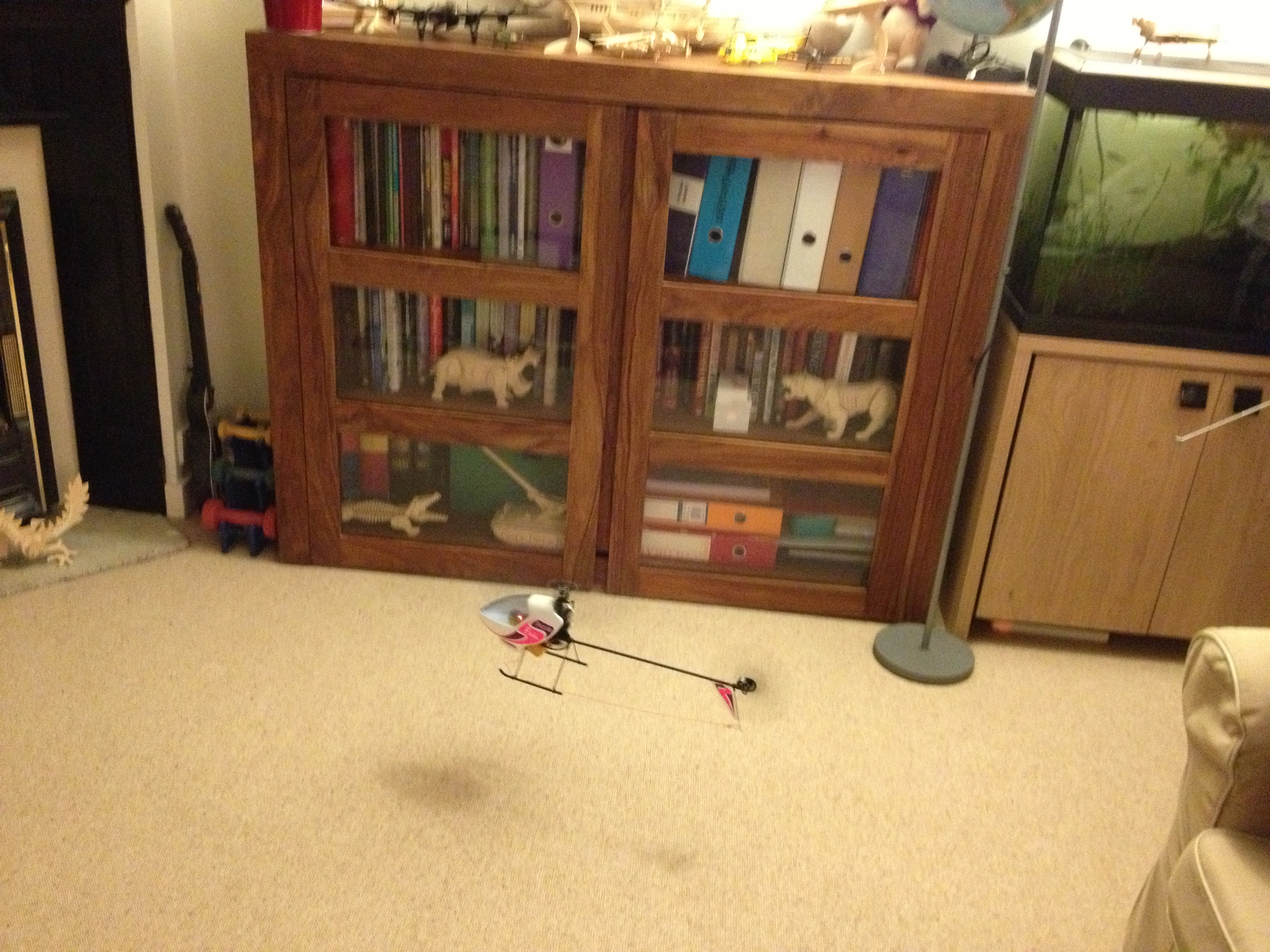
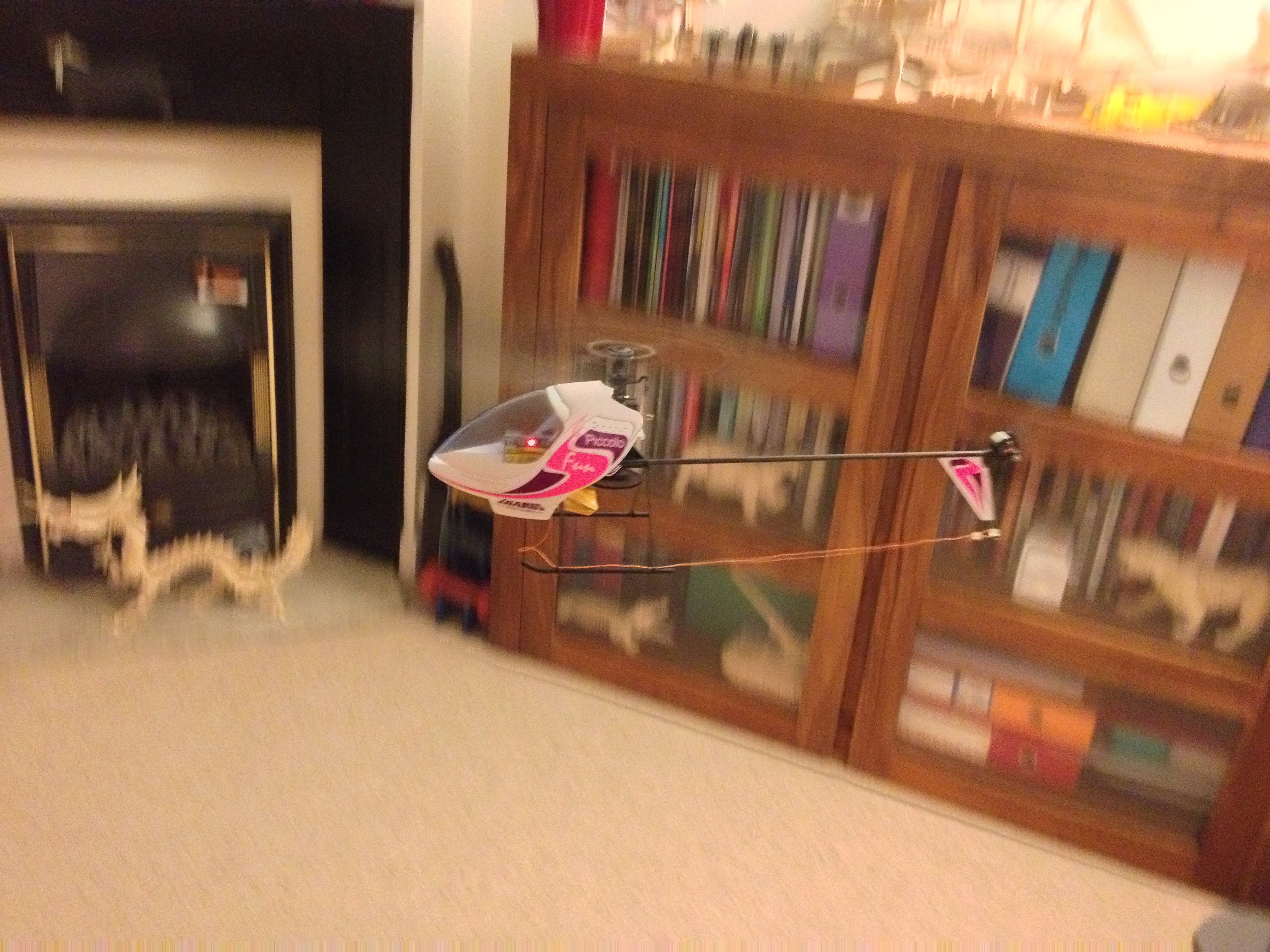
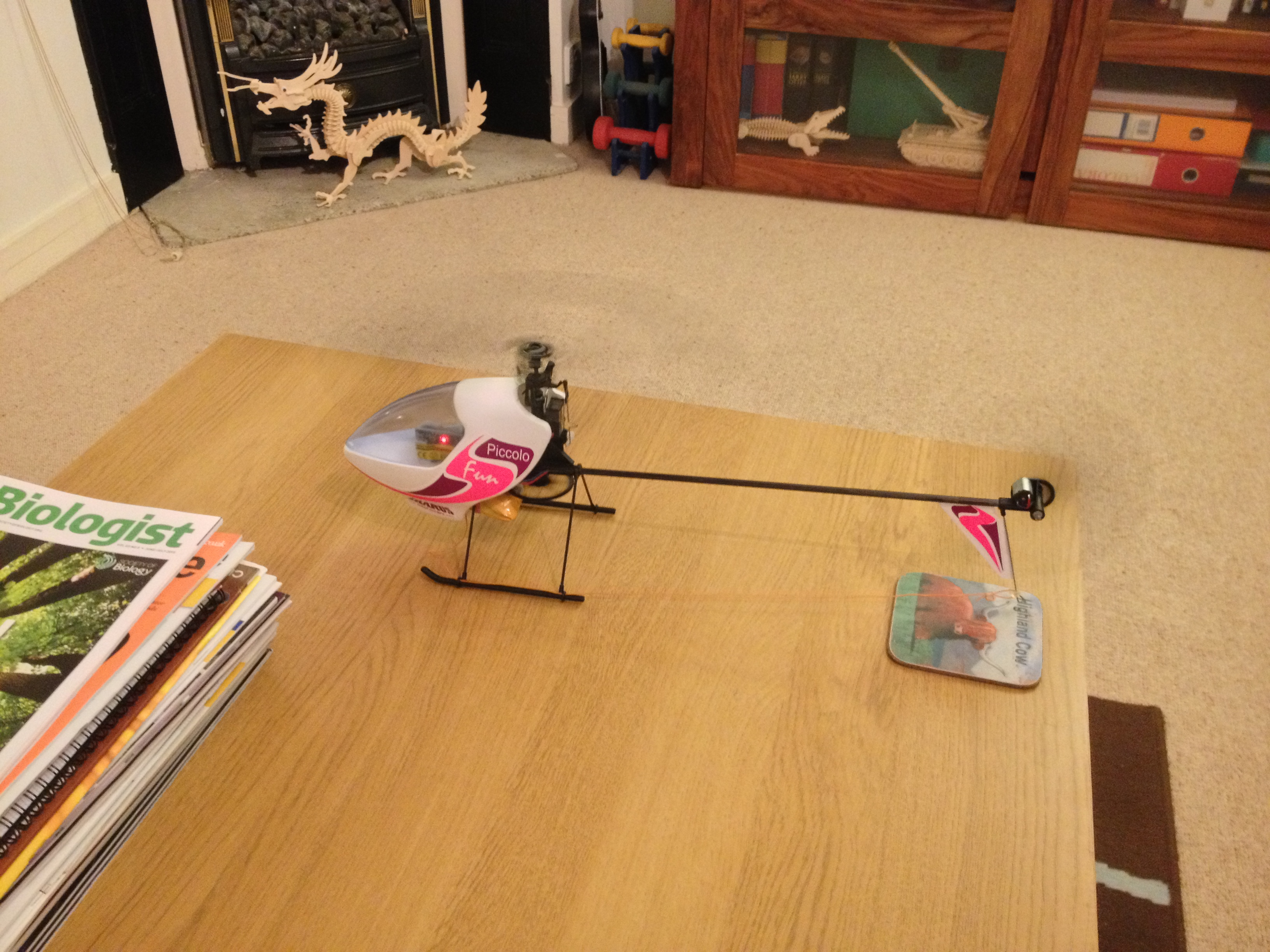
The Piccolo’s first flights went well. The original NiCd pack, at only 250mAh, doesn’t last long and is further hampered by being quite old. It had enough poke to allow for initial flight testing and fine tuning of the Picoboard. A few small turns with a miniature screwdriver was all that was required.

The Piccoboard mixes the main and tail motors and allows for adjustment comparable to revolution mixing; once used to mix tail pitch with throttle before the onset of heading hold gyros.

I think it might be an idea to replace the double-sided foam tape I used to affix the servos with something thinner. The current foam allows to much movement with the result of inconsistent trimming in the hover.

We have lift off!

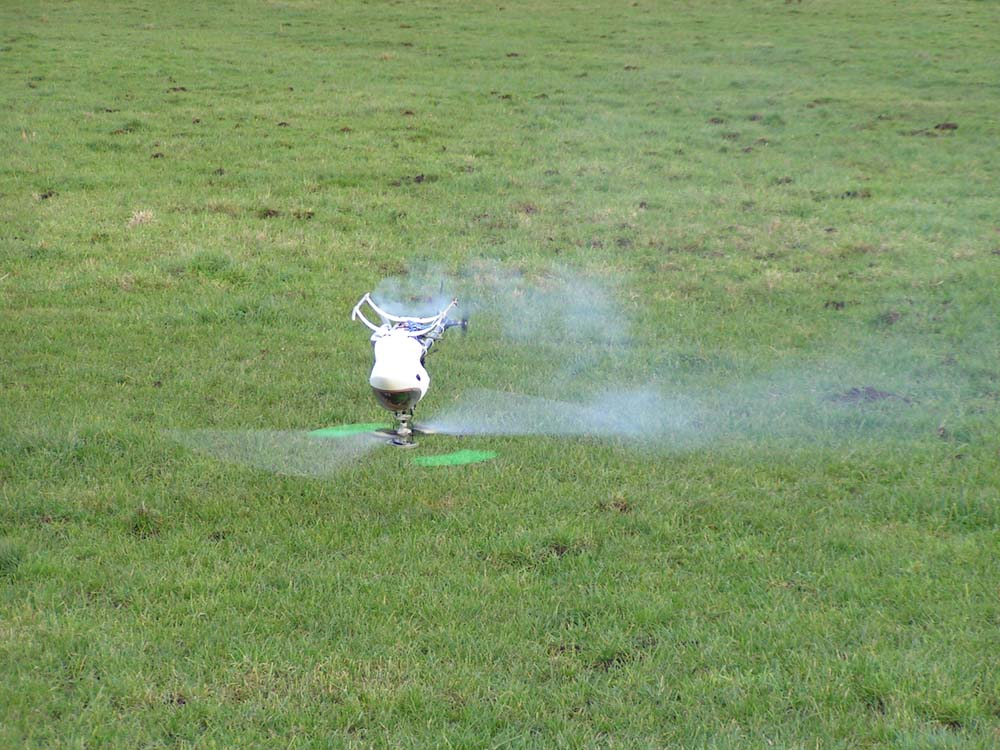
The trick with a the Piccolo, and any other low rpm fixed pitch machine, is not to hang around in ground affect for too long or risk rapidly and uncontrollably drifting about due to rotor wash. The trick is too quickly ‘leap’ into the air to above 30 cm where things are calmer.

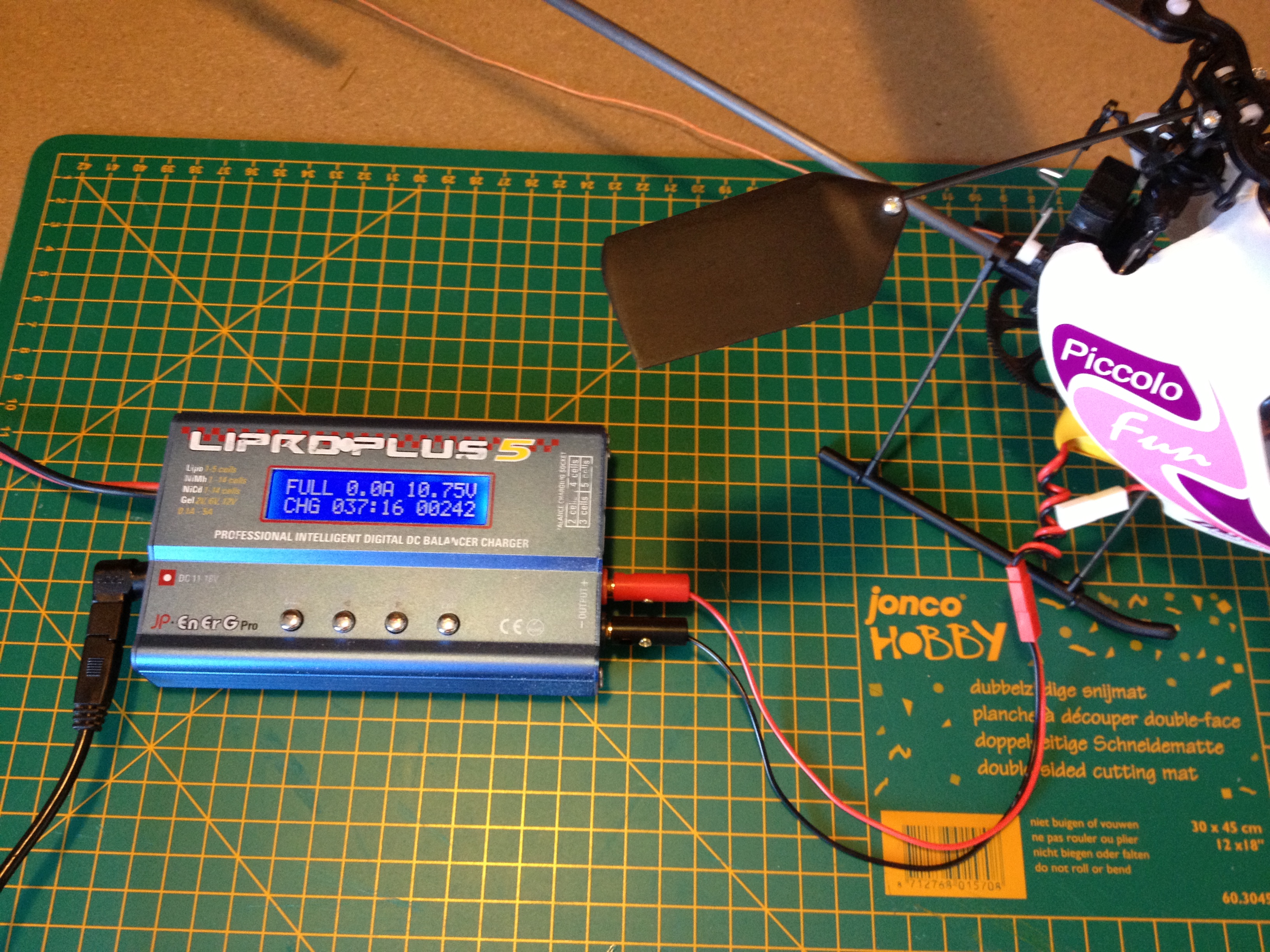
Fully charged the battery only gives 2 minutes of flight time. Interestingly the pack accepts over 240 mAh from completely flat. So despite it’s age it’s working as new. The flight time is nothing to do with the cell’s condition, just their capacity.

A soon as the new NiMh packs arrive (and providing this weather holds) its next flights will be outdoors.